
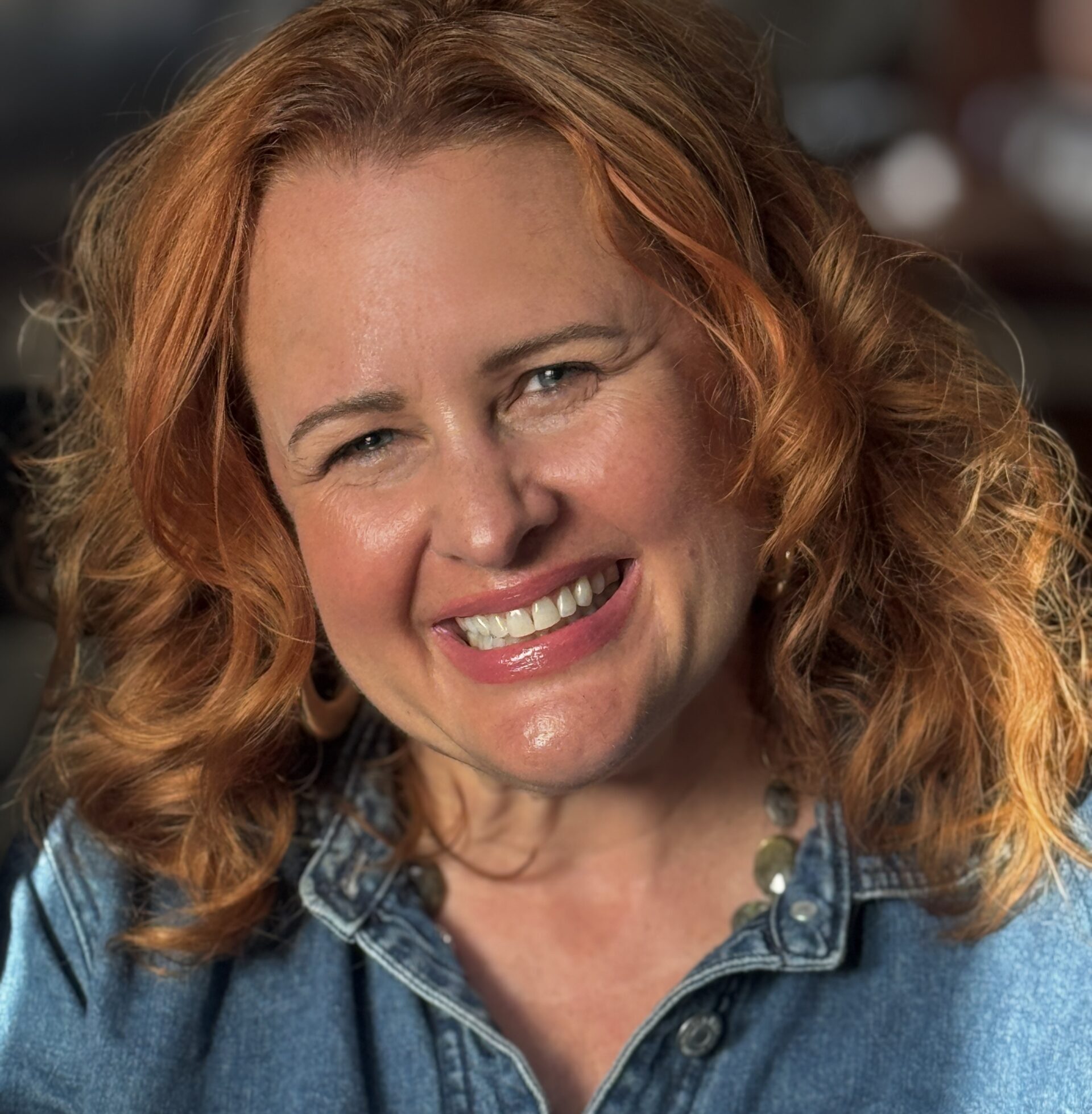
 About the Author: Jennifer Dickinson is a widely published short story writer, book coach, and teacher living in Los Angeles. She has loved writing since she was seven years old, when a typewriter from her mother unveiled a world overflowing with characters and stories. Inspired by her own childhood experiences, including a severe stutter, she creates memorable, relatable characters who foster empathy and help young readers better understand people different from themselves. She attended Hollins University, a women’s college in Virginia, where she developed her passion for storytelling and fell in love with the power of theater. She lives with her TV writer husband, Andy Reaser, and their two dogs, Hattie and Mabel. She spends her days writing stories and helping others discover how to tell their own. Find out more about her at jenniferdickinsonwrites.com |
“J-j-jennifer, w-w-why do you t-t-talk l-l-llike that?”
As a little girl, I dreamt of burrowing beneath the teacher’s desk, making myself miniscule, until I become one with the concrete floor. I had a severe stutter and spent my days dodging insults. Being vulnerable was out of the question at the elite private schools I attended, it would’ve been the same as putting a mark on my heart and yelling: “Aim the arrow here!”
Thanks to the encouragement of my mother, I escaped into my writing: stories, a journal, and eventually the theater where I discovered when I acted and played another person I didn’t stutter as much, but most importantly, when I did, I wasn’t judged or ridiculed. The people in the theater encouraged me and I felt at home.
But being in a creative writing class setting meant there was always the danger of being asked to share my stories aloud. For this reason, I resisted sharing my writing in college, even though the creative writing department had one of the best programs in the country. I finally worked up the nerve to take a class my junior year. When it became apparent that I had a stutter, my teacher hugged me and said: “Your stutter is your wound. Write from it.” But the memories of being teased wouldn’t go away. I was scared and embarrassed.
Then, in the fall of 2015 I attended a women’s writing residency in the woods outside of Montreal, Canada. Supported by a group of other female writers in a cozy cabin, I finally wrote about my wound. And the women loved it, telling me that they felt seen by my story.
Those early pages in 2015 became the foundation for my first middle grade novel, “Maggie’s Big Break” which was published by Includas Publishing in April 2026. The story centers around an eleven-year-old girl named Maggie Pierson who has a severe stutter. Maggie’s life and confidence is transformed when she gets the lead in the play at her new middle school.
During the writing of the novel, I had to revisit painful memories to make Maggie’s story as authentic as possible and this led to forgiveness and a sense of spaciousness for the people in my life who had bullied me. By writing about empathy in my story, I grew more empathetic.
Similar to my experience in Montreal, when Maggie is supported and encouraged by the girls in the play she feels she can continue to go for other goals in her life besides just acting. She feels nourished, enriched, and seen. Writing from my wound in “Maggie’s Big Break” was the KEY to unlocking my confidence.
As a stutterer I tried to blend into the background as a little girl, not wanting to be seen. But then I discovered Madonna. And theater. And writing. I wanted people to hear my voice, literally and figuratively. Now I believe my voice has power, no matter how many times I may repeat a syllable or block on a word. When I stand up in front of a group of kids and read portions of my novel, I always strive for my words to connect and create love and acceptance.
My wound gave me power. My wound gave me my voice, my shade.

Wow, Jennifer, what a powerful story! I myself found writing to be my way of communication for so long, as I could express my written thoughts fluently!
I’m a little torn about how I feel about stuttering being described as a wound. When I think of wound, I think injury, and I don’t personally feel as though I’ve been injured because I stutter. Do you think you were actually wounded by stuttering? Or by the negative reactions you had to cope with as a kid?
Also I’m super interested in your middle school age novel. I work with the NSA and we’ve been collecting book titles for kids and adults. I hope it’s super successful and that you get good feedback from readers!
Pam
Pam, thank you so much for this thoughtful response! And great question–yes I think when I say “wound” I’m reflecting on how terrible it felt to be bullied as a little girl. I’m glad you love writing, too! It’s been so healing and fun for me to do throughout my life. My novel, “Maggie’s Big Break” is avail now on Amazon, Bookshop.org, etc! I’ve been on the east coast in the past few weeks reading from the book to kids and they’re really connecting with the story, which has been incredible.
Hello Jennifer!
I also live in Los Angeles (Pasadena) but lived in Montreal for three separate stints and that city has been the home of two momentous (and good) changes in my life: (a) finally confronting my stuttering head-on and (b) the start of my career.
I am a Board Member of the Canadian Stuttering Association and the text of my keynote at our recent conference is also on this site.
And would love to connect with you in person !!
Catherine
I’d love to connect in person! Funnily enough I’m in Montreal right now on vacation. Such a great city. Could you reach out to me through my website in my bio.
Hi Jennifer, thank you for sharing your story! I resonated with the way you communicated the negative feelings and reactions you experienced as a “wound”. I think that connecting your emotions to something concrete makes it feel tangible and less intimidating. With a physical wound, we can clean it, heal it, and try again, and I think that is a powerful metaphor.
I was excited to read that you wrote a book! I will be checking it out, and I hope that it continues to reach all of the students that need to hear it.
Morgan
Jennifer, thank you for opening up and sharing your journey. It’s truly inspiring to see how pain and trauma can be transformed into a perspective that empowers your future. Huge congratulations on publishing your book! I know “Maggie’s Big Break” will make so many readers feel seen and less alone.
Best Regards,
Maggie
Thank you so much for your support!!!
Thank you so much!!!
Hello Jennifer!
Thank you for sharing your story. I am happy that you found an outlet to escape from and a way to find your confidence. It’s interesting because your story reminds me of the magical question that speech therapist talks about of “what would be different if you don’t stutter?” or “what would your life look like if you don’t stutter?”. Through writing you may be able to express your thoughts and feelings that help others feel seen and heard. You are helping others find their confidence that you have found in yourself through writing!
Ellysa, thanks so much for your response. I appreciate your kind, supportive words. Writing is truly my fav thing to do in the world, and I have found so much confidence in sharing through my words. I hope to spread that joy with my work.
Hi Jennifer! Thank you for sharing your story. I was especially moved by how you transformed your “wound” into a source of strength, connection, and empowerment for others. Congratulations on publishing Maggie’s Big Break! I know Maggie’s story will help many young readers who stutter feel seen, understood, and accepted. Since publishing your book, what has been the most meaningful response you’ve received from a reader?
Rylie B
Rylie, this is such a nice question. I’ve heard some amazing responses, but I think my *favorite* was from an 11 yr old student who came up to me after I finished presenting to her elementary school class and told me about her struggles with OCD and that she related to the emotions I wrote about in the story regarding Maggie dealing with her stutter. I wrote this story for kids to feel less alone, so this response meant so much to me.Thanks for writing to me!!
Hello Jennifer
Thank you for writing and for sharing you story. The concept of your/our wound being the source of our power resonates with me. When I was starting to write, to think about writing, I came across the following statement from Mira Hadlow: “If you are unsure of your purpose in this life, look to your wounds. Where we are called to serve is where we ourselves have been impoverished.” At my first NSA conference I attended a workshop called “The first time I stuttered”, where we shared about that first time. For myself and others, it was the first time we were speaking about that event, that wound. We cried, sure, but they were healing tears. Speaking about the wounds allowed us to move forward, and find our way.
Your writing reminds me, too, of Marcus Aurelius’ writing, in Meditations: “The impediment to action advances action. What stands in the way becomes the way.” It’s incredible to me that something we experienced as such a wound can facilitate our journey, even our purpose as it seems to have done for you. I am very pleased for you.
Wishing you well, and continued success and fulfillment with your writing.
Hanan
Hanan, what a truly beautiful response. I appreciate your taking the time to share with me these quotations (which I will save) from Hadlow and Aurelius. Yes, I truly believe that writing from what wounds us can ultimately empower us and ignite empathy and understanding in those around us when we share from these places. I love that you had this experience at the first NSA conference and that you found your tears to be healing. Thanks for reaching out!
I appreciated reading your reflection, Jennifer! A friend recently shared a quote with me, “Your pain is your purpose. The very thing that brings you to your knees–the place where your journey leads you to self-love, self-compassion, and empathy–is where you will be of most service.” I’m putting your book on my list of books to read!
Ana Paula, Thank you for your response! I love that quotation you shared–it’s great. And I heartily agree with it. I hope you enjoy my book!!
Hi Jennifer, thank you for sharing your story. I was especially intrigued how you turned your wound into power, I believe it’s such a powerful approach for self growth and for your journey. When your teacher first described your stutter as a wound, what were your thoughts?
Asolo12,
Thanks for reaching out. I knew my teacher was right and I was scared to be honest and write about my past. Even though I knew fundamentally that writers should write stories about what they know, I was scared to share about my history. It took a long time to work up the nerve to be able to do it.
Hi Jennifer,
Thank you for your incredible and powerful story. It is praiseworthy and inspiring how your story teaches us that the greatest contribution PWS (or actually anyone) can make to society is by being true to themselves, and that their authenticity can help many people and inspire them to embrace who they are and persevere in the things they love. Your paper and other papers from PWS help with developing a better understanding of oneself and one’s speech, building self-confidence, and finding the courage to speak up and express one’s opinions regardless of the situation or the people one is communicating with. It is important to give ourselves time and to be patient with ourselves and others. Furthermore, raising public awareness of stuttering is essential, and the observance of International Stuttering Awareness Day plays an exceptional and irreplaceable role in this effort.
Nika
Nika, Thank you so much for sharing your response with me! I’m glad you connected with my story–your message is exactly why I wrote it. Good luck on your journey.
Best wishes, Jennifer
What a beautiful paper Jennifer. I recognize so much. The first time I met other PWS. The first time I accepted my voice, and later on myself. Going from silent to raising my voice. And still having this plan in my head to write a book.
I few years ago I almost lost my leg, as it dislocated, ripped of every single thing inside. I had many operations and many scars. I decided to tattoo my leg, with every flower showing the different stages of my journey (from weed being the years of bullying, to dragon flowers, showing my strength and fire). People now ask me if I was ashamed of my scars. No. On the contrary. My flowers tell my story, the butterflies have the colors of my different diagnoses. And people now ask me about my tattoos, giving me the opportunity to tell my story. My scars, my tattoos are my story book, as the scars show my struggle, while the flowers and butterflies show my victories.
Keep writing and keep sharing your story
Anita
Anita, What a gorgeous, honest reply. I so appreciate you sharing this story with me. I imagine your tattoos are lovely and what an amazing way to share your journey with people. I hope you write a book! You’re a talented writer. Best, Jennifer