
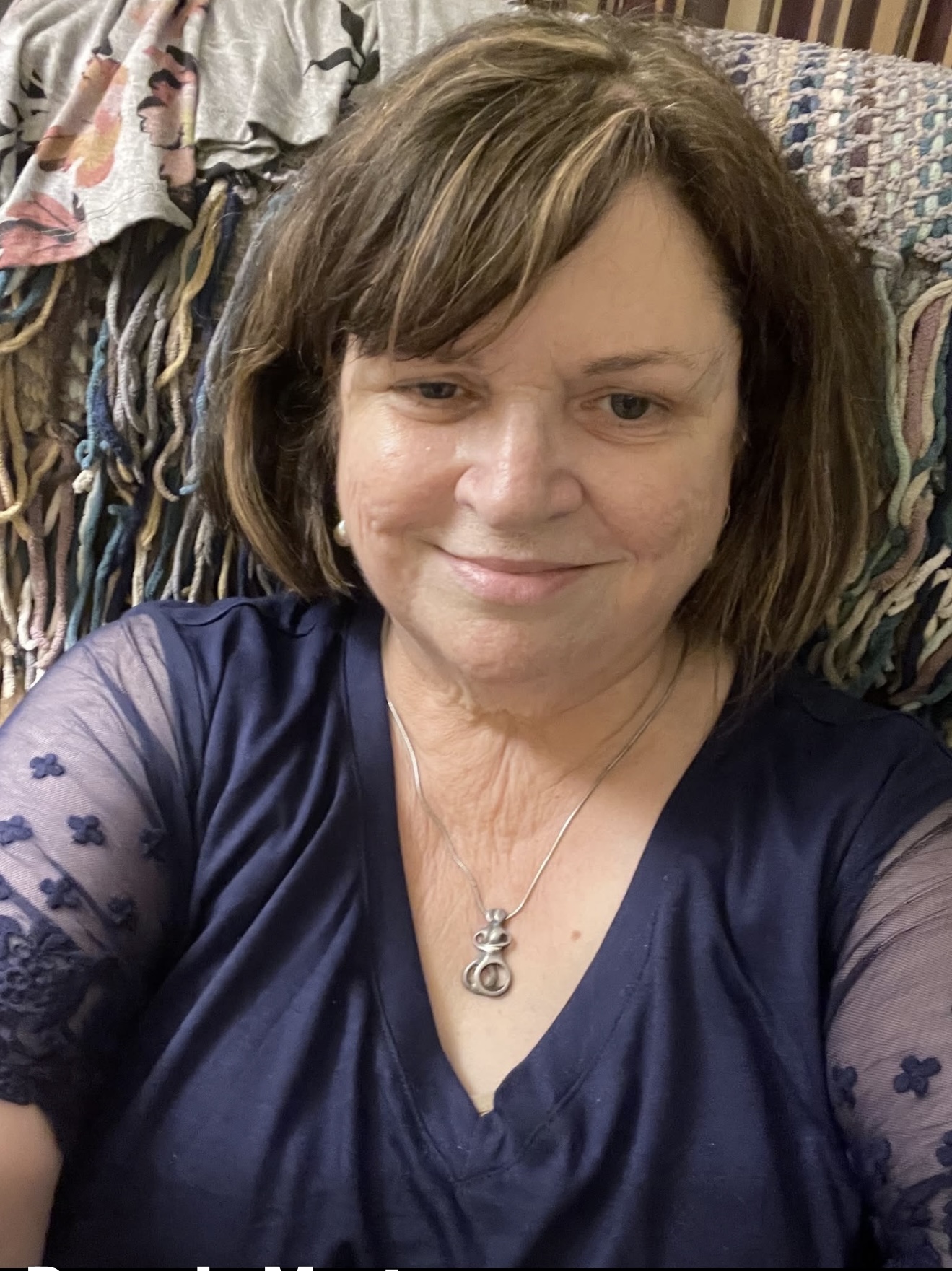
About the Author: Pamela Mertz is an active member of the global stuttering community. She started a blog about making room for stuttering in 2009 and began a podcast exclusively for women who stutter in 2010. She works part-time for the USA National Stuttering Association (NSA), and co-facilitates a monthly online support group for women who stutter. She is also actively involved in the NSA’s “We Stutter at Work” program, which she envisioned in 2016. Pam was inducted into the NSA Hall of Fame in 2022. |
PONDERING
I often wondered when I hesitated before I spoke if it looked like I was pondering what I’d say. Pondering makes you look like a deep thinker. Maybe people would be excited with what I had to say because it appeared that I had pondered a bit before saying it.
Deep thinkers had important stuff to say, right? And perhaps it would be more meaningfully received if it appeared well thought out beforehand.
SEARCHING
I liked to think I was searching for the exact right words before I said them, so that I would look smart and relevant and worthy of being heard.
I wasn’t searching for the perfect words. I was searching for the ones I thought I could say perfectly, without pausing or stumbling.
AVOIDING
I knew I was a master at avoidance by the ripe old age of 6. Hurtful, angry words hurled at me as a reaction to my less than perfect 5 year old speech seeped into my bones so much that it hurt. I didn’t want that to happen. Ever. Again.
But I couldn’t figure out how to prevent that from happening if my speech failed to meet someone else’s expectation. So I did the only thing I could think of to avoid being yelled at, laughed at, or worse, excluded.
I avoided speaking. I stopped talking.
ANALYZING
I took a research methods analysis course in college and absolutely hated it. It seemed to take way too much time to study every single facet of what would be eventually presented, either written or spoken.
It never really occurred to me that I was already an expert analyst because I was always studying and scanning ahead for words that might trip me up at some point. Analysis helped me have a ready stock of available synonyms for words I might struggle to say.
As a kid, I would often say “Affirmative”, instead of a simple “Yes,” because that four syllable word came out smoother than that one syllable word. Imagine that super smart kid with such a vocabulary.
PRETENDING
When I avoided speaking to protect myself, I pretended like it didn’t matter. I let people think I was perfectly fine with being shy, quiet or nervous. I wasn’t any of those things but pretending somehow made it easier. I don’t think anyone ever really cared.
PARALYZING
When I made conscious decisions to avoid speaking situations and pretend like it didn’t bother me, I quickly learned about something little kids shouldn’t know about yet. Shame.
The very thoughts of being exposed and embarrassed paralyzed me with fear and shame. I just knew that if the way I spoke somehow defined me, I’d be doomed to a lonely life. Maybe one not even worth living.
UPENDING
When I reached a point where I couldn’t take it anymore, something really weird happened. I stopped caring what others thought and started caring what I thought.
I yearned for authenticity. I craved being heard. I looked for the way.
FITTING
The way found me. When I was fired from a long time job because someone else deemed there was something wrong with me, I woke up. I found others who sounded like me. And funny thing, they welcomed me. I fit. After years of feeling like I didn’t fit anywhere, I found that I did fit with other people who spoke with hesitations, pauses, stumbles and bumps. Like me, sometimes.
LIVING
I went through so many shades of experiences with my stuttering. When I got my first pair of eyeglasses, I remember putting a little gold “P” on the lens. It was the trend then. That didn’t last long, as soon, I got new prescription eyewear almost every year.
I looked for all kinds of different frames – trendy, cute, colorful, big ones, small ones, rimless ones and endless shapes. I tried them all. And then I got sick of that (it was getting expensive) and had LASIK eye surgery so I didn’t have to wear glasses as much. It was freedom – I could drive without wearing glasses. I could watch TV and movies without them and wear funky sunglasses.
STUTTERING
I was living life, on my terms, doing and saying what I wanted when I wanted. All the shades of my stuttering journey taught me ONE powerful lesson.
Stuttering is what makes me ME.
After a lifetime of pondering, searching, analyzing, avoiding, pretending, paralyzing, upending, fitting and living, my last word is simply stuttering.
STUTTERING

Hi everyone – welcome to the 2026 ISAD conference. I am so glad you found us, and I really hope you enjoy my perspective on what the shades of my stuttering has been like over a lifetime.
I can’t wait to hear your thoughts.
Pamela, this is so very moving…it almost takes my breath away. I resonate deeply with the idea of authenticity-as-living, as someone who also has had life-long shame around stuttering and trying to hide it. Authenticity is literally like oxygen to the lungs for me…hiding who we truly are can feel like suffocation. Dying a slow painful death. But authenticity – precisely because it is so vulnerable (which can make it much harder to access) – allows us to be witnessed in the most real, meaningful ways. Thank you SO MUCH for your authenticity, for sharing your stuttering journey, for showing us your shades!!! YOU ARE A WILD INSPIRATION.
Thank you Kimberly.
I love how you share that authenticity is like oxygen. I truly feel like I was oxygen deprived for so long and that I was suffocating. I’m so glad the way found me when I was searching for a way out of my self imposed prison. Removing the shackles and being re-oxygenated healed me in ways I didn’t know I needed.
I’m glad we’re sharing parts of the journey.
Pam
Hello Pam
Thank for this moving and meaningful paper. I really admire how you manage to capture the various experiences so succinctly.
Thank you for helping me find my own way.
Hanan
Thank you Hanan. This piece just kind of flowed. I did not set out to explore this but when I reflected on all the shades of my journey, I realized how so many things in my life were unwittingly shaped by stuttering.
Pam
Hello Pamela . loved reading this, you are always so inspiring , thanks for being you.
Thanks Phyllis. I find it very healing to write about stuttering.
Pam
Hi Pamela,
I really enjoyed reading your piece on the shades of stuttering that you have experienced throughout your life; it was quite moving! I am a graduate student in speech language pathology, and I appreciate how your work here, and on your podcast featuring women who stutter, recognizes the different stories and perspectives of people who stutter. Your work has helped me learn a lot about stuttering in graduate school, and I look forward to continue learning from you in the future!
Thank you so much for this wonderful feedback and for commenting on the podcast.
I love when SLP grad students are encouraged to participate in the ISAD conference.
Pam