
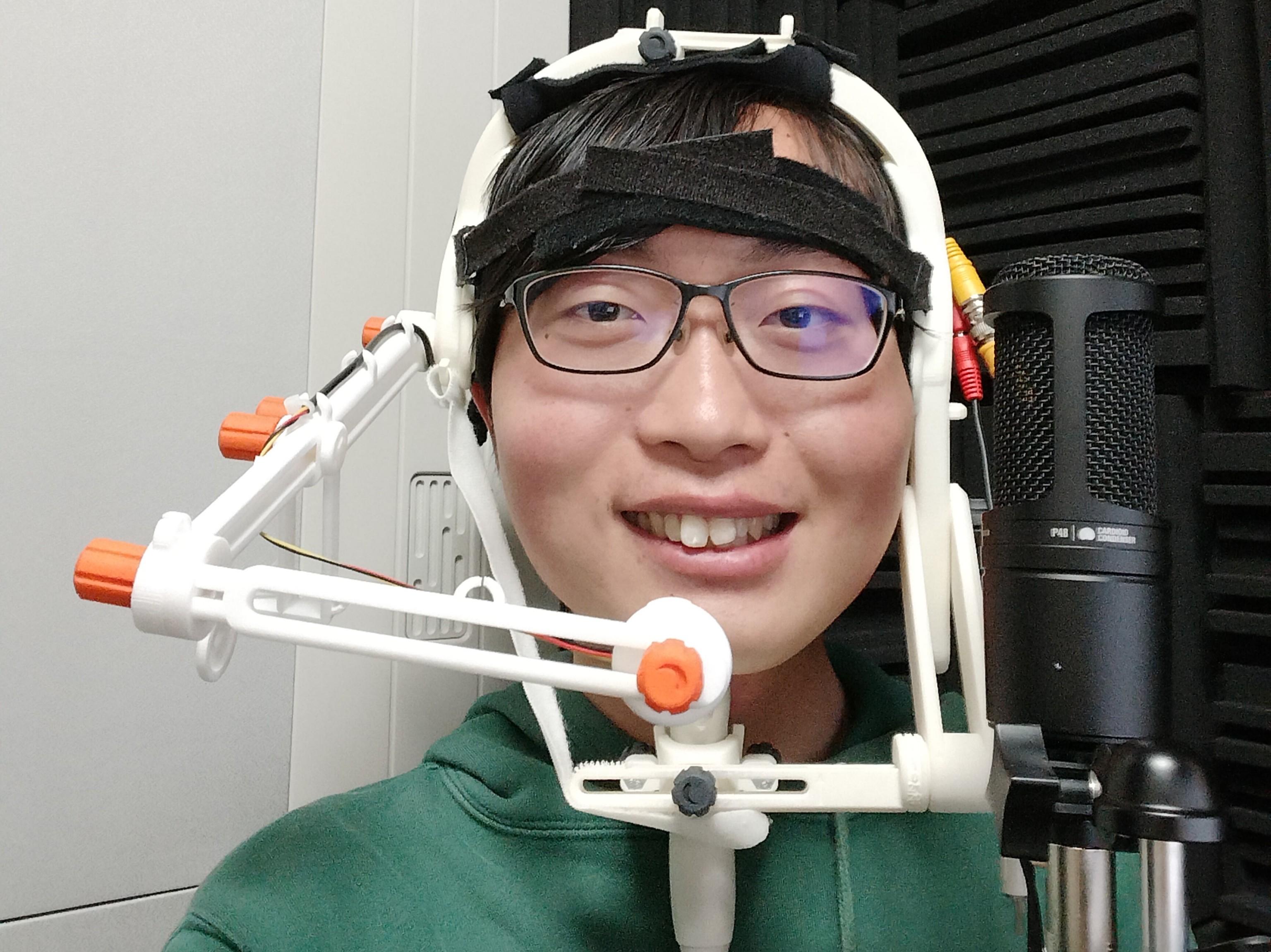
 About the Author: My name is Kakeru Furukawa and I’m a student at Hiroshima University, Japan, where I study linguistics, phonetics, and phonology, with research focused on stuttering. I was a Grand Prize winner at Japan’s “DREAM” Round-the-World Contest with a presentation theme called: “A Hero with a Stutter from Egypt”. The prize was a round-the-world airline ticket. The trip is now planned between Nov 2026 and Oct 2027. My goal is to learn more about stuttering around the world. |
This November, I will set off on a trip around the world. But this is not just a trip. It is a journey to meet people who stutter, their families, speech-language pathologists, and stuttering researchers around the world. I will also visit stuttering communities, self-help groups, and conferences across the globe. Across countries, languages, and cultures, stuttering takes many forms—and so do the ways people understand and live with it.
This is a round-the-world trip of PWS, by PWS, for PWS.
I am a person who stutters. My stuttering became much more severe when I started university. I could not speak on the phone. When a teacher called on me in class, I could not answer. At restaurants, I sometimes ordered something that was easier to say instead of the food I actually wanted. I wanted to study abroad and took online English lessons, but even during those lessons, I often could not speak. Speaking always felt frightening, and I hated it.
Then, somehow, I became close friends with someone from Egypt. He invited me to Egypt, where I studied for five months. Perhaps because there were not many East Asian people around, strangers in Egypt spoke to me every day. I could not speak Arabic, so we communicated in English instead. This turned out to be one of the best things that had ever happened to me.
Many of the Egyptians who spoke with me were not fluent in English either. They spoke slowly and used simple words. Because of my stuttering, I often needed more time to say what I wanted to say. But I made sure to communicate clearly what I truly wanted to say.
Neither of us expected perfect English. We spoke slowly, used simple words, and met each other halfway. For the first time, I felt that conversation did not have to be fast or fluent to create a real connection.
I had never experienced anything like this before—not with people who did not stutter, even in my own language, and not with the English teachers I had studied with. Talking with people in Egypt was genuinely fun. My fear of speaking faded. My confidence grew, speaking became easier, and even my stuttering became less severe.
Stuttering has had many shades in my life. At university, it was the fear, frustration, and words I could not say. In Egypt, it became a reason to value each word and a bridge that connected me with other people. It brought me friendships, confidence, and this journey—things I never expected to gain from stuttering. My stuttering is not only one shade, and through this trip, I hope to discover the many shades of stuttering experienced by people around the world.
After returning to Japan, I entered a contest called DREAM. In this contest, participants present their dreams and travel plans, and the grand prize is a round-the-world plane ticket. Inspired by my experience in Egypt, I gave a presentation about my dream of meeting people who stutter around the world.
It was not easy. On some days, although the presentation time limit was six minutes, I could speak for only three. But I did not give up. I practiced again and again, refusing to give up on the words I wanted to share. I believed that if I could face this challenge, I could give courage to people who stutter around the world. In the end, I won the grand prize and received a round-the-world plane ticket.
Thank you for reading my story. Now, I have a request for you.
This November, I will begin my journey around the world. If you would like to meet me, or if you know a person, group, researcher, or conference I should visit, please leave a comment with their name and country. For example:
- People who stutter
- Families of people who stutter
- Speech-language pathologists
- Stuttering researchers
- Stuttering communities
- Stuttering self-help groups
- Stuttering associations and conferences
Anything related to stuttering is welcome.
I believe this journey can give courage to even one more person who stutters, uncover even one more piece of the mystery of stuttering, and help even one more person learn about it.
Let’s build this round-the-world trip—of PWS, by PWS, for PWS—together!

I am proud of you my friend
Thank you my friend
I really enjoyed reading about your experience in Egypt! Congratulations on winning the contest. How did your confidence stay strong when returning to Japan? Do you have any strategies for staying confident even when you return back to environments that you were not confident in before?
Thank you for reading my paper and leaving a comment!!!
Studying abroad in Egypt gave me many success experiences in conversation and boosted my self-esteem. Before going to Egypt, I often felt discouraged whenever my stutter made it hard to carry on a conversation. However, after going to Egypt, I gained a lot of success experiences and my self-esteem improved, so even when a conversation didn’t go smoothly, it didn’t bother me as much as it used to. I gained the confidence to believe, “I’ll be able to speak well next time.”
I think I was able to enter the presentation contest because I believed I could give a presentation even though I stutter.
Therefore, I often tell people, “When things aren’t going well, changing your environment might be the key to success.”
Hey Kakeru! If you happen to be in the middle east again, drop me an email to shiran@ambi.org.il – I’m a researcher too and we’d love to welcome you on the Israeli Stuttering Association support groups. Have fun!!!
Thank you so much for reading my paper!!! Here are the links to my Instagram and Facebook accounts.
https://www.instagram.com/dream_kakeru/
https://www.facebook.com/share/1DTKvJ5mFZ/
If you’d like to meet me while I’m traveling around the world, please feel free to contact me!
Wow, I was really moved when I read your article. What a wonderful opportunity life has given you with this trip you’ll be taking very soon. I hope it’s very rewarding for you—hearing about the experiences of others who stutter will help heal many parts of us and our own experiences. And thank you for sharing it, too. I’m already following you on social media!
Alexandra, from Bolivia!
Thank you for reading my article. I’m so happy you liked my paper!!!
I’m planning to visit South America next Aug and Sep, so I’m looking forward to meeting all of you—and others who stutter—in Bolivia!! Since that will be the final stop on my trip around the world, I think I’ll be able to share what I learned until that time with all of you!!
Hi Kakeru, the world tour that you are set on sounds like a grand project. I am the organiser of the Hong Kong Stuttering Support Group in Hong Kong https://www.instagram.com/stutter.hk/. Feel free to visit us when you are around 🙂
Thank you for following my IG account!! I followed you back.
I will go around Asia in Nov and Dec. If there is any meetup, I’d love to join!!!
You shared that you are more at ease when speaking English in Egypt. I haven’t been there, but I had similar experience when I studied in Taiwan. People are generally friendly and patient when they heard me stutter in Mandarin, perhaps because they believe that it is my second/ third langauge, despite the fact that I stutter less in my mother tongue (Cantonese).
Yes traveling abroad can be an opportunity to change our perceptions of stuttering
Many congratulations on winning the DREAM prize, Kakeru!
I am UK-based but also occasionally travel to Japan. It would be great to meet you if you come to the UK and I’m sure you will be warmly welcomed by the global stuttering community.
Best wishes
Gina
Thank you so much for your kind words of congratulations!!
I’m looking forward to hearing from PWS in the UK and connecting with them!!!
Respectfully yours
Kakeru
What an epic trip that will be!
Thanks! Hope the CSA conference will be held before my trip ends so I can join any Canadian stuttering community!
My sincere congratulations to you Kakeru! Thank you for sharing this experience with us. I’m really inspired by your confidence and determination. As an aspiring SLP, this emphasized how important community is and the vital role it plays on personal growth. What were some emotions you experienced when communicating with people you felt supported by and how did that impact your stutter?
Thank you so much for your thoughtful comment! When I communicated with people who supported me, I felt relieved, safe, accepted, and genuinely happy. I no longer felt that I had to speak quickly, hide my stutter, or choose easier words.
That sense of safety reduced my fear and physical tension. Speaking gradually became easier, and my stutter became less severe. More importantly, even when I did stutter, I was less afraid of it. Their support helped me realize that good communication is not about perfect fluency—it is about listening, patience, and meeting each other halfway.
Hi Kakeru, I loved reading this impacting story of yours and I am so grateful you are choosing to share this experience with others around the world. I am currently studying to become a speech language pathologist and my question to you is, how do you hope your journey around the world will change the way people who stutter view themselves, especially those who may still feel fear or shame when communicating??
Thank you so much for your kind words and thoughtful question. I hope this journey will show people who stutter that they are not alone and that their voices have value, whether their stuttering is mild, pronounced, overt, or hidden.
I especially want people who still feel fear or shame to see that meaningful connection does not require perfect fluency. Around the world, I hope to discover many different ways of living with stuttering and share those stories—not as one “correct” answer, but as possible choices. If even one person can think, “I do not have to blame myself, and I can still speak, connect, and pursue my dreams,” this journey will have achieved something important.
Hi Kakeru!
Thank you for sharing your experience. There is so much to learn from your story, and I am excited to see what your trip around the world brings you. I think it was very inspiring how you shared how people in Egypt met you halfway, without expecting perfect fluent speech. It is a great reminder that communication should always be about connection, not perfection.
As an SLP grad student, I am curious whether you will be documenting your journey. Also, in what ways do you think that you could possibly take these experiences and use them in therapy?
Thank you so much for your thoughtful comment and question! Yes, I plan to document the journey through social media, 22 reports, and a final report. With each person’s consent, I hope to share what I learn from people who stutter, self-help groups, SLPs, and researchers in different countries.
I am not yet an SLP, so I do not want to assume that these experiences can be directly turned into therapy techniques. However, I hope they will shape how I approach future research and clinical practice. In particular, I want to learn how culture, community, acceptance, and individual preferences influence support. Rather than searching for one universal answer, I hope to bring back more options and a deeper understanding of person-centered therapy.
Wow, what an amazing price and what an amazing plan! You’re going to meet so many wonderful people, who will share their countries, their cultures and their stories with you. You will comeback with a huge smile, loads of new friends and so much to work with for your further research. I’m addicted to international stuttering conferences, although it’s getting hard for me to travel because of health issues, but everytime I do, I return with a full heart. Enjoy your fantastic journey and share with us a website or social media account where we can follow your journey. I envy you! 😉
Keep talking, in all kinds of languages
Anita