
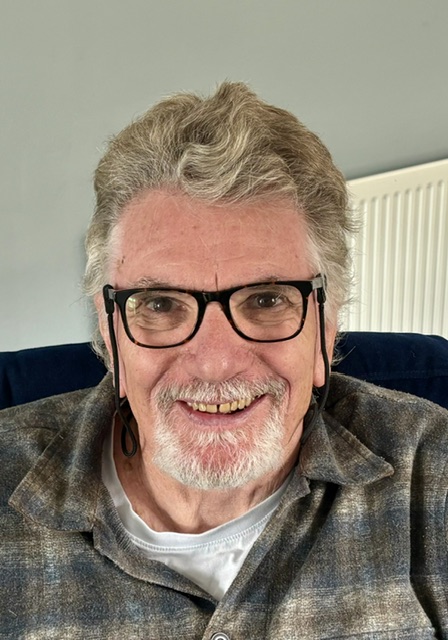
 About the Author: About the Author:
I am Tim Shanks, 75 years old, and have been active with the Association for Stammerers and the British Stammering Association (now called Stamma). I was the Editor of the magazine Speaking Out (1988-1993) and Fundraiser (1993 – 2000). I am now a regular Your Voice contributor for Stamma. In 1972 I left college with a degree but was completely handicapped by my fear of stammering. I stumbled into a procession of dead-end jobs and failed relationships. In 1987 I discovered the Association for Stammerers (AFS) and they changed my life. I am now retired and have two children. The AFS had a profound effect on me and my understanding of stammering, introducing me to the Speech Foundation of America and the works of Wendell Johnson, Charles Van Riper and Joseph Sheehan. After 2000 several years of psychodynamic psychotherapy had importantly helped me to accept myself and understand my avoidance of stammering. See me demonstrating my avoidance and attempting open stammering here. Also, if you’d like to read my stammering biography, To Stammer Or Not To Stammer – Between A Rock And A Hard Place, email me at shanksfamily@sky.com and I’ll be happy to send you a free digital copy. |
‘Give me the child until he is seven and I will give you the man’. I am a self taught avoider of stammering. I probably started when I was four. I suspect I have always had a severe stammer, which was doubly important not to disclose, rather than a mild one. The intermittency of my stammer seduced me into thinking I should be able not to stammer all the time. I could not accept the more positive message of accepting my stammer when I occasionally heard it.
Nothing has enabled me to overcome my avoidance in over 70 years. (That must have been a hell of a strong message not to stammer!) Not the stammer more fluently approaches of Van Riper and Sheehan, nor several different shades of psychotherapy, or the promises of pride. I knew Van Riper was not for me when he said I should block for a whole minute rather than avoid. I knew that was never going to happen.
I thought Sheehan was promising a cure when he said with no avoidance and all approach there would be no stammering. I did not understand how he reconciled this with his recognition of a neuro-physiological cause, and I lost a bit of faith in my favourite guru. I still thought he talked a lot of sense psychologically though about ‘the giant in chains’ and defence mechanisms which I thought could apply to me. Vivian Sisskin informed me recently that Sheehan neither valued or promoted fluency – which was definitely not what I understood at the time.
I would now never try the currently available ‘speak more fluently’ approaches of stammerers and non professional speech and language therapists David McGuire and Lee Lovett. Both developed different therapies that worked for themselves and that they then promoted to others. Both tended to demonise stammering. McGuire saw stammering as an enemy or opponent to be defeated. Lovett saw his own stammering as “verbal leprosy” to be stopped. I presume that people who want to eliminate their stammer in these ways cannot see any positives in it?
I have personal sympathy for the desire to keep stammering in the shade and be fluent, as exemplified by McGuire and Lovett. However I cannot intellectually agree with McGuire’s premise that stammering is caused by fear or his explanations of the functioning of the diaphragm, or his illogical combination of the avoidance reduction therapy of Joseph Sheehan with a breathing technique. Likewise I cannot agree with Lovett’s view that stammering is all in the mind. Nevertheless I cannot argue with the fact that many stammerers are very happy with the fluency they achieve with their methods.
I welcome the arrival in the 21st century of stammering affirming therapy. The best example I know of is the open stammering of Vivian Sisskin. She comes to praise stammering – not to bury it! It is a shade of therapy I theoretically approve of. I hope more individuals adopt this approach and help overcome the fluentist aspects of society. Let’s bring stammering and therapy out of the dark ages into the enlightenment, where there is no more guilt, shame, fear and avoidance.
I do not yet see much open stammering in society. Quite a few well-known faces who say they have stammered, or do stammer though i.e. Joe Biden. My personal favourite open severe stammerer was UK TV personality and writer Patrick Campbell in the 1960s with his self-declared “attractive impediment”.
Affirming stammering has flowered in the diversity movement of the 21st century. Some speech and language therapists are having to re-evaluate stammering as a disorder in this current climate. It is advocated by Stamma in the UK in its vision of society embracing stammering. It is practised by more and more individuals around the world choosing stammering pride.
However I am not able to practise what I preach and keep my stammering in the shade because of my deep shame and fear. All my attempts at fluency (apart from avoidance!) have failed. More recently acceptance, despite extensive psychotherapy, has generally failed too. I have come to accept that avoidance is the best shade of therapy for my own particular psychological make up – insecure, anxious, and depressed. I can only let it out in my own company and feel a tremendous relief. Not for me the joy of fluency when talking to myself – but the joy of stammering!
I only recently realised I only speak when I can be fluent. The massive cost of this fluency is not saying what I wanted to say, because I would stammer. I have also only recently realised that authentic stammered communication could be a better option.. Being taught affirmation at a young age would have made me a better communicator. My desire to communicate is still alive in my desire to write which gives me great joy. I especially like witty poetry – I have developed a sense of humour out of my self-inflicted verbal and emotional adversity.
However as a chronic avoider of stammering it is not surprising that I am a reluctant participant in the current identification of stammering as a neurodiversity. I find it hard to accept that my speech is not faulty and does not need fixing. To me, it is faulty and I have failed to fix it.
I recognise that I do talk differently when stammering and that is not the norm. It takes me about 50% longer to say anything. Why do I and most of society have such a big problem with that difference? Patience and a toleration of diversity would dissolve the issue.
I personally cannot see any direct benefit to stammering. There may be some indirect benefits – but they do not outweigh the costs. I would not choose to stammer. If it was easy to change I would.
I was born with a stammer. It is sad that I have not been able to develop an emotional capacity to accept my stammer. No-one encouraged me to accept my stammer – only to speak or stammer more fluently! All my attempts at avoidance-based fluency have come with great costs. I am sure it will be easier for anyone born tomorrow with a stammer to accept it within a more accepting society and not need to spend so much time and effort trying to be fluent. Power to the people who openly stammer in the future!

Hello Tim,
Thank for this wonderful paper. I really admire your openness and honesty, such as when writing about shame and fear. Those are very powerful emotions, and the longer they have a hold of us the more challenging it is to free ourselves from them. It’s really not easy, and this is all the more reason for thanking you for writing.
Be well.
Hanan
I did reply but it seems to have disappeared! Thank you for your kind words. I do like being honest – perhaps because I have not been able to be open and ‘honest’ about my stammer.
Tim, thank you for sharing your story so honestly. I really appreciated the complexity you explored, and what you shared about your hopes for the next generation. Based on everything you’ve experienced, is there anything you especially wish speech-language therapists knew–or did differently–when supporting people who stammer?
No – not really! I think specialists generally do a good job. I think a person-centred approach and a recognition of psychological factors are important. Also clarity and a good understanding of semantics and logic. What does acceptance and it is OK to stammer really mean to a slt. I do expect the therapist to be the expert in terms of knowledge and experience. As a friend of mine once said a pws is only an expert about their own stammer.
Hello Tim, thank you so much for sharing your story. One part that stood out to me was that the fear of stammering can impact your communication greater then the stammer itself. This also gave a great insight on how treatment and strategies is not a one size fits all approach. Treatment should be geared towards personal goals and experiences rather than an approach that has no impact on your personal life. I am a graduate student learning about fluency and I appreciate your perspective and identifying that acceptance isn’t a switch that can be flipped, but something that takes ime and strength to work through. I appreciate you sharing your honest emotions about your stammer and how you have gone through a winding road to find techniques that fit just right for you.
Glad you liked!
Thank you, Tim, for sharing your experience with stuttering and for being so genuine, honest, and open about the day-to-day reality of your voice. The phrase that really stuck with me is, “All my attempts at fluency based on avoidance have come at a high cost.” Thank you for sharing it—I’ll be thinking about it for a long time!
Alexandra, from Bolivia!
I am very pleased to have reached all the way to Bolivia! I hope you are more successful with non-avoidance than me. It can be tough -good luck.
Hi Tim,
Thanks for sharing your thoughts and experiences. I too avoided speaking and intentionally tried to hide that I stutter, due to deep shame and societal stigma. I missed out on so much while I was deeply covert – friends, dating and career aspirations.
I applaud you for being direct about your views on non traditional fluency approaches. Therapy didn’t work for me, in the 9 months I tried as an adult. The practice I was involved in only attempted fluency shaping techniques and that’s not what I needed or wanted after 35+ years of trying to hide stuttering.
Fluency shaping techniques just seemed like an official way to be covert.
Minus all authenticity.
I’m also wary of any programs that promise fluency or charge exorbitant fees. And is delivered by individuals with no formal education or training.
At almost 65, I’m neither firmly in the fluency or acceptance camp. I’m just finally comfortable in my own skin and I deeply regret that it took me so long to get here.
Pam
Hello Pam – lovely to hear from you. Did you never want to try any stammer more fluently approaches like Sheehan and Van Riper? What does your stammering skin look like now? Are you happy with whatever happens in the moment – fluency, avoidance, stuttering – as long as you are being yourself and doing what you want do? Forgiveness could help to counteract your regrets?
Have a good year. Tim