
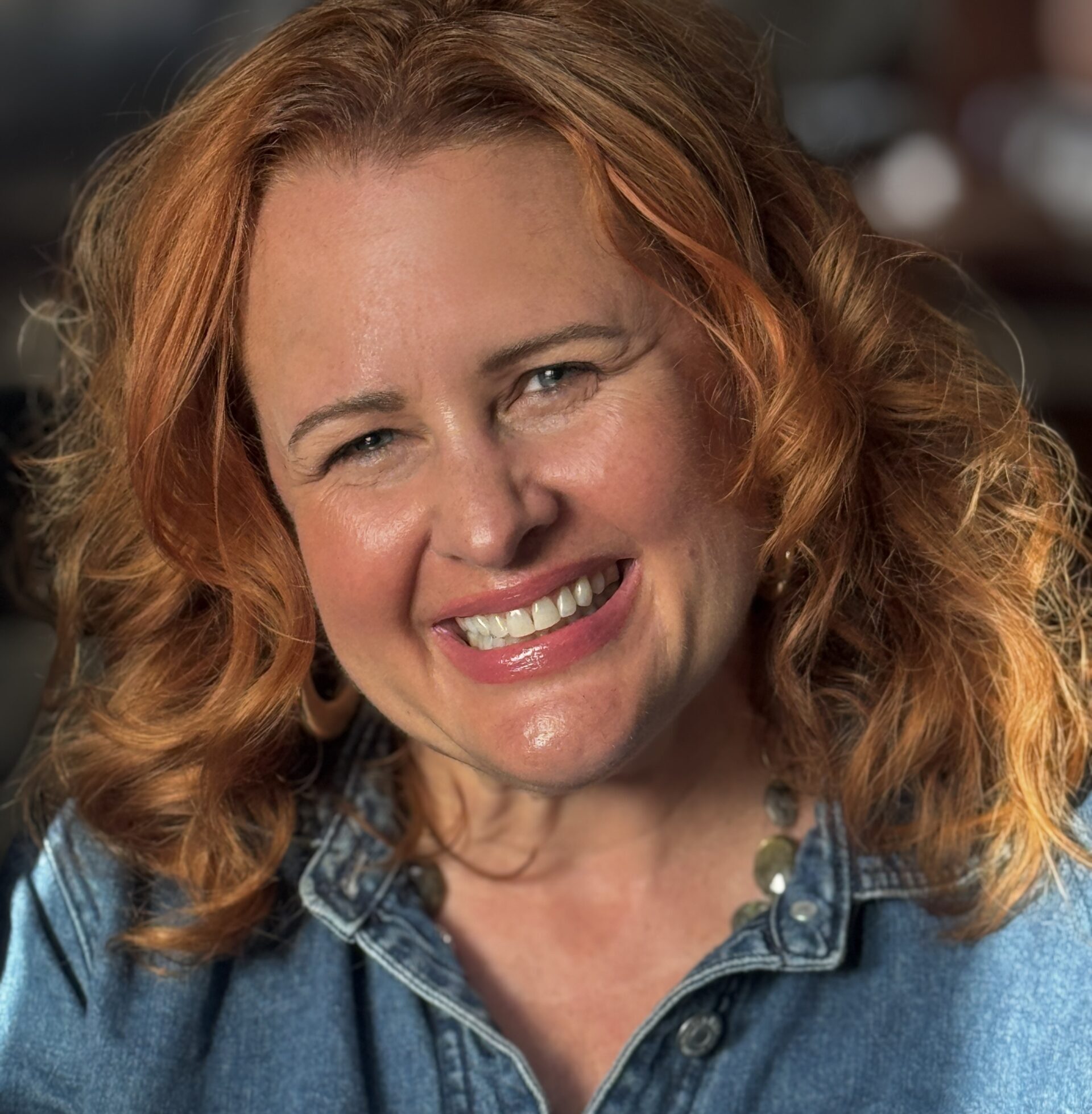
 About the Author: About the Author:
Jennifer Dickinson is a widely published short story writer, book coach, and teacher living in Los Angeles. She has loved writing since she was seven years old, when a typewriter from her mother unveiled a world overflowing with characters and stories. Inspired by her own childhood experiences, including a severe stutter, she creates memorable, relatable characters who foster empathy and help young readers better understand people different from themselves. She attended Hollins University, a women’s college in Virginia, where she developed her passion for storytelling and fell in love with the power of theater. She lives with her TV writer husband, Andy Reaser, and their two dogs, Hattie and Mabel. She spends her days writing stories and helping others discover how to tell their own. Find out more about her at jenniferdickinsonwrites.com |
“J-j-jennifer, w-w-why do you t-t-talk l-l-llike that?”
As a little girl, I dreamt of burrowing beneath the teacher’s desk, making myself miniscule, until I become one with the concrete floor. I had a severe stutter and spent my days dodging insults. Being vulnerable was out of the question at the elite private schools I attended, it would’ve been the same as putting a mark on my heart and yelling: “Aim the arrow here!”
Thanks to the encouragement of my mother, I escaped into my writing: stories, a journal, and eventually the theater where I discovered when I acted and played another person I didn’t stutter as much, but most importantly, when I did, I wasn’t judged or ridiculed. The people in the theater encouraged me and I felt at home.
But being in a creative writing class setting meant there was always the danger of being asked to share my stories aloud. For this reason, I resisted sharing my writing in college, even though the creative writing department had one of the best programs in the country. I finally worked up the nerve to take a class my junior year. When it became apparent that I had a stutter, my teacher hugged me and said: “Your stutter is your wound. Write from it.” But the memories of being teased wouldn’t go away. I was scared and embarrassed.
Then, in the fall of 2015 I attended a women’s writing residency in the woods outside of Montreal, Canada. Supported by a group of other female writers in a cozy cabin, I finally wrote about my wound. And the women loved it, telling me that they felt seen by my story.
Those early pages in 2015 became the foundation for my first middle grade novel, “Maggie’s Big Break” which was published by Includas Publishing in April 2026. The story centers around an eleven-year-old girl named Maggie Pierson who has a severe stutter. Maggie’s life and confidence is transformed when she gets the lead in the play at her new middle school.
During the writing of the novel, I had to revisit painful memories to make Maggie’s story as authentic as possible and this led to forgiveness and a sense of spaciousness for the people in my life who had bullied me. By writing about empathy in my story, I grew more empathetic.
Similar to my experience in Montreal, when Maggie is supported and encouraged by the girls in the play she feels she can continue to go for other goals in her life besides just acting. She feels nourished, enriched, and seen. Writing from my wound in “Maggie’s Big Break” was the KEY to unlocking my confidence.
As a stutterer I tried to blend into the background as a little girl, not wanting to be seen. But then I discovered Madonna. And theater. And writing. I wanted people to hear my voice, literally and figuratively. Now I believe my voice has power, no matter how many times I may repeat a syllable or block on a word. When I stand up in front of a group of kids and read portions of my novel, I always strive for my words to connect and create love and acceptance.
My wound gave me power. My wound gave me my voice, my shade.

Wow, Jennifer, what a powerful story! I myself found writing to be my way of communication for so long, as I could express my written thoughts fluently!
I’m a little torn about how I feel about stuttering being described as a wound. When I think of wound, I think injury, and I don’t personally feel as though I’ve been injured because I stutter. Do you think you were actually wounded by stuttering? Or by the negative reactions you had to cope with as a kid?
Also I’m super interested in your middle school age novel. I work with the NSA and we’ve been collecting book titles for kids and adults. I hope it’s super successful and that you get good feedback from readers!
Pam
Pam, thank you so much for this thoughtful response! And great question–yes I think when I say “wound” I’m reflecting on how terrible it felt to be bullied as a little girl. I’m glad you love writing, too! It’s been so healing and fun for me to do throughout my life. My novel, “Maggie’s Big Break” is avail now on Amazon, Bookshop.org, etc! I’ve been on the east coast in the past few weeks reading from the book to kids and they’re really connecting with the story, which has been incredible.
Hello Jennifer!
I also live in Los Angeles (Pasadena) but lived in Montreal for three separate stints and that city has been the home of two momentous (and good) changes in my life: (a) finally confronting my stuttering head-on and (b) the start of my career.
I am a Board Member of the Canadian Stuttering Association and the text of my keynote at our recent conference is also on this site.
And would love to connect with you in person !!
Catherine
I’d love to connect in person! Funnily enough I’m in Montreal right now on vacation. Such a great city. Could you reach out to me through my website in my bio.
Hi Jennifer, thank you for sharing your story! I resonated with the way you communicated the negative feelings and reactions you experienced as a “wound”. I think that connecting your emotions to something concrete makes it feel tangible and less intimidating. With a physical wound, we can clean it, heal it, and try again, and I think that is a powerful metaphor.
I was excited to read that you wrote a book! I will be checking it out, and I hope that it continues to reach all of the students that need to hear it.
Morgan
Jennifer, thank you for opening up and sharing your journey. It’s truly inspiring to see how pain and trauma can be transformed into a perspective that empowers your future. Huge congratulations on publishing your book! I know “Maggie’s Big Break” will make so many readers feel seen and less alone.
Best Regards,
Maggie