
 About the Author: About the Author:
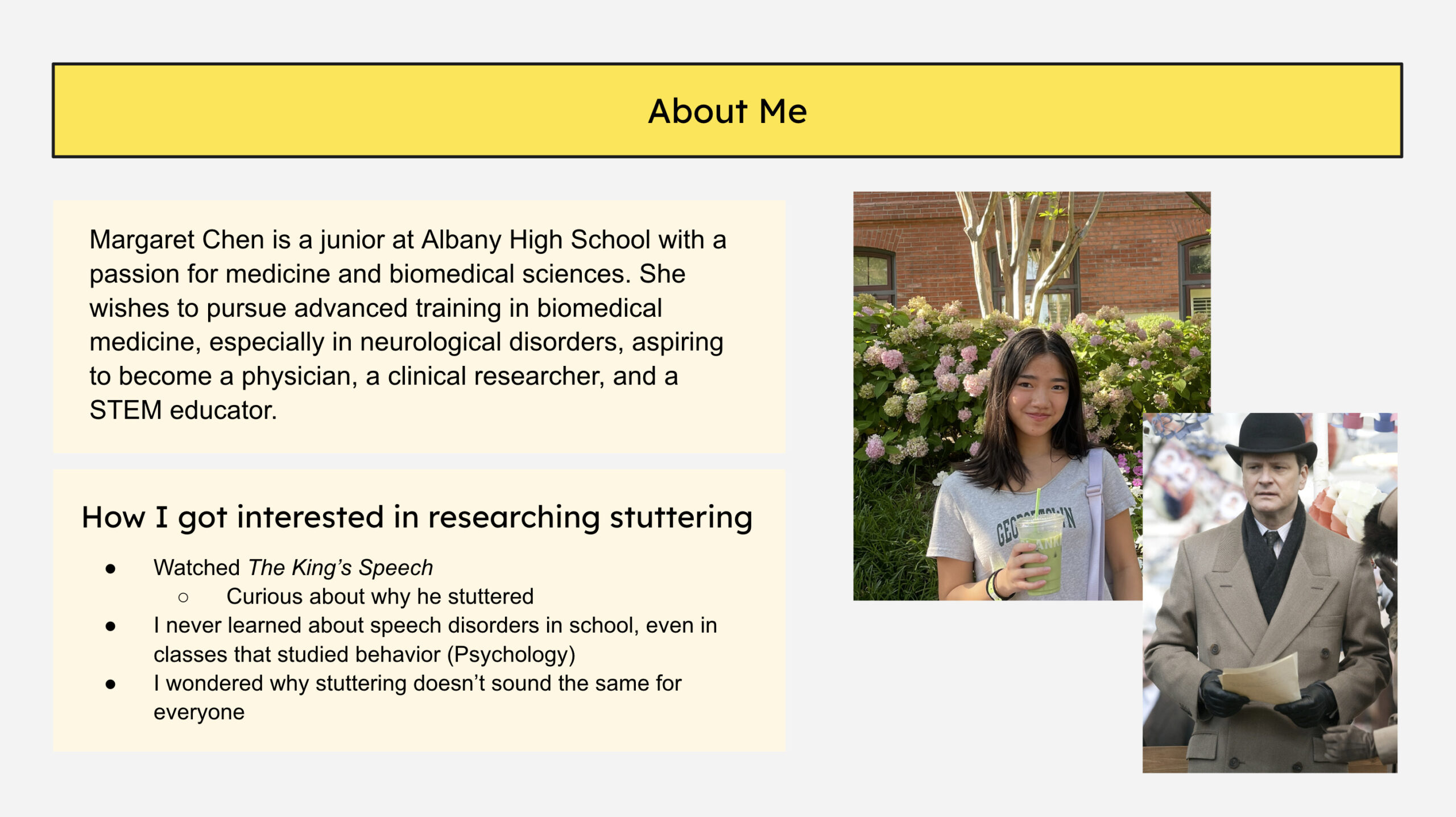
Margaret (Maggie) Chen is a junior at Albany High School in California with a strong interest in medicine, neuroscience, and biomedical research. After watching The King’s Speech, she was curious to learn more about the neurological basis of stuttering. This led her to develop a research project where she conducted an extensive literature review, with guidance from Dr. Ioannis Delis at the University of Leeds, exploring the brain regions connected to stuttering along with its treatments. Through her work, she has developed a deep appreciation for the myriad of “shades” stuttering comes in. Beyond research, Maggie values STEM education and community health outreach. She has served as a teaching assistant for a Human Physiology course at UC Berkeley’s Academic Talent Development Program and is involved in student organizations at school focused on health and service. She aspires to become a physician, clinical researcher, and educator in STEM. |
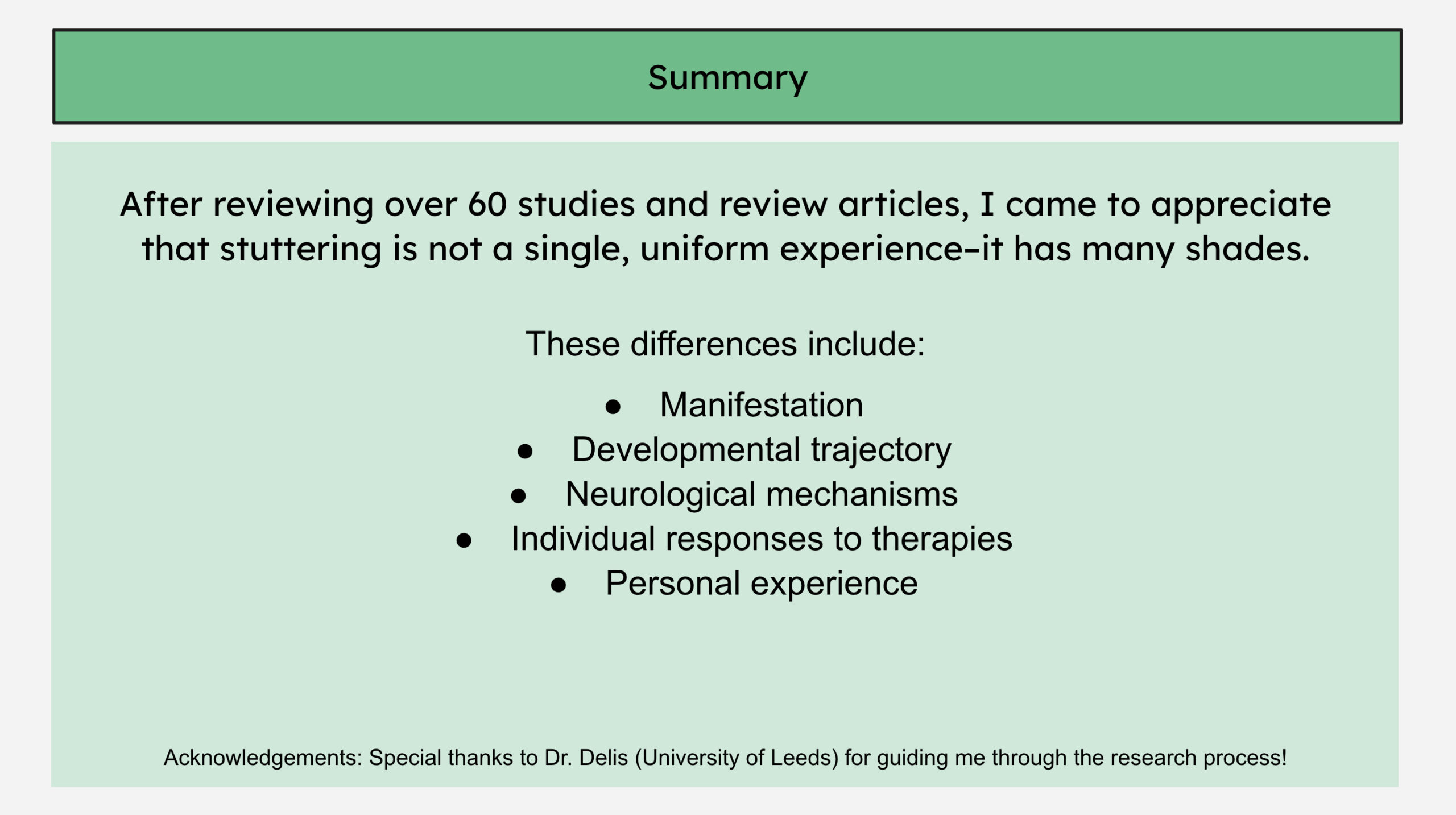
After reviewing more than 60 studies and review articles, I learned that there is no single “shade” of stuttering. Stuttering varies by the sound, development, neurological underpinnings, treatments, and personal experiences. Inspired by the theme, “Shades of Stuttering — What’s Yours?”, this presentation explores the diversity of stuttering.
Works Cited
Slide 2:
First image: Personal photo of Margaret Chen.
Second image:
Lancashire County Council (2009). Colin Firth and Helena Bonham Carter filming The King’s Speech at Queen Street Mill Textile Museum. [Photograph]. Flickr: Filming Colin and Helena.
https://upload.wikimedia.org/wikipedia/commons/6/63/Colin_Firth_and_Helena_Bonham_Carter_filming_%28cropped%29.jpg?utm_source=commons.wikimedia.org&utm_campaign=index&utm_content=original. Licensed under CC BY 2.0. Cropped from original.
Slide 3:
Information:
Neef, N. E.; Chang, S.-E. Knowns and Unknowns about the Neurobiology of Stuttering. PLoS Biol 2024, 22 (2), e3002492. https://doi.org/10.1371/journal.pbio.3002492.
First image:
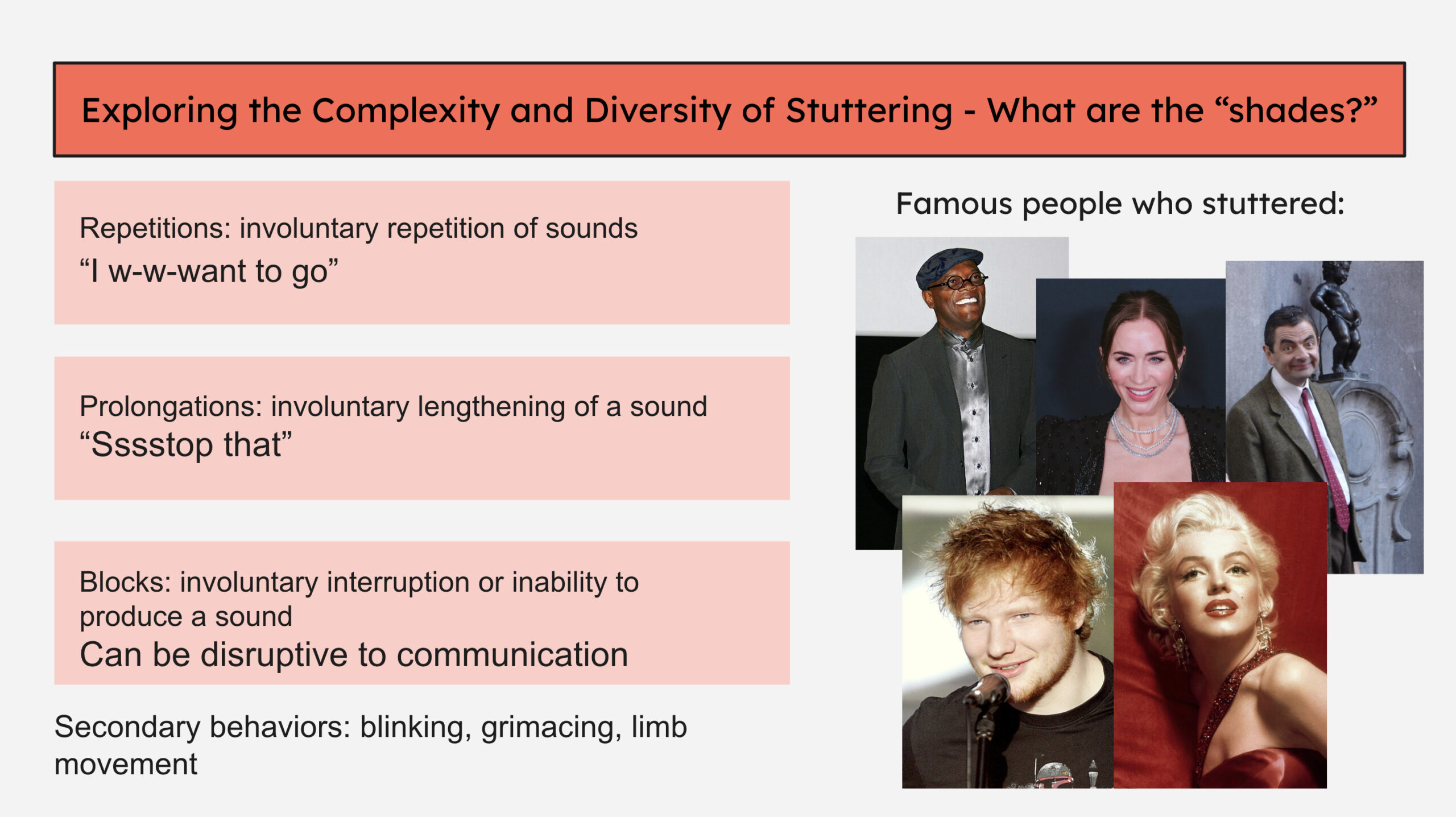
Caro, T. (2008). Samuel L. Jackson à l’avant-première de Cleaner diffusée à l’UGC Ciné Cité Les Halles, à Paris [Photograph]. https://upload.wikimedia.org/wikipedia/commons/c/ce/Samuel-L.-Jackson-Cleaner-2.JPG?utm_source=commons.wikimedia.org&utm_campaign=index&utm_content=original. Licensed under CC BY-SA 3.0
Second image:
Paul, K. (2026). Emily Blunt at the WWD Style Awards 2026 [Photograph]. https://upload.wikimedia.org/wikipedia/commons/b/b2/Emily_Blunt_at_WWD_Style_Awards_2026.jpg?utm_source=commons.wikimedia.org&utm_campaign=index&utm_content=original. Licensed under CC BY 4.0
Third image:
Antonio, Z. (2007). Rowan Atkinson and Manneken Pis in Brussels [Photograph]. https://upload.wikimedia.org/wikipedia/commons/6/6f/Rowan_Atkinson_and_Manneken_Pis.jpg?utm_source=commons.wikimedia.org&utm_campaign=index&utm_content=original. Licensed under CC BY 2.0.
Fourth image:
Rinaldi, E. (2013). Ed Sheeran [Photograph]. https://upload.wikimedia.org/wikipedia/commons/c/c1/Ed_Sheeran_%28cropped%29.jpg?utm_source=commons.wikimedia.org&utm_campaign=index&utm_content=original. Licensed under CC BY-SA 2.0.
Fifth image:
Shaw, S. (1953). A glamorous Marilyn Monroe in a red dress, taken for publicity purposes for 1953 film How to Marry a Millionaire. [Photograph]. Doctor Macro.
https://upload.wikimedia.org/wikipedia/commons/2/2a/Marilyn_Monroe_in_How_to_Marry_a_Millionaire.jpg?utm_source=commons.wikimedia.org&utm_campaign=index&utm_content=original. Public domain in the United States.
Slide 4:
Information:
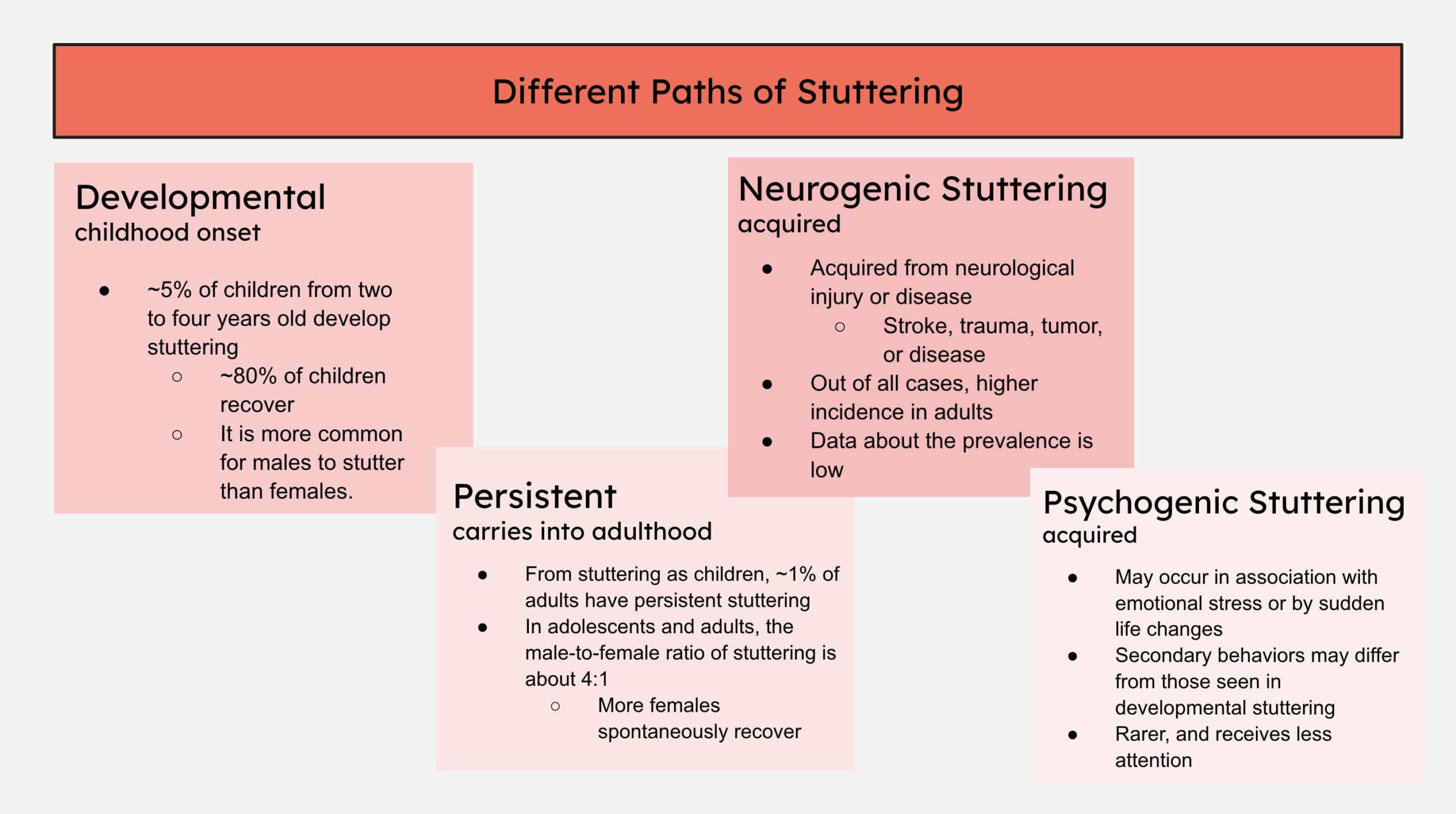
Ehud, Y.; Ambrose, N. G. Early Childhood Stuttering; Pro-Ed, 2005.
Smith, A.; Weber, C. How Stuttering Develops: The Multifactorial Dynamic Pathways Theory. J Speech Lang Hear Res 2017, 60 (9), 2483–2505. https://doi.org/10.1044/2017_JSLHR-S-16-0343.
Lundgren, K., Helm-Estabrooks, N., & Klein, R. (2010). Stuttering Following Acquired Brain Damage: A Review of the Literature. Journal of neurolinguistics, 23(5), 447–454. https://doi.org/10.1016/j.jneuroling.2009.08.008
Junuzovic-Zunic, L., Sinanovic, O., & Majic, B. (2021). Neurogenic Stuttering: Etiology, Symptomatology, and Treatment. Medical archives (Sarajevo, Bosnia and Herzegovina), 75(6), 456–461. https://doi.org/10.5455/medarh.2021.75.456-461
Slide 5:
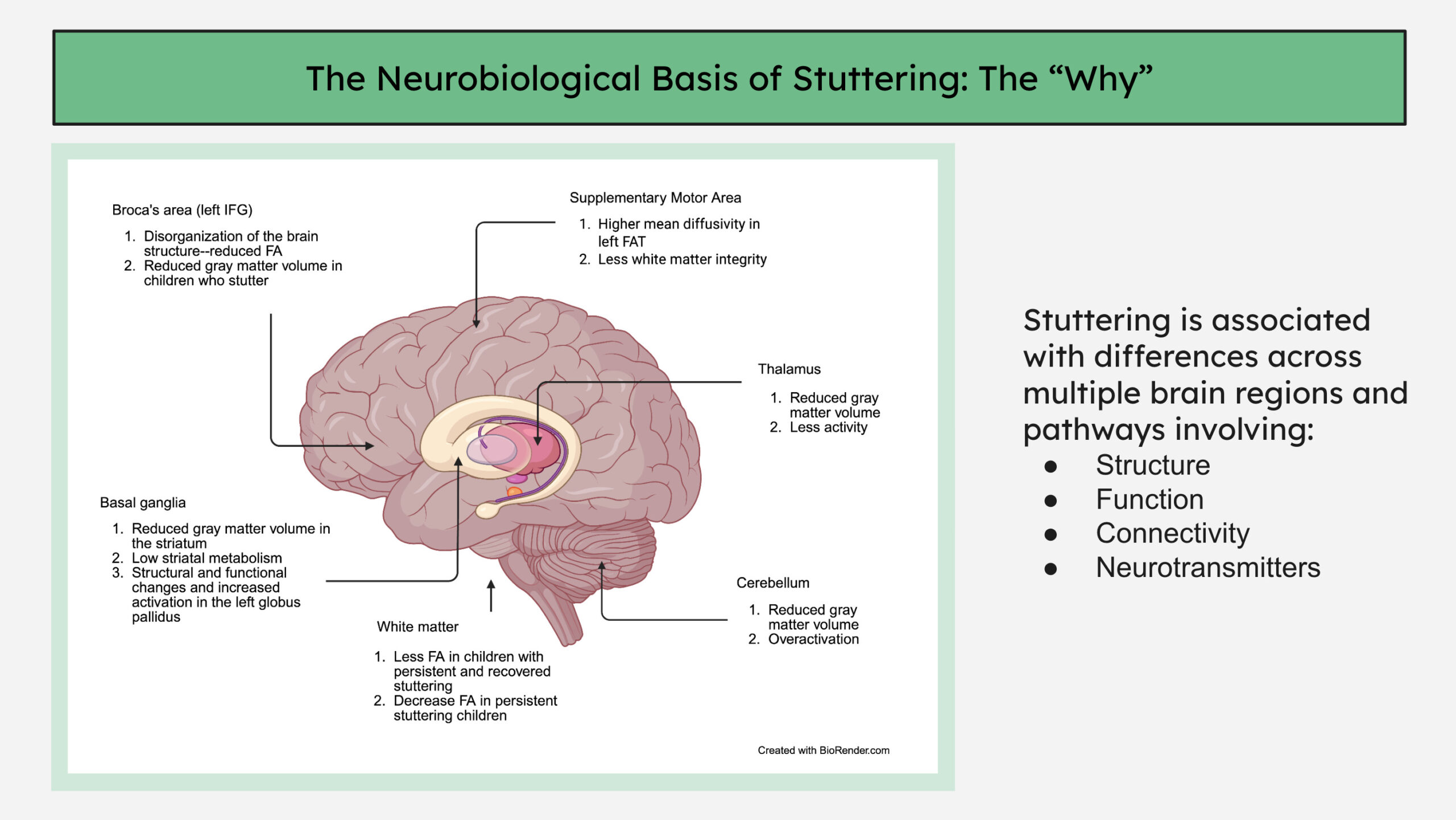
Information:
Beal, D. S.; Lerch, J. P.; Cameron, B.; Henderson, R.; Gracco, V. L.; De Nil, L. F. The Trajectory of Gray Matter Development in Broca’s Area Is Abnormal in People Who Stutter. Front. Hum. Neurosci. 2015, 9. https://doi.org/10.3389/fnhum.2015.00089.
Alm, P. A. Stuttering and the Basal Ganglia Circuits: A Critical Review of Possible Relations. Journal of Communication Disorders 2004, 37 (4), 325–369. https://doi.org/10.1016/j.jcomdis.2004.03.001.
Hertrich, I.; Dietrich, S.; Ackermann, H. The Role of the Supplementary Motor Area for Speech and Language Processing. Neuroscience & Biobehavioral Reviews 2016, 68, 602–610. https://doi.org/10.1016/j.neubiorev.2016.06.030.
Alario, F.-X.; Chainay, H.; Lehericy, S.; Cohen, L. The Role of the Supplementary Motor Area (SMA) in Word Production. Brain Research 2006, 1076 (1), 129–143. https://doi.org/10.1016/j.brainres.2005.11.104.
Johnson, M. D.; Ojemann, G. A. The Role of the Human Thalamus in Language and Memory: Evidence from Electrophysiological Studies. Brain and Cognition 2000, 42 (2), 218–230. https://doi.org/10.1006/brcg.1999.1101.
Chow, H. M.; Chang, S. White Matter Developmental Trajectories Associated with Persistence and Recovery of Childhood Stuttering. Human Brain Mapping 2017, 38 (7), 3345–3359. https://doi.org/10.1002/hbm.23590.
Ackermann, H.; Mathiak, K.; Riecker, A. The Contribution of the Cerebellum to Speech Production and Speech Perception: Clinical and Functional Imaging Data. Cerebellum 2007, 6 (3), 202–213. https://doi.org/10.1080/14734220701266742.
Figure:
Created in BioRender. Chen, M. (2026) https://BioRender.com/hip0ila
Slide 6:
Information:
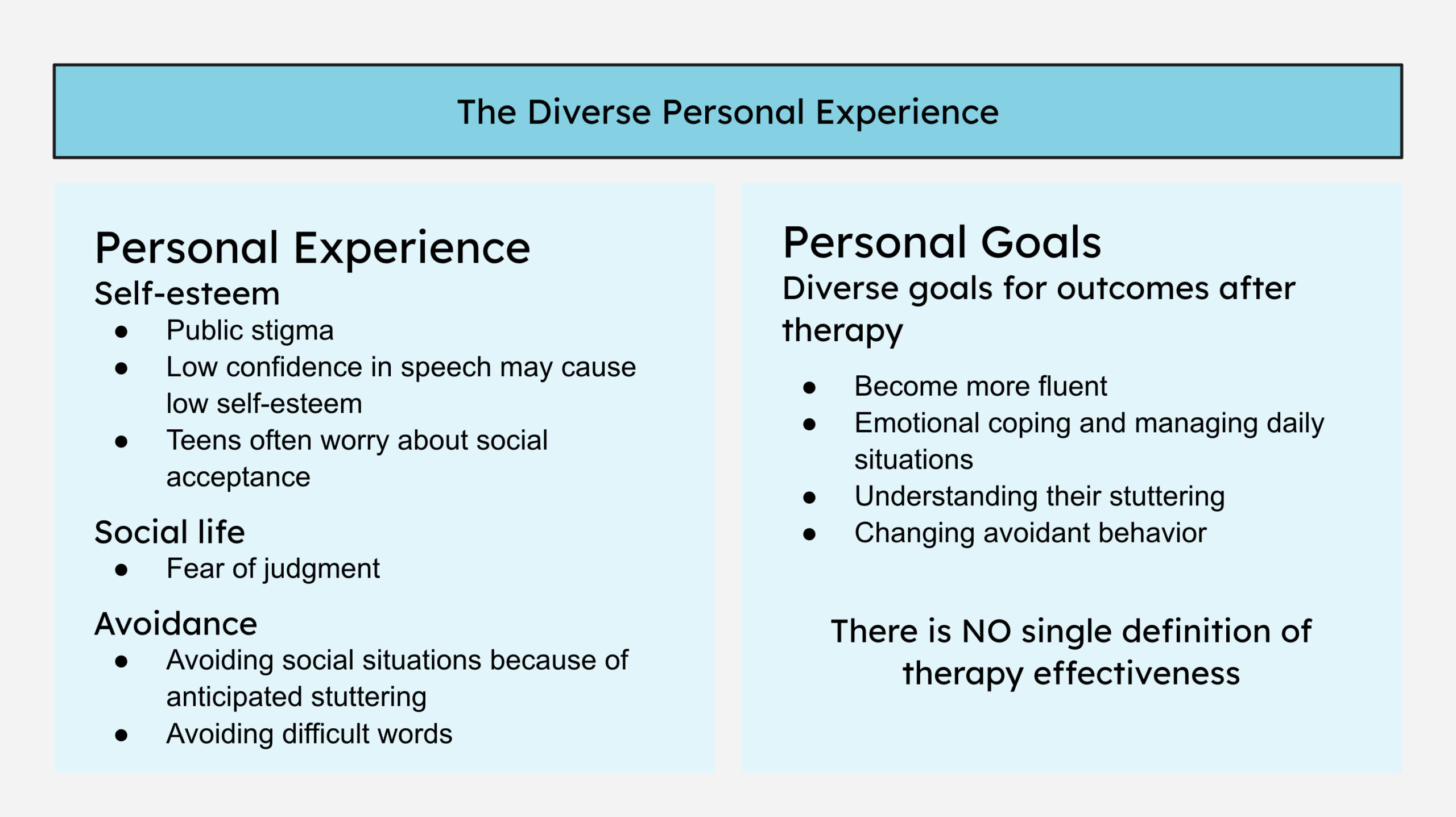
Blomgren, M. Behavioral Treatments for Children and Adults Who Stutter: A Review. PRBM 2013, 9. https://doi.org/10.2147/PRBM.S31450.
Sønsterud, H.; Halvorsen, M. S.; Feragen, K. B.; Kirmess, M.; Ward, D. What Works for Whom? Multidimensional Individualized Stuttering Therapy (MIST). Journal of Communication Disorders 2020, 88, 106052. https://doi.org/10.1016/j.jcomdis.2020.106052.
Slide 7:
Information:
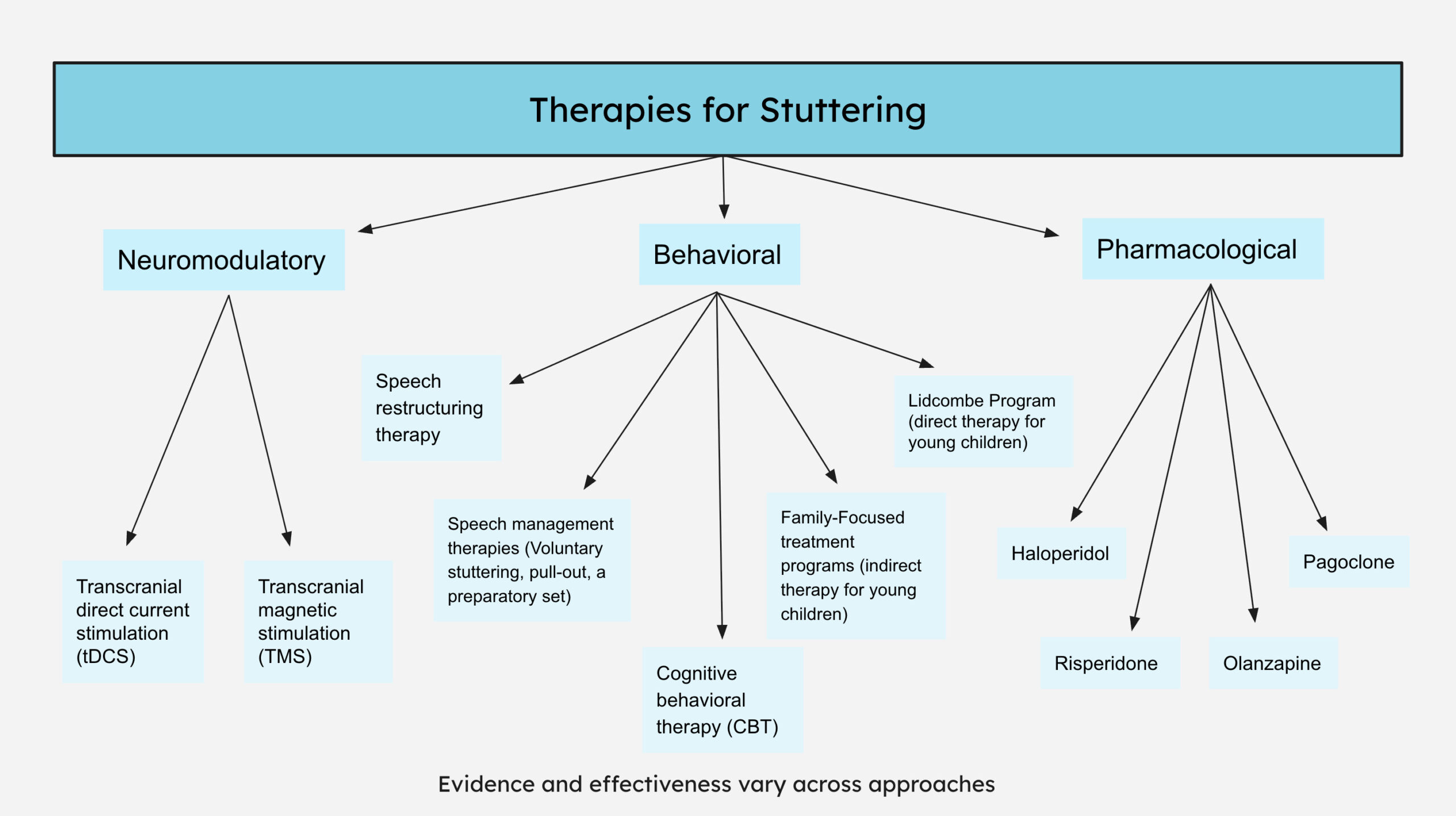
Bakhtiar, M.; Yeung, T. W. Y.; Choi, A. The Application of Neuronavigated rTMS of the Supplementary Motor Area and Rhythmic Speech Training for Stuttering Intervention. Intl J Lang & Comm Disor 2024, 59 (5), 1893–1905. https://doi.org/10.1111/1460-6984.13039.
Yada, Y.; Tomisato, S.; Hashimoto, R. Online Cathodal Transcranial Direct Current Stimulation to the Right Homologue of Broca’s Area Improves Speech Fluency in People Who Stutter. Psychiatry Clin Neurosci 2019, 73 (2), 63–69. https://doi.org/10.1111/pcn.12796.
Blomgren, M. Behavioral Treatments for Children and Adults Who Stutter: A Review. PRBM 2013, 9. https://doi.org/10.2147/PRBM.S31450.
Guitar, B. Stuttering: An Integrated Approach to Its Nature and Treatment, 5th ed.; Wolters Kluwer Health, 2019.
Menzies, R. G.; Onslow, M.; Packman, A.; O’Brien, S. Cognitive Behavior Therapy for Adults Who Stutter: A Tutorial for Speech-Language Pathologists. Journal of Fluency Disorders 2009, 34 (3), 187–200. https://doi.org/10.1016/j.jfludis.2009.09.002.
Yaruss, J. S.; Coleman, C.; Hammer, D. Treating Preschool Children Who Stutter: Description and Preliminary Evaluation of a Family-Focused Treatment Approach. LSHSS 2006, 37 (2), 118–136. https://doi.org/10.1044/0161-1461(2006/014).
Andrews, G.; Dozsa, M. Haloperidol and the Treatment of Stuttering. Journal of Fluency Disorders 1977, 2 (3), 217–224. https://doi.org/10.1016/0094-730X(77)90025-0.
Maguire, G. A.; Riley, G. D.; Yu, B. P. A Neurological Basis of Stuttering? The Lancet Neurology 2002, 1 (7), 407. https://doi.org/10.1016/S1474-4422(02)00217-X.
Maguire, G. A.; Nguyen, D. L.; Simonson, K. C.; Kurz, T. L. The Pharmacologic Treatment of Stuttering and Its Neuropharmacologic Basis. Front. Neurosci. 2020, 14, 158. https://doi.org/10.3389/fnins.2020.00158.

A great read Maggie and so good to see such passion and interest in someone young and upcoming! Your future is so bright, that you should be wearing shades! Also great to see that you did not simply ask GenAI for a presentation (like so many do now). Great to see you doing research!
Thank you Maggie for putting this together and choosing to participate in the ISAD conference. We need more young voices to get involved in the stuttering community – either to share lived experiences, or do research or enter into the field OR all three.
I live in Albany, NY and we too have an Albany High School.
Keep spreading the word and help the world better understand stuttering.
Pam
Thank you for sharing, Maggie! I was wondering whether you’ve ever encountered someone who stutters? How do you feel you would react in that scenario, now that you’ve educated yourself?