
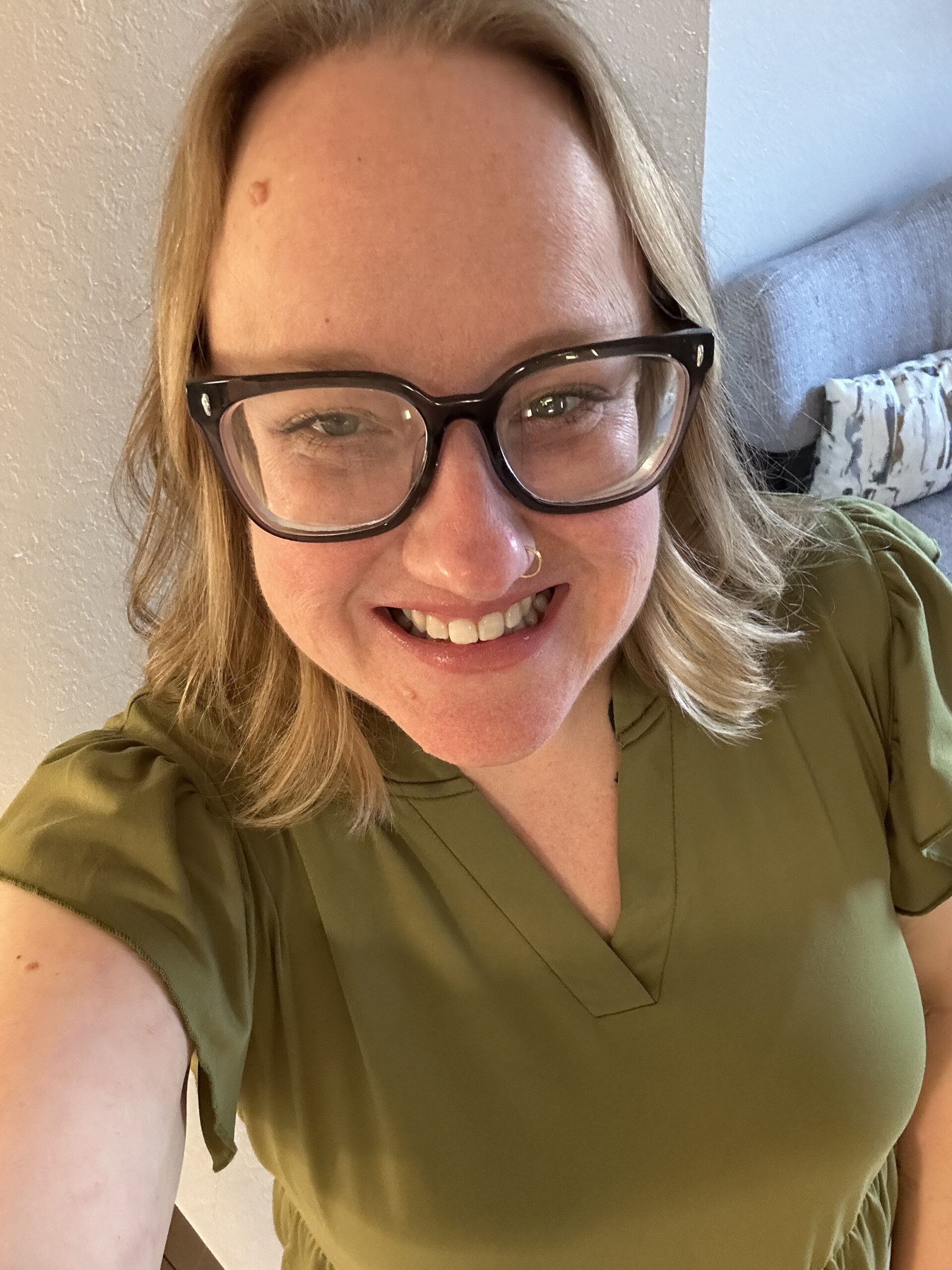
 About the Author: Steff Lebsack is a wife, mother and Speech-Language Pathologist. She is also someone that lives with chronic lung disease. Steff is a speech-language pathologist with Crandall Independent School District in Texas, United States, and a fourth-year PhD student at Idaho State University. Steff is currently researching child agency as displayed in caregiver interactions with children who stutter (CWS). Steff is delighted to be a participant in this year’s ISAD Online Conference. |
The Neurogenic Shade of Stuttering: Steff Lebsack’s Story of Covert Stuttering
This video submission is Steff Lebsack’s story of neurogenic stuttering and why she briefly went silent.

I’m so grateful that you made a video to allow us to hear your voice, Steff! Thank you for sharing these insights about neurogenic stuttering and your unique take on the experience.
Thank you so much for watching it!
Wow, Steff, thanks so much for sharing this. I definitely was unaware of the extent and particulars of your journey with brain injury and resultant stuttering.
Covert stuttering in all its shades is still largely misunderstood (I think) among both stutterers and professionals in the field. I was covert for more than 35 years and I am still recovering from the trauma of hiding. I also endured what I now consider also traumatic experiences and reactions with fellow persons who stutter, who clearly did not understand that one can choose to hide. I’ll never forget my first experience at a stuttering support group, after finally getting there after chickening out twice. A woman asked me why was I there since I didn’t stutter. I didn’t stutter openly because I was afraid and still deeply in hiding.
She asked me more than once, publicly, in the group setting. I felt so embarrassed and unwelcome. I was yelling at myself internally to not cry in front of them. I was also chastising myself for going – clearly recalling the thought of, “See, I told you so. You don’t belong here either.”
The shades of stuttering are not black and white, huh?
Thanks again for sharing with us an easily missed shade of stuttering.
Pam
Thank you for sharing your story as well, and for listening and watching my video. Wow, knowing you now- that moment was probably so hard and I couldn’t imagine going through that! Trying to mask is so valid in this case and I bet you had to do a whole lot of inner work to even be ok to speak in a support group- let alone do what you are doing now! Do you feel like that instance helped shape your international advocacy roles now?
Dear Steff
Thank you so for sharing your story and for educating us on this other shade of stuttering. Much appreciated.
Hanan
THank you for listening and watching my story- I appreciate you very much. Yes, the neurogenic shade doesn’t oftentimes get talked about so I am honored to have this space to share it.
Hi Steff,
Thank you so much for sharing your story! I am a graduate student in speech language pathology, and we are currently learning about all the different shades of stuttering in our coursework; however, your story really educated me about neurogenic stuttering and how it can develop and subside differently for different people. I also appreciate your perspective on observing your brother stutter throughout your life. If you feel comfortable sharing, I would love to hear if your perspective about stuttering changed at all after years of observing stuttering to then experiencing it for yourself? Thank you again for sharing your compelling and educational story!
Hello! Thank you so much for commenting and watching my story, I truly appreciate your time. My perspective did change some in switching from the sibling role to the experiencer role. The first person I stuttered in front of was a nurse during the hospital stay. Right away she told me, “I’ve had you before, you are faking it- that’s not how you talk.” I tried to educate her in-the-moment, and had difficulty telling her what I wanted to, so I typed it on my cell phone. She then said, “you can talk, I know you can talk” and they had a psychologist come to see me after that experience. I thought to myself, that this was just an inkling of what people who stutter may go through on a regular basis. It gave me a whole lot of perspective. Thank you for your question, and feel free to ask any others! I’m a pretty open book. Thanks, Steff Lebsack
Hi Steff! Thank you for sharing your story! I found your video to be very helpful and meaningful. I was curious to know what helped you feel most supported while your speech was changing, and what you wish the people around you had understood during that time?
Thank you so much for listening to my story! I think what helped me to feel the most supported while my speech was changing was already having friends in the stuttering community to reach out to and communicate with about the tough stuff. Stuttering is a very vulnerable experience, and while not all folks are ready to participate in support groups- I found one pretty quickly and it really was pivotal in my experiences. I really like your question about what do I wish people had known- I wish people had known that stuttering isn’t just the type that you have starting in childhood- stuttering can be acquired (sudden onset) and be caused by head injuries, medication side effects, and other things. When I first started to stutter, a nurse was the first person that I spoke to while I was in the hospital, and she immediately accused me of faking it by saying, “I have had you before, I know you- you didn’t talk like that- that’ts not real.” I tried in that moment to explain to her about it but she left the room before I could finish. So to answer your question, I wish more community helpers like nurses, doctors, and other folks that serve others in their profession- knew more about stuttering and types of stuttering. Thanks again for listening and for your time to post this!
Hi Steff! Thank you so much for sharing your story! I thought it was really interesting how your brother’s experience with stuttering initially inspired you to become an SLP, and then later in life you began to experience stuttering yourself. I was curious if your experience with stuttering changed the way you understood or related to your brother’s experiences. Did you find that you were able to connect with him on a different level or better understand some of the challenges? Thank you again for sharing your story!
Hello! Thank you so much for listening to my story and for taking the time to comment and ask questions- I really appreciate you! This is such a great question! I actually did find that I was able to connect with my brother more when I started to stutter. I remember the very first time I tried to speak and I was stuttering, and I had my first interaction with someone while I was stuttering. I remember the conversation and how it went, and thinking to myself (afterwards) “this is just an inkling of what people who stutter go through every single day”- it was really eye-opening. My stuttering led to some more in-depth conversations with my brother about our lived experiences, and really gave me even more empathy for my clients who stutter that I treat. Thanks again for your time and take care!
Hi Steff, I find it really interesting that stuttering can change throughout time and that each person’s experience can look different at different points in their life. I’m curious if your personal experience with stuttering has influenced your perspective as an SLP or how you approach working with clients who stutter? Thank you for sharing your story! I enjoyed listening.
Thank you so much for watching my story and for commenting and asking questions! I really appreciate you. My personal experience with stuttering absolutely has influenced my perspectives as a clinician that treats people who stutter. Even though stuttering is so personalized, I think having experienced stuttering myself I am able to have more empathy and understanding with what the person is going through and I understand some of the tougher times a bit more than I used to. I think that clinicians who do not stutter can be really good clinicians in treating stuttering- but for me personally, stuttering gave me even more perspective on what people who stutter are going through. I do also feel that it is important that even though I am an SLP that has a stuttering journey, I still recognize that the lived experiences of the clients that I treat are not mine so I will still never fully understand exactly what one person is going through. Thanks again for watching and for your time.
Hi Steff!
Your story is so inspiring and amazing to hear. You have such a unique perspective to stuttering and shared such powerful insight.
I would like to ask if you view stuttering any differently now that you experience it compared to years before you began stuttering?
Thank you so much for watching my story, and for your question- this is such a good question. Yes, my view on stuttering is different since I have now experienced stuttering myself. I think stuttering has now given me more insight into what my clients are going through, particularly with the tougher parts of stuttering like frustrations. Every person who stutters has a different lived experience but I do remember thinking to myself multiple times (when my stuttering was more prominent), “gosh this is hard”. I feel like I did try hard to validate the stories of my clients who stutter but now that I have stuttered myself, I can validate them even more having gone through it. There are times that are hard within the lived stuttering experience- and it’s ok to identify and name those hard times. Thanks again for your thoughtful question and insights and for your compliments, I appreciate you!
Hi Steff, it is nice to meet you! I appreciate you sharing your story and knowledge. As an SLP, who already had so much knowledge of the stuttering community because of your brother, did your perspective change, or your treatment approach change once you began stuttering? I appreciate your time.
Hello! Thank you so much for watching my story and for taking the time to comment and ask questions! My perspective did change once I started to stutter. I feel like I am able to better understand what people who stutter are going through- while also recognizing that their experiences are not my own. It’s helped me with the empathy piece in my clinical practices, and has helped me as a clinician to really be able to internalize my client’s stories even more than I did previously. My brother and I’s relationship has always been very close since we were kids, but we have had some really neat conversations about stuttering since I started to stutter. Thanks again for your time and I appreciate you as well!
Hi Steff! My name is Jacqueline. I wanted to say you are an empowering individual who overcame a serious and traumatic experience. I applaud you for overcoming these challenges you had to go through. When watching your video, how did your stuttering change your perspective on how you support others who also stutter like your brother? I appreciate you sharing your experience with us and I hope you have a wonderful day. Thank you so much!
Hello! Thank you so much for your kind words, and for listening to my story- I really appreciate your time. My stuttering for sure changed my perspective on supporting others who stutter. I feel like before I started to stutter, I really did my best to be an empathetic listener and really take in the stories and lived journeys that people who stutter shared. Even though all lived experiences with stuttering are different, I feel like I am able to internalize the stories my speech therapy clients share even more- and not just clients who stutter but other clients who are going through communication differences and needs as well. It’s really helped me in all aspects of treatment that I get to experience, and has helped me to serve people with a listening heart even more than before. Thanks again!
Hi Steff,
Thank you for sharing your story. Currently, I am working with adult patients, many of whom have experienced an acquired brain injury. What advice would you give to future SLPs, who want to work with adult patients that may develop a neurogenic stutter.
Thank you!
Hello, and thank you so much for watching my video and for asking a question- this is such a good question! Also, thank you for the work that you do with adult patients with TBI- I have done a lot of work in this area as well and really do love it. This is such a good question- as for advice to future SLPs- neurogenic stuttering is probably the treatment area in stuttering that has the least amount of literature- so I would give them the advice that one size still doesn’t fit all in the treatment of neurogenic stuttering- and that grief is a bit part of the journey with neurogenic stuttering- it’s ok for the person to grieve themselves before the TBI. TBI’s can come with a whole handful of symptoms (in addition to stuttering) and it can be pretty hard to process it all- I definitely grieve the changes I have experienced because of TBI- and that’s alright. Thanks again for your time!
Steff, thank you so much for sharing your story and your voice in this video. It’s a gift to hear your perspective on neurogenic stuttering! As you mentioned, textbooks need to be updated to truly reflect the many shades and lived experiences of stuttering like yours. Thank you for teaching the world about your journey!
Thank you so much, Zeb, for listening to my story and for taking the time to post this. Sharing ones story with the world for sure is a vulnerable experience! Even though it’s been some years since my initial TBI (I have had some follow-up TBI experiences since then)… sharing this video felt pretty good, actually- and was something I needed to do in my journey more than I realized. Thanks for your compliments, I really do appreciate you very much!
Hello! Thank you Steff for sharing your story with neurogenic stuttering. I really enjoyed hearing your perspective and how you have been able to overcome the challenges.
Thank you so much for taking the time to watch my video and listen to my story, I appreciate it so much! Neurogenic stuttering isn’t talked about often- so I am happy to share.
Thanks for sharing yet another shade of stuttering only a few know about. I’m so grateful to have been with you on your journey these past years, with your sudden stutter and fighting other battles. You’re such a warrior! Now that you’ve been on both sides of the therapy table, that makes you an even more fantastic SLP as you already were. So happy you’re on our team and even happier to call you my friend.
Keep (them) talking
Anita
Thanks so much, Dear Anita, for watching my video and listening to my story. It’s been a pleasure to serve with you on this planning team- and even more so, to have you as a friend, mentor and (really) as family. I believe family in this life can also be chosen, and you for sure are a part of my chosen family. Thanks again for your compliments on my story- coming from you is really appreciated!
Thank you so much to everyone that took the time to watch my video and hear my story- I appreciate you all so much! Have a great rest of your year, and Happy ISAD!