
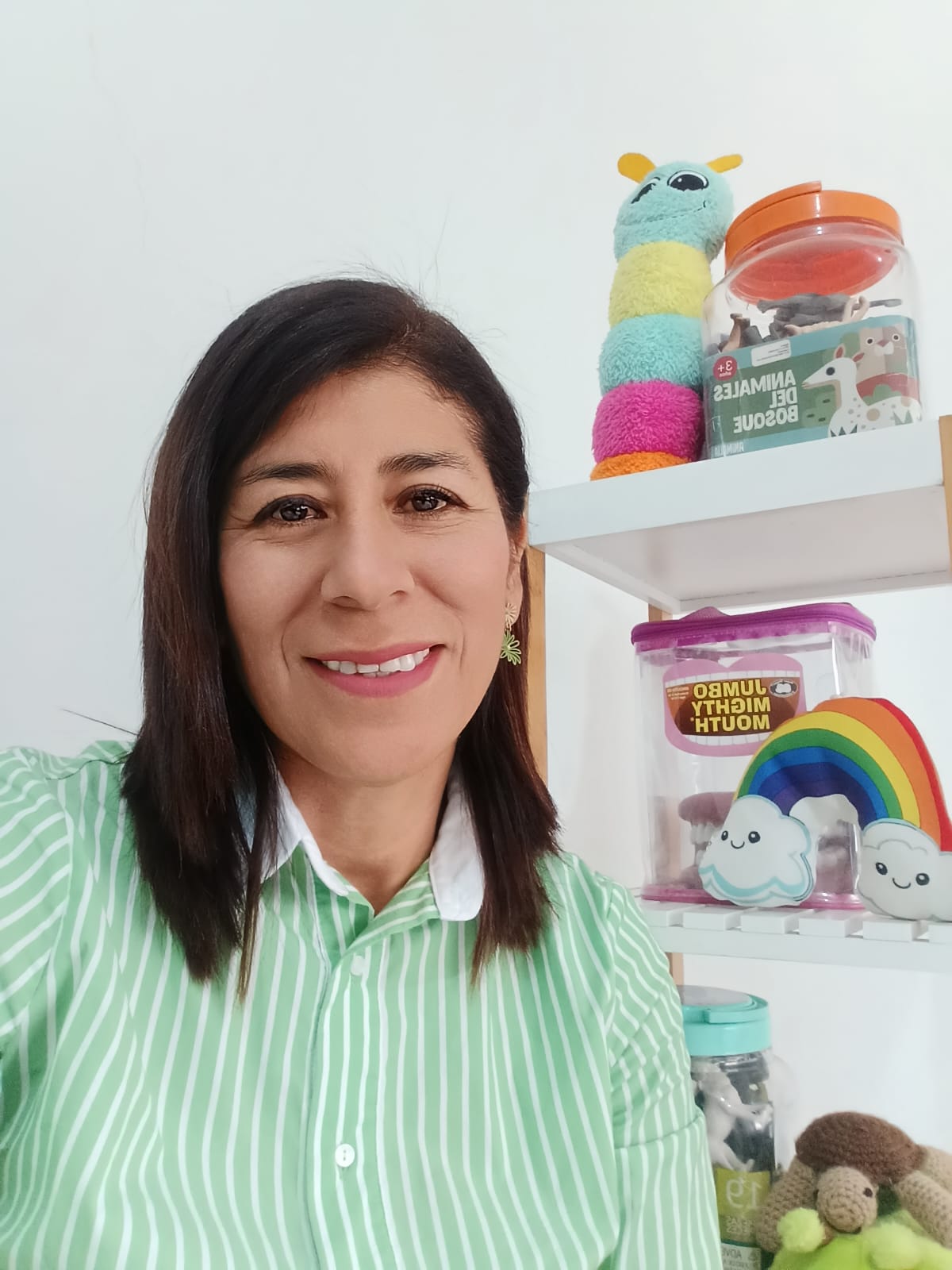
 About the Author: My name is Catalina Valer García, I am a Speech – Language Pathologist and I live in Lima, Peru. I studied Special Education at the Women’s University of the Sacred Heart in Lima, almost 31 years ago, with the specialty of “Disturbances in Communication”. Later I studied a Master’s Degree in Speech Therapy with a mention in Oral Motor, Voice and Stuttering, and I have made national and international presentations in relation to research carried out around stuttering. Currently almost 100% of my students have stuttering and I enjoy working with them.
|
I’m really glad to participate in the ISAD 2026 online conference and share my thoughts on the different shades of stuttering.
In my experience as an SLP and regarding the care of children who stutter, I think that early detection and treatment is the best thing we can do. I’ve had many cases of children who, after receiving a timely diagnosis and then going through an adequate period of therapy, were able to break the stuttering speech pattern and recover spontaneous fluency, and that is very hopeful for the family.
Regarding young people and adults who stutter, I think they have the freedom to choose whether they want to undergo Stuttering Therapy or not. If they do want to, that’s great because you can always practice, you can always learn. They can learn techniques that allow them to communicate with more confidence, more smoothly, and I also think it’s necessary to work on acceptance and to join Support Groups, meet more young people who also get stuck when speaking but keep moving forward with their goals.
It might seem like stuttering is a disadvantage, but it’s not. When there are difficulties, you become stronger. I believe stuttering helps teenagers, young people, and adults develop courage, patience, teaches you to make an effort, to be more understanding and tolerant with the people around you. But it’s important that you have a GOAL in life, that you have a target, that you find your purpose, that you discover: What do you like to do? What task are you good at and can do well? Because when you find the goal of your life, nothing can stop you. You will move forward even if you have a stutter or other difficulties in your life. That’s why I believe that ‘ All paths help for good,’ and in the end, you will be able to help other people who are going through the same thing. So there’s no way to lose—you will always win.
Come on, keep going, keep moving forward.

A picture with my students celebrating mid-year vacation
 A memory with my students celebrating at Christmas |
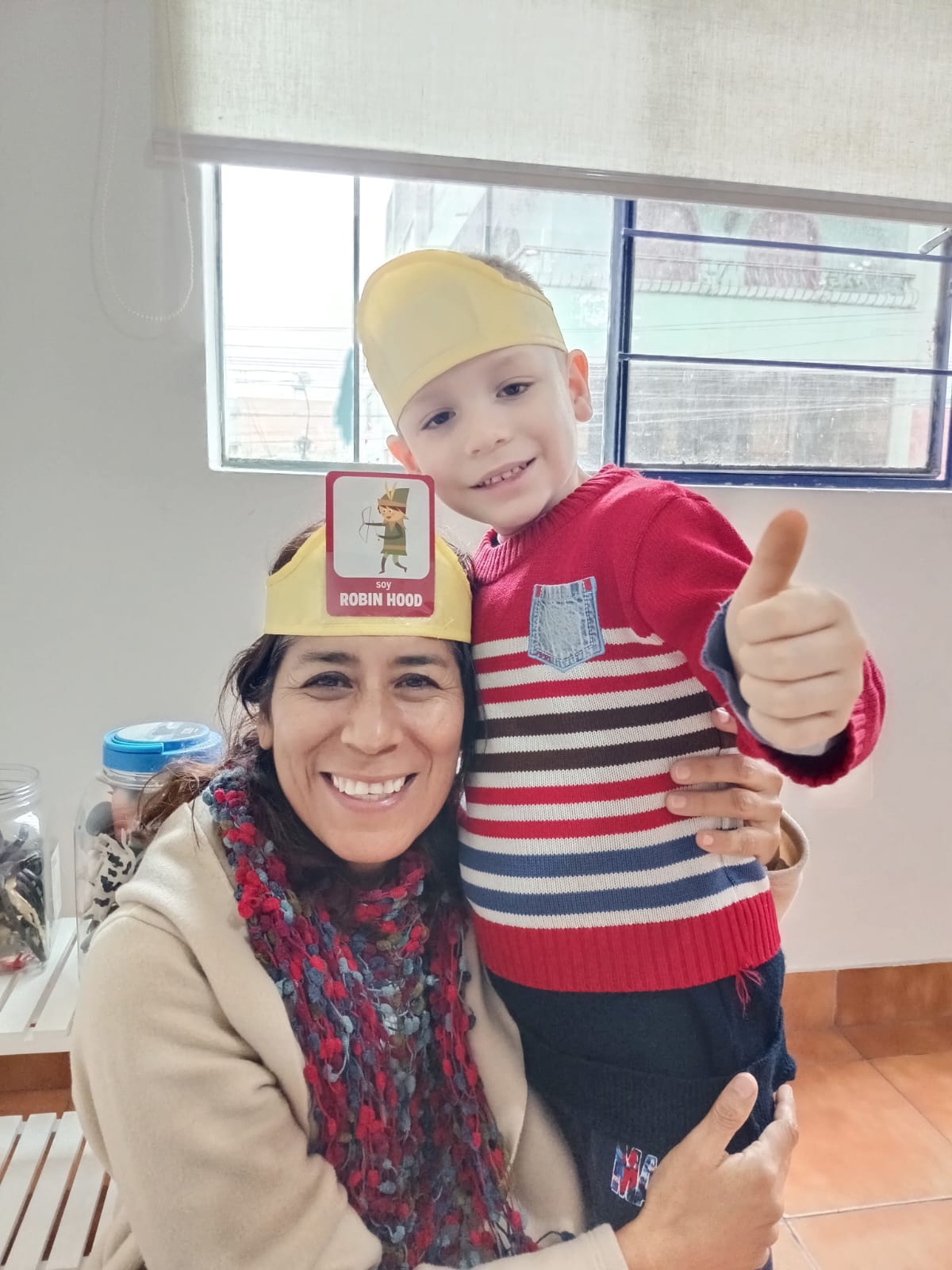 A nice picture with my little student playing and practicing in his therapy session |
 A picnic day with the guys from the Support Group |

Hi Catalina! I love how you highlight the positive aspects of being a person who stutters, such as the empathy and strength you can develop and how that can be used to help others. I was wondering how you might help your students find their goal and purpose. After determining their goals and aspirations, do you include that information in your therapy? Thank you!
Hi, thank you very much for your comment. I believe that to find our goal or purpose in life, we must be aware that we are on this earth to do ‘good deeds’ and also that we live a limited time of life. On the other hand, there are 3 questions that could give us direction: 1. What do I enjoy doing? Finding our passion to develop our potential. 2. What am I good at? In which things do I stand out and achieve results. 3. What do others value about me? That is, what do other people recognize that I do well or that comes out well. And indeed, all that information allows me to know my patient better and use it in therapy. For example: I have several young people whom I currently attend to, and they are studying at the university, and in some of the sessions, we read about a notable character in their field or
read and talk about a topic that interests them in their profession so the learning is more meaningful.
Greetings
Catalina Valer
I liked your point about helping clients pursue goals that are meaningful to them. How do you connect a client’s personal interests and life goals to activities in stuttering therapy?
Hello LPGrad_Geelgano, thank you very much for your question. In this case, I’m thinking about teenagers or young people who are already more aware of their life goals, etc. I always start by understanding the reason for consultation, that is, what they want to improve, and on the other hand, I consider fluency techniques such as: speaking slowly, speaking softly, and I also consider acceptance, which is fundamental. With these variables, we can integrate the work; for example, if it’s a school student who wants to practice their presentations, we can practice in therapy the presentation they have to give at school using slow speech, with pauses, speaking softly, establishing eye contact, and also studying their topic to present because that will give them more confidence. That way, the practice is more meaningful for them, and little by little they will reduce their fear of presenting.
Greetings
Catalina Valer
Hi, I am an SLP graduate student and want to know how you would approach a young adult/teenager that stutters and does not want therapy, but their parents want them to receive therapy?
I also love how you focused on the positives when in comes to people who stutter. Everyone has strengths and I believe it is important to recognize those strengths!
Of course, I think it’s necessary to think, focus, and boost our strengths; I believe our energy should be focused on moving forward, and if there are not-so-positive aspects, we should identify them and work on them, but our mind should be focused on all the good.
Greetings
Catalina Valer
Hello, Hollykarch, thanks for your question. I think we should take into account the reason for the consultation—in this case, who is requesting the help or evaluation? It seems that the adolescent does not feel affected by the stuttering, but the parents do want help. In this case, I would talk with the parents to understand what worries them. In many cases, parents are afraid that their children will not succeed in life because of stuttering, and they have many concerns. In that case, I would advise you to talk with the parents, help them understand that there are many successful people in the world who stutter (that is, desensitize the parents), and also talk with the adolescent and listen to him. Maybe he does not feel affected by the stuttering, and that is valid. You might encourage him to have a few guidance sessions, but if he has no motivation to undergo therapy, it will be difficult to work with him. I insist, the work should focus more on the parents so they don´t worry so much.
Greetings
Catalina Valer
P.S. Please write to me if you have any questions
Hi Hollykarch, I replied to you a few lines below.
Greetings
Catalina Valer
Hi Catalina, I really like how you portrayed stuttering in such a positive way, as it is often associated with negative feelings among PWS and the general population.
I also know that stuttering can be considered a niche area of practice within the field of speech-language pathology, where speech therapists are classified into generalists or stuttering experts. It appears that you are a stuttering expert with a high caseload of PWS. I am interested in knowing how many SLPs provide stuttering services in your area. In general, are there many other SLPs nearby?
Hi Magdalena, thanks for your question and comment. As we know, indeed a person who stutters should be seen by a Speech-Language Pathologist or Speech Therapist specialized in Stuttering. Unfortunately, in the city where I live, which is Lima (the capital) in Peru, there are few stuttering specialists, and in the provinces (towns in the interior of the country) even fewer. That is a big difficulty because if there are no specialized professionals, there is no therapeutic success. On the other hand, unfortunately, there is still a lot of misinformation about stuttering in my country; in some cases, treatment is carried out by psychologists or teachers without specialization, or patients (children) are told to wait. I have attended mothers of teenagers who contacted me and sadly told me that their children had been seen by specialists who told them that it is a condition, that this is how it will stay for life, but they weren’t given opportunities to improve their communication and fluency. That’s why I always take the chance to teach and guide families and people who stutter properly.
Greetings
Catalina Valer
Hi Catalina! You mentioned that stuttering can help people develop courage and patience. How do you respond when a client does not see anything positive about stuttering, while still helping them feel hopeful about their goals? Thank you.
Hi mshundo, thank you so much for your question. I understand that we’re usually talking about young people or adults; in those cases, when the patient doesn’t see anything positive in stuttering, I share some testimonials from my previous patients or those I’m currently seeing in therapy who are making progress toward their goals or managed to get into university and study the career they like. For example, I can tell them that one of my students got into medical school (which is a difficult and demanding program) and is making progress, or I can share that a young patient managed to pass the interview with a professor or academic director and is already starting to study, etc. It also helps to hold meetings with Support Groups, which can be virtual or in person (in this article I included photos of several meetings with my young people from the Support or Mutual Aid Group).
So by seeing and hearing real stories and meeting young people who are moving forward with their goals, studying and working, they can see for themselves that therapy isn’t a “story”—it really works, and that’s our mission: to help them find the way, and later they will help others who are just starting out. There will always be a way out.
Greetings
Catalina Valer
Hi Catalina! Thank you for sharing your experience with students who stutter. I really appreciated how you talked about what students who stutter can learn from their experience with stuttering, such as courage and patience. I also like how you find the importance of joining support groups as this can further help children who stutter have confidence and accept that they stutter. Have you ever experienced where the children accept that they stutter, but their parents/caregivers did not? If so, how did you help the student navigate this experience?
Hi Ellysa, thank you so much for your question and comment. What you say is true, most parents really don’t like their children to stutter. In my professional work, I always keep in mind this theoretical concept highlighted by an excellent Brazilian Speech Therapist named Claudia Furquim de Andrade: ‘Stuttering has treatment, and the earlier it is addressed, the better the prognosis, and the worst thing we can do is wait,’ but early detection is vital.
In my professional experience, dear Ellysa, with most of the children I have worked with, we have managed to interrupt the stuttering speech pattern and they have been able to regain spontaneous fluency. In some cases, there may have been persistent disfluencies, but there was a significant improvement in their fluency. I have scientific evidence of what I’m telling you because I conducted research to earn my Master’s degree on the “Effects of a Childhood Stuttering Treatment Program for Children Aged 3 to 6.” The work has to involve the family and the school. In all cases, I meet with the family and teach them what helps and what harms fluency, and we talk and guide them on the importance of parents’ reactions and the importance of them modeling slow speech and not correcting the child’s speech.
In many cases, I have the parents join the therapy sessions, and they learn speech modeling, but I also guide them on family dynamics, encouraging them to maintain a calm lifestyle, not to rush, and to listen to the child with the necessary time.
Anyway, there’s so much to talk about and teach.
Greetings
Catalina Valer
Hi Catalina, I am an SLP graduate student like how you mentioned the importance of having a goal in life rather than just goals for speech since the core principle of our professional is to help others feel like themselves despite their hardships. May I ask how you would counsel a client who avoids speaking situations due to their stutter?
Hi, thank you so much for your comment and question. In that case, I think we need to address desensitization. I wonder, what have they been told at home or at school about their speech? Why do they avoid speaking? I think first we need to talk with them about stuttering, debunk myths—they might feel guilty, but we know it’s not their fault. After all that teaching work, busting myths, explaining the causes of stuttering, and also guiding the family and school, I would share that many people get stuck while speaking. In my case, I tell them that I have several students who are also in therapy and ask if they would like to meet them. Many times, we’ve done one-on-one Zoom meetings, and that motivates them, since they may have never met anyone who stutters, and meeting someone who shares similar experiences encourages them and also makes them feel more motivated.
Kids like to have group meetings, but it will depend on each case and also on the specific communication needs.
Greetings
Catalina Valer
Hi Catalina! Thank you for sharing your experiences and perspectives on working with people who stutter. As an SLP graduate student, I value your emphasis on respecting each individual’s decision to pursue therapy while also encouraging self-acceptance and confidence. How do you incorporate self-acceptance into your therapy sessions, especially with clients who may feel frustrated by their stuttering?
Hi, thank you very much for your comment and question. Auto-acceptance is a delicate topic, perhaps difficult to address, and it’s a constant process that will require time and patience. In the therapy sessions I conduct, I set aside time to work on specific fluency techniques, but I always include acceptance in all of them. It may sound like a topic that should be addressed by a psychologist, but in our case, we understand the negative feelings a person with stuttering experiences and we can help with desensitization and acceptance. I always guide them to think about the positive aspects they have, the strengths they have, the talents they have, what they enjoy doing, etc., so that they don’t focus only on the bad but also see the good in themselves.
We also share stories of famous people in history and in our current lives who have done or are doing something important and have stuttering. I share with them many links, readings, and videos of exemplary people. For example, in history, we have the patriarch Moses (who had a stutter and accomplished a very important work, freeing God’s people, the Israelites, from the Egyptians). If we come to the present, I share the testimony of the Spanish writer Jordy Sierra y Fabra (his testimony is on YouTube), and he talks about how his childhood was and how he overcame it despite all the opposition from his family, school, and his era; and little by little, they get motivated by the testimony of other successful people who have had stuttering, and that leads them to recognize that stuttering cannot be an obstacle in their life. I also share with them some speech therapists here in South America who have stuttering and have done extraordinary things like: the Uruguayan Pablo Piñeyro who was the first Speech Therapist with stuttering here in South America and who dared to study this career despite the disbelief of most people, or the Colombian Johan Gallego who founded the Colombian Stuttering Foundation and who also has stuttering. So in that way, they see beyond the horizon and gradually dare to look at that aspect of their life, but I repeat, everyone has their own time and we have to patiently accompany them in that process. In your case, you can look for relevant people in your environment and also share. I hope I’ve been able to help you a little.
Greetings
Catalina Valer
Hi Catalina! Thank you for sharing your experiences. I’m currently an SLP graduate student, and I really appreciated your on early intervention and helping individuals who stutter build confidence. I was wondering, when working with younger children, how do you approach introducing the concept of stuttering and helping them develop a positive relationship with their speech without making them overly conscious or self-critical of their disfluencies? Thank you!
Hello, thank you very much for your comment and what a lovely question. It is very nice to work with young children. I think early detection is key, and if a young child undergoes therapy promptly, the chances of recovering spontaneous fluency are high. In my case, I work a lot with play and association. For example, I teach them and say: ‘Let’s speak slowly like a turtle, or softly like a little bunny, or continuously like a snake.’ We associate that it is better to speak slowly like a little turtle instead of speaking quickly like a little horse. I always model slow speech and work closely with the parents so that they also model their young children’s speech continuously. In this way, we can achieve success in therapy.
Greetings
Catalina Valer
Hi Catalina! I really enjoyed how you shared that stuttering treatment can look different depending on a person’s age and individual needs. In your experience, I wanted to know how you help older children move from working on speech fluency to feeling more comfortable and accepting of their stuttering?
Hi, thank you very much for your comment. Regarding older kids, in general with all of them I approach the work with the family and school. With older children, I also model slow speech, we work on soft speech, continuous speech. I focus a lot on choral reading, that is, reading a text in unison, then we can alternate: one paragraph is read by the child slowly, with soft starts and pauses, then the next paragraph I read, and finally the child can read a text on their own; but it’s a process, little by little we train. Also, using our fluency strategies, I ask them to tell me the story, in their own words, and we always talk about the lesson or message of the story and relate it to a real-life experience that happened to them; this way we also reinforce spontaneous speech. In my case, we’ve had a recovery of spontaneous fluency with the vast majority of my patients, both young and older children. The approximate therapy time has been about a year, and in some cases even up to two years. In childhood, the chances of recovery are high because the child has a lot of brain plasticity.
Greetings
Catalina Valer
Hi Catalina, thank you for sharing this article. You mentioned that support groups can be an important part of therapy for people who stutter. What do you think support groups provide that individual SLP therapy may not, and how can SLPs better incorporate peer support into their treatment?
Hi, thank you so much for your comment and question. Working with Support Groups is wonderful. When a young person meets another young person in a Support Group, they have the chance to meet someone who experiences almost the same difficulties as they do, they can share similar experiences, they can share how they have solved different stuttering challenges, and they can encourage and inspire each other by listening to their achievements, challenges, goals, etc. Many of them have never met another young person who stutters, and meeting and talking within this support group is a relief because they feel safe, no one will be judged, etc.
It is essential to include working with Support Groups. Maybe you can start by bringing together two young people of nearly the same age and interests, and gradually invite more young people. You could also schedule a monthly meeting with the Support or Mutual Help Group.
Greetings
Catalina Valer
Hi Catalina! Thank you for sharing your experiences! I saw that you mentioned that you recommend that young people and adults who stutter join Support Groups. I was wondering which support groups that you personally recommend?
Hello, thanks for your question. I think that will depend on the language and the age of the young people. Here in Peru we have several support groups, the language we speak is Spanish, and I also recommend to my patients that they attend monthly meetings of the support groups of the Argentine Stuttering Association, the AAT. In Europe, we have Friends (The National Association of Young People who Stutter), the email is: friends@friendswhostutter.org
Greetings
Catalina Valer
Hello Catalina! Thank you for your beautiful perspective on stuttering. I like that you mentioned having goals in life. How do you help your clients find their passion and what they are good at, if that is what they want, but suttering is a big obstacle for them?
Hello, thank you for your question.
I believe that to find our goal or purpose in life, we must be aware that we are on this earth to do ‘good deeds’ and also that we live a limited time of life. On the other hand, there are 3 questions that could give us direction: 1. What do I enjoy doing? Finding our passion to develop our potential. 2. What am I good at? In which things do I stand out and achieve results. 3. What do others value about me? That is, what do other people recognize that I do well or that comes out well.
On the other hand, it’s necessary to work on desensitization. To do this, it helps a lot to share stories of people who have done very important things in life and have stuttering. Not too far off, you can also share with them the testimonials of the patients you currently see or arrange meetings with young people who are in therapy to motivate them.
Greetings
Catalina Valer
Hello Catalina! Thank you for your beautiful perspective on stuttering. I like that you mentioned having goals in life. How do you help your clients find their passion and what they are good at, if that is what they want, but stuttering is a big obstacle for them?
Hi Catalina, I’m A current SLP graduate student and I found a great read. I think making sure all PWS have a goal, whether its learning to live and love their stutter, or getting help reducing it is a great way of understanding the mutiple ways stutter can be addressed!
Hello, thank you for your comment.
That’s right, which is why the title of this year’s ISAD is very appropriate and valid, since everyone has their own way of seeing and feeling stuttering. I also think that what’s important is to listen to what the patient or client tells us, what their reason for consultation or point of view is, and based on that, direct our help if it is needed and requested.
Happy Isad 2026
Greetings
Catalina Valer
Hi Catalina, thank you for your article. What other support services are in place for children who stutters in Peru? I have heard of stuttering camps in the U.S. Are those available in Peru, in addition to support groups?
Hi Jacgonzalez, thanks for your question. Actually, in Peru, few speech therapists and institutions work with Support Groups for children and people who stutter in general. Regarding stuttering camps, this type of work is very rare in my country; I’ve also heard that in the United States they hold stuttering camps.
Greetings
Catalina Valer
Hello Catalina! I really enjoyed hearing your positive outlook on stuttering and allowing the individual to decide what is best for them. As a current SLP graduate student, I am wondering what are some strategies you utilize to work on acceptance for young adults?
Hi Kennedy Howard, thanks for your interesting question. Personally, I believe that acceptance is a process that takes time and patience. One of the strategies that I notice really helps with acceptance, and that young patients themselves have told me about, is meeting other young people who stutter; there, they can realize that they are not the only ones, that there are other kids who stutter, and they can share similar experiences, which eases the burden and negative thoughts. Those meetings are wonderful.
Greetings
Catalina Valer
Hi Catalina! As a speech-language pathology graduate student, I appreciated your presentation’s emphasis on support groups in addition to therapy. As you mentioned, intervention is something a person who stutters may choose to pursue. However, the stuttering community is very powerful for all people who stutter. Supoprt groups and conventions like this one can connect people who stutter to increase their confidence in communication. Thank you for sharing!
Hi Otrancho, what you mention is true, the community of people who stutter is “POWERFUL.” How necessary are these spaces, right? Where we can meet new friends, share our experiences, both good and not so good. How wonderful it is to have a community where we can understand each other, care for each other, and get to know each other. Let’s keep building and facilitating these spaces.
Greetings
Catalina Valer
Thank you Catalina, for giving YPWS back their voice and space to decide what way of speaking makes them want to say what they want to say, what and how they want to. Therapy has for many years focussed on fluency. I’m so happy to see the shift, into making kids love to talk, and instead focus on their strength, skills, personalities.
I’ve been a leader of camps for children and for young adults who stutter for decades, and as soon as they realize their voices have the right to be heard, they grow and dare to share their many shades. It’s such a beautiful transformation.
Keep them talking
Anita
Hi Anita, it’s so nice to read your message. That’s right, every voice deserves to be heard, no matter what tone it has; I firmly believe that every person was created with a purpose here on Earth; that our mission will always be to do good deeds and contribute so that our world becomes better, with more love, respect, tolerance, and care. May every word and message that comes from our mouth and heart always be meant to build; I believe that all the experiences we go through in our lives shape us and help us gain more wisdom. I felt very happy reading so many comments from young SLP professionals and sharing my experience and professional work with them. I embrace each one of them warmly; it’s so good to be part of this community full of love and sensitivity. See you next year, and let’s keep teaching, let’s keep raising awareness. With gratitude and affection.
Catalina Valer