
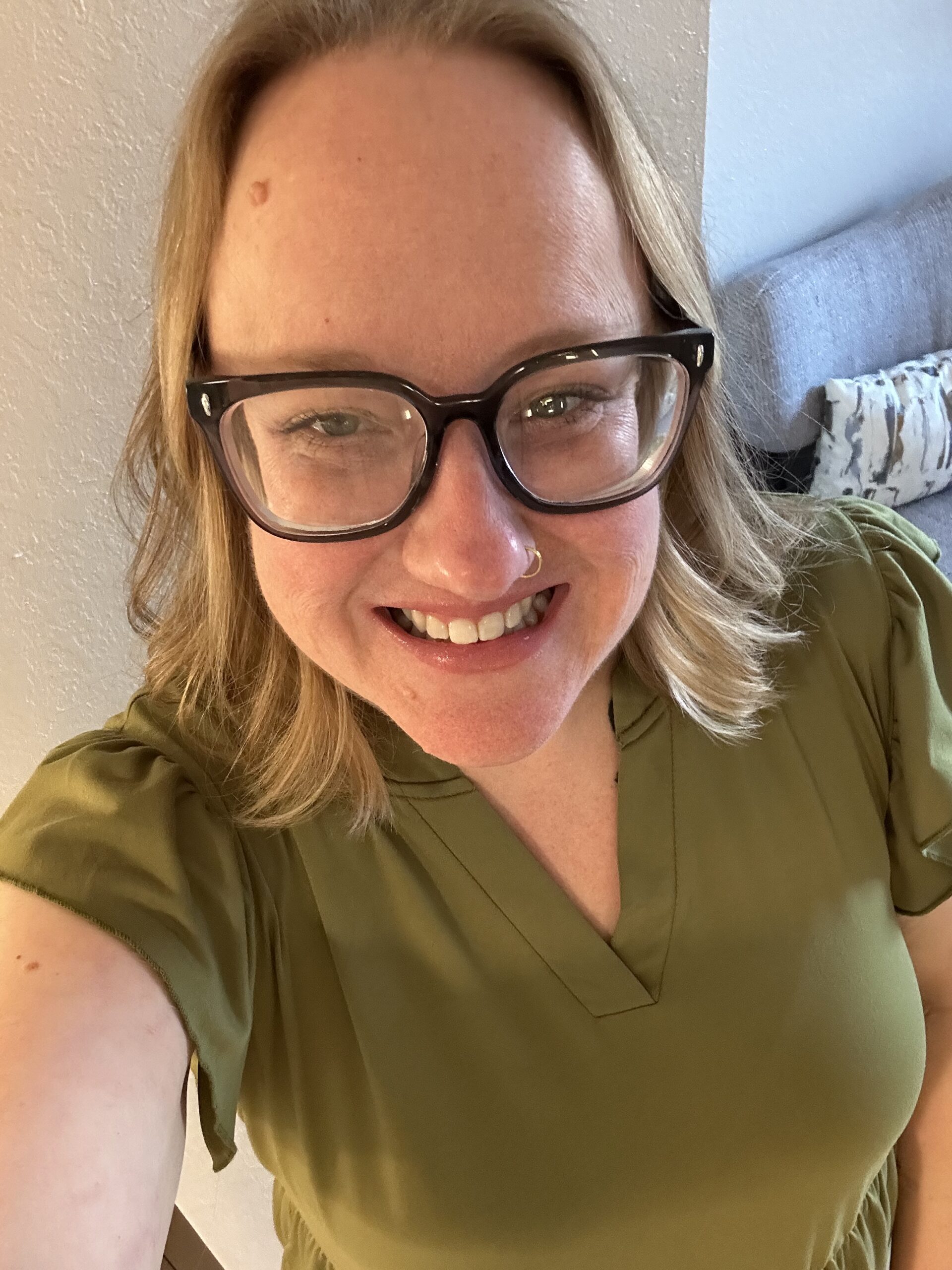
 About the Author: About the Author:
Steff Lebsack is a wife, mother and Speech-Language Pathologist. She is also someone that lives with chronic lung disease. Steff is a speech-language pathologist with Crandall Independent School District in Texas, United States, and a fourth-year PhD student at Idaho State University. Steff is currently researching child agency as displayed in caregiver interactions with children who stutter (CWS). Steff is delighted to be a participant in this year’s ISAD Online Conference. |
The Neurogenic Shade of Stuttering: Steff Lebsack’s Story of Covert Stuttering
This video submission is Steff Lebsack’s story of neurogenic stuttering and why she briefly went silent.

I’m so grateful that you made a video to allow us to hear your voice, Steff! Thank you for sharing these insights about neurogenic stuttering and your unique take on the experience.
Wow, Steff, thanks so much for sharing this. I definitely was unaware of the extent and particulars of your journey with brain injury and resultant stuttering.
Covert stuttering in all its shades is still largely misunderstood (I think) among both stutterers and professionals in the field. I was covert for more than 35 years and I am still recovering from the trauma of hiding. I also endured what I now consider also traumatic experiences and reactions with fellow persons who stutter, who clearly did not understand that one can choose to hide. I’ll never forget my first experience at a stuttering support group, after finally getting there after chickening out twice. A woman asked me why was I there since I didn’t stutter. I didn’t stutter openly because I was afraid and still deeply in hiding.
She asked me more than once, publicly, in the group setting. I felt so embarrassed and unwelcome. I was yelling at myself internally to not cry in front of them. I was also chastising myself for going – clearly recalling the thought of, “See, I told you so. You don’t belong here either.”
The shades of stuttering are not black and white, huh?
Thanks again for sharing with us an easily missed shade of stuttering.
Pam
Dear Steff
Thank you so for sharing your story and for educating us on this other shade of stuttering. Much appreciated.
Hanan
Hi Steff,
Thank you so much for sharing your story! I am a graduate student in speech language pathology, and we are currently learning about all the different shades of stuttering in our coursework; however, your story really educated me about neurogenic stuttering and how it can develop and subside differently for different people. I also appreciate your perspective on observing your brother stutter throughout your life. If you feel comfortable sharing, I would love to hear if your perspective about stuttering changed at all after years of observing stuttering to then experiencing it for yourself? Thank you again for sharing your compelling and educational story!