
|
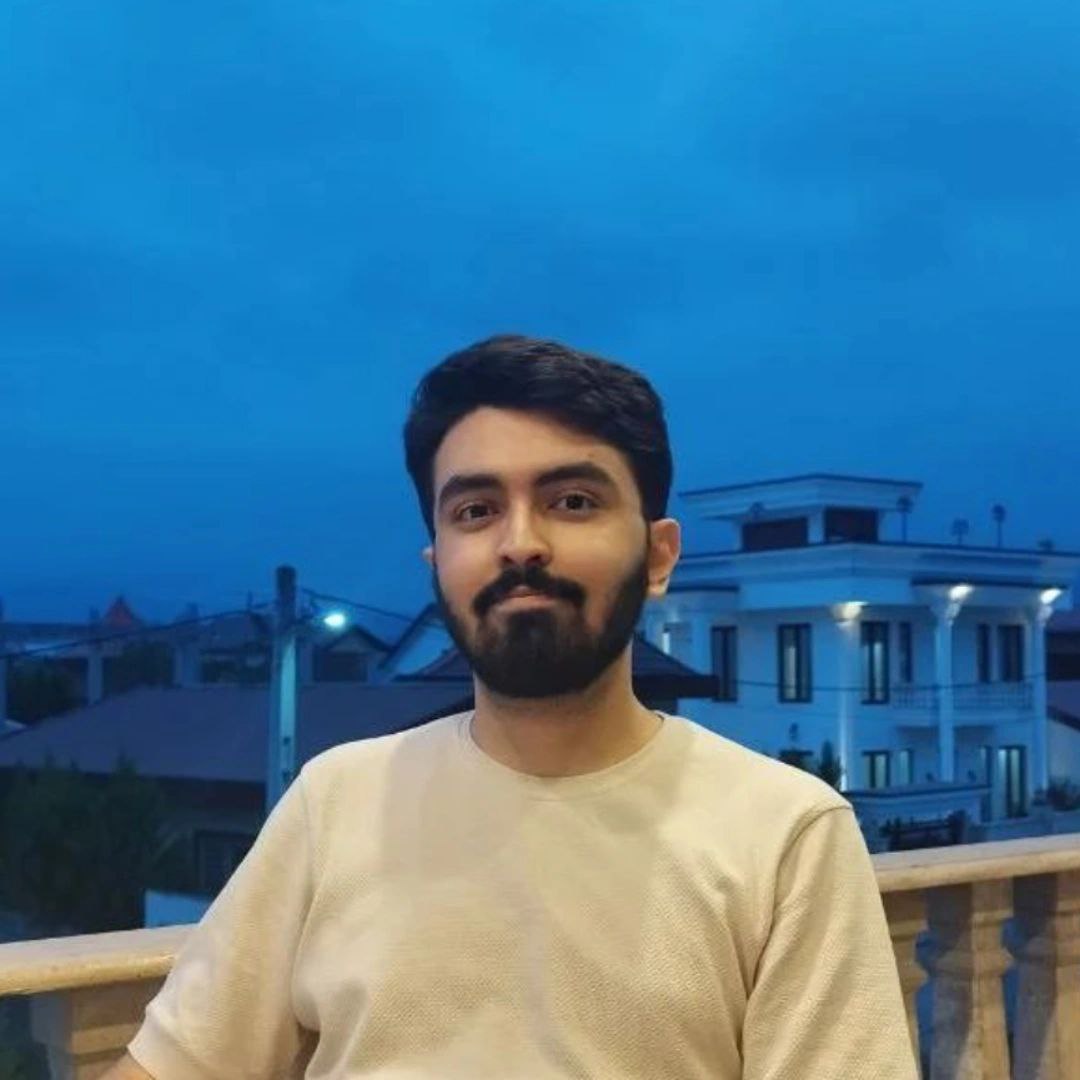
Masoud Madadi (b. 2003, Iran) is a person who stutters and an active member of the Iranian Stuttering Association. He launched the first Persian-language podcast on stuttering in 2021 and has since been engaged in organizing community events to support and empower people who stutter. |
Monday, 8 a.m. My turn to read aloud. My name was called and the room got small. I asked to skip. The teacher said if I didn’t read, I would have to leave. The last time I read, my classmates laughed for five long minutes.
I began. The first vowel stuck in my throat. I tried to hop over the block like a video-game jump. My lips tightened. My palms sweated. I pressed my feet into the floor and kept my head down while every eye found me. Then the teacher moved on.
This happened every week. I felt like I disappeared and came back once every Monday. In nine years of school, I don’t remember speaking up in class. I have stuttered as far back as I can remember. Not a day without it—at school, at home, everywhere. Like a shadow that wouldn’t leave.
Maybe I could have lived with it—but why me? By fifteen, I had never met a single person who talked like me. Everyone else seemed to say whatever they wanted, as fast as they wanted, without freezing, tripping, or burning with embarrassment. I felt like I had crash-landed on Earth alone.
Thinking I was the only one ate me alive. Pain is heavy, but thinking you carry it alone makes it unbearable. No one I knew stuttered. I started to believe this was forever. Some people are born without the use of their legs. Some are blind. Me? I had a tongue that felt locked.
So I stopped talking for a while. Not out of shame—out of exhaustion. I was tired of fighting for every word. Tired of the looks and the laughter. Tired of replaying every conversation in my head, blaming myself. I went quiet—with everyone, even with myself.
Silence didn’t help. It only made me more alone. When you stop speaking, you start to fade. And when no one sees you, it feels like you don’t exist.
One night I couldn’t stand it anymore. I grabbed my phone—not to escape, but to search. I didn’t know exactly what I was looking for. Maybe a sign. Maybe a voice that sounded like mine.
I typed: “people who stutter.”
Then: “why am I the only one who stutters?”
Then: “loneliness and stuttering.”
And there it was: “Iran Stuttering Association: a place where no one is alone.”
I froze. Someone had put my feelings into words. They met every Friday in a park. People like me. My spaceship wasn’t the only one that had crash-landed—there were other survivors.
That Friday, I went. Eight people were there. Usually the word “stutter” made me shrink, but that day we talked about it for two hours. I left with more energy than I had felt in years. I learned stuttering wasn’t an impossible riddle. People could live well with it. Most of all, I learned I wasn’t alone.
I kept going every week. Through the group I met a speech therapist and started treatment. The people I met shattered my walls. I thought a person who stutters couldn’t be a teacher—then I met Mazaher. I thought we couldn’t be university professors—then I met Saeed. A successful salesperson? Yasin. An actor? Dariush. He played the lead in a film.
The greatest gift the Association gave me was breaking the picture in my head of what was “possible” with a stutter. Before, it felt like a monster sitting on top of every dream. Then I met people who stuttered more than I did—and still built the lives I believed were closed to me.
I’m twenty-two now. Eight years have passed since those dark Mondays. I’m at university. I have a job where I talk with people all day. I have hosted two Persian podcasts that found real audiences. I’ve turned the “no way” of my fourteen-year-old self into “done.”
Now my mission is to raise awareness about stuttering—because I know something I didn’t know back then:
“The greatest pain is to feel alone in an indifferent world.”
No one should have to carry that alone.

Very powerfull words from you thank you for your message hope you the best
Thank you so much for your kind feedback.
Thanks for sharing this personal, beautifully written story. For me your experience emphasizes the enormous importance of good information about stuttering in schools. So thank you also for your contribution in raising awareness about stuttering globally.
Thank you so much for reading my story. Surely all of us, the 70 million people on the planet who struggle with stuttering, need to join hands together to raise awareness around the world, and this is not possible without working together.
Hello Masoud
Thank you very much for sharing this part of your story. I am very pleased that you found that you are not alone, and now you help others find that, too.
Your paper is very important. I hope that PWS who might feel alone will find it, and gain encouragement from your writing and from your path.
Thank you
Hanan
Dear Hanan
Thank you for your nice comment on my article.
I am very happy that ISAD has made me find good friends from all over the world and I hope that together we will continue to raise awareness about stuttering.
Your friend, Masoud
Hi Masoud,
Thank you for sharing your post. It is inspiring to see how creating a community within has positively changed your way of thinking when it comes to stuttering. How difficult was it for you to get out of your comfort zone and meet up with individuals you hadn’t meet before and open up?
-Estefanny
Hi Estefanny,
Thank you for the lovely comment you left for me. I’m really happy that through this website I’ve had the chance to meet positive and kind people like you.
To be honest, it was very hard. But my need to speak fluently forced me to step out of my comfort zone. When a person has to do something, no matter how scared they are, they simply have to do it. When you’re standing at the edge of a cliff and thousands of zombies are chasing you, no matter how afraid you are of heights, you have to jump.
It’s definitely a tough journey, but happiness lies outside our comfort zone.
Your friend, Masoud
Masoud,
That was a beautiful article and a very relatable story. Finding your tribe changes everything; your story is my story.
Welcome to the stamily (stuttering family), brother.
Dear David,
Thank you for your kindness, brother. All of us who stutter share one soul in thousands of bodies. We all have common stories and a shared journey that ultimately leads to healing.
I’m really glad you enjoyed my article, and I’m happy to have met such an energetic person like you in this family.
Your friend, Masoud
Hello Masoud,
Thank you for sharing this. Your story is incredibly powerful. The way you captured those early moments of silence, isolation, and then discovery was deeply moving. I especially felt the weight of that line: “Pain is heavy, but thinking you carry it alone makes it unbearable.” It’s inspiring how one search led to such a turning point in your life and how you’ve now become that signpost for others.
Was there a specific moment that made you hit “search” that night or had it been building up for a while?
Hello my friend,
I’m really glad you enjoyed and connected with my story.
I believe that big changes and the kind of events that transform a person’s life don’t happen overnight. There was definitely an inner process that led me to finally reach out and press that “search” button to look up stuttering — a deep inner desire to heal. It was those inner conversations in my mind that eventually guided me toward seeking therapy.
Thank you for the beautiful comment you left for me. I hope you stay strong and steady on your path toward the therapy.
Your friend, Masoud
Hi Masoud,
Three contributions from Iran, maybe that’s a first?
Wonderful that you finally found the Iranian Stuttering Association. Does it have a website or a Facebook webpage? If so, please let me know on gijs@stamily.org.
Hi Gijs,
Yes, it seems so! This year, thanks to a few Iranian speech therapists who have emigrated to the U.S., the event has gained a lot of attention.
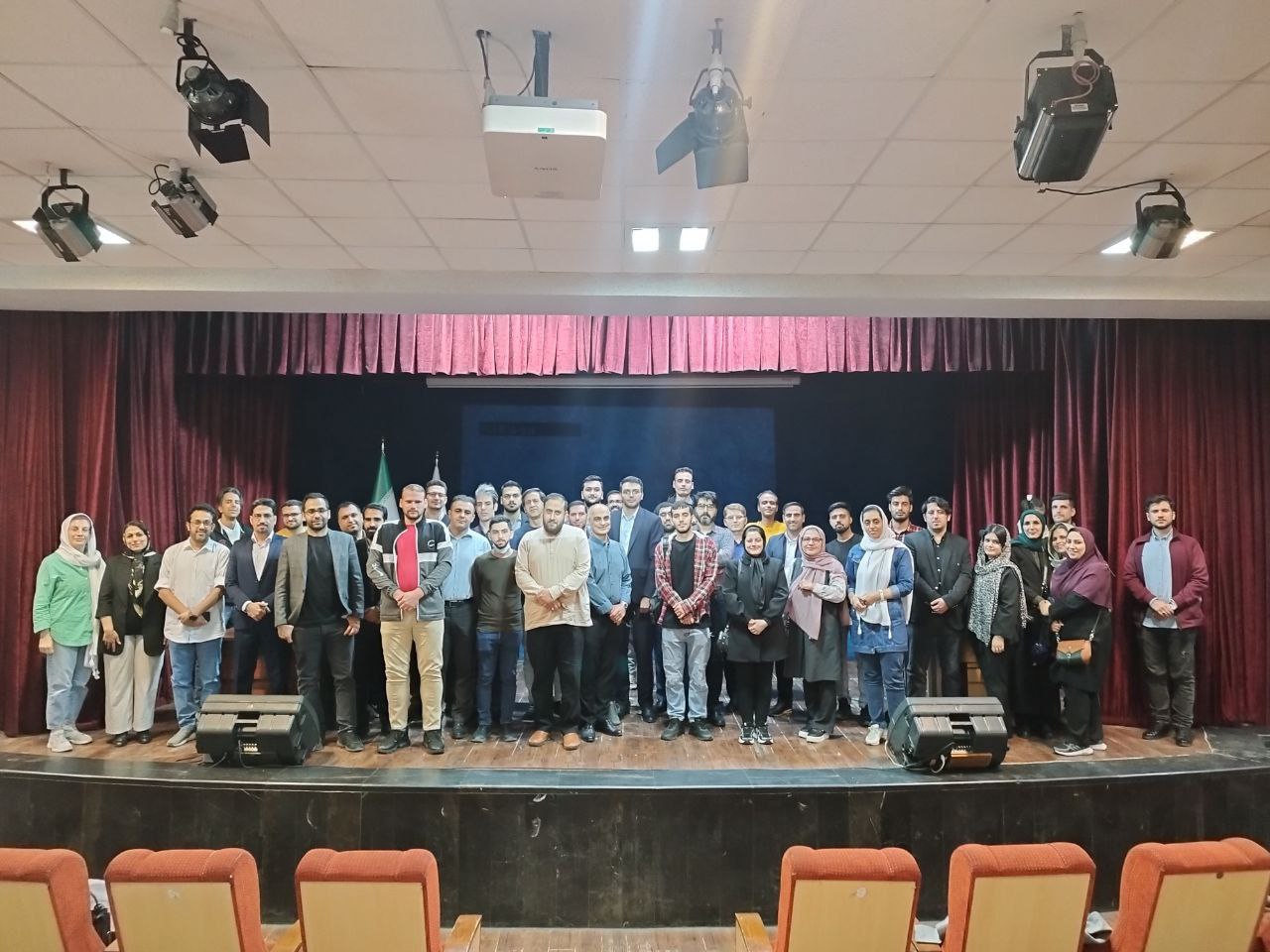
Even the annual gathering we hold every year in Tehran has been influenced by ISAD and will follow the theme of this event.
I’ll be more than happy to send you all the information you need about the Iranian Stuttering Association.
I’m really glad you read my article, and even happier that this event has connected me with such energetic and kind guys like you.
Your friend, Masoud
Hello Masoud, thank you for sharing your story. It’s encouraging to see you living your dreams with stuttering present, that the “monster” is no longer “sitting on top of every dream.” All the best to you! – Ana Paula Mumy
Hello Ana. Thank you for you kind feedback. It’s encouraging to find a lots of friends like you. It’s my pleasure and wishing you all the best.
Your friend, Masoud.
Hello Masoud,
I really appreciate your message about stuttering and feeling like you are all alone and the only one that bares that burden. My favorite part of your story was when you joined the support group and started listing off all of the people you met who stuttered and their amazing accomplishments. Thank you for your truth and transparency!
My dear friend,
Thank you for your kindness. I’m really honored to be part of such a lovely and inspiring group of people like you.
I hope we’ll keep moving forward together with great energy to raise awareness about stuttering.
– Masoud
Hello Masoud!
Thank you so much for sharing your story and feelings towards stuttering. I love how you highlighted that you have overcame and now have hosted two podcast and you have a job where you talk to people all day. You really demonstrated how you didn’t let your stutter define you! I really admire that!
Hello my friend,
Thank you for your kind feedback. I give my power with your positive energy and It’s my pleasure to find you all.
– Masoud
Hi Masoud! This was such an inspiring read! ‘Shattering the walls’ of possibility as a stutterer is so powerful. I love the line about going from ‘no way’ to ‘done’ as well, very empowering. Thank you for sharing!
Dear Finnian,
Thank you for your attention and your lovely comment. It’s my pleasure and I get my power with your positive energy.
Your friend, Masoud
Hi Masoud,
Thank you for the courage for sharing your story. I have stuttered for over 50 years and spent over 35 years of that time trying to hide that I stuttered because I was so ashamed and fearful that I would be laughed at and judged for being inadequate and not good enough. I was made to feel that way at 5 years old by my own father who ridiculed and humiliated me when I started stuttering, and would yell and scream and curse at me to shut up and stop talking like that.
Imagine how that made me feel. I pretended to like being quiet when it was actually the farthest from the truth. I was screaming inside to be heard.
I am so glad you found your voice and other people, your tribe, and see that life with a stutter is possible and that one can be successful and aspire to anything you want.
I now stutter openly – with all it’s shakes and quivers, repetitions and blocks and silent moments too. It’s so much more freeing to just be me.
Please take a read of my own paper on here about the meaning of what we can still hear when we speak and nothing comes out:
https://isad.live/isad-2025/papers-presented-by-2025/stories-and-experiences-with-stuttering-by-pws-2025/what-goes-unsaid-pamela-mertz/
Keep sharing!
~Pam
Hi Pamela,
Thank you so much for sharing your story with me. Your words truly touched me. It’s incredibly powerful how you’ve turned years of hiding and pain into openness, strength, and authenticity.
I can deeply relate to that feeling of wanting to be heard but being silenced by fear or shame. It takes a lot of courage to embrace our stuttering fully and to live honestly as we are — with all the pauses, blocks, and repetitions.
Your message reminds me that every voice, no matter how it sounds, has meaning and deserves to be heard. I will definitely read your paper — the title alone, “What Goes Unsaid,” already speaks volumes.
Thank you again for your kindness and inspiration. I’m really glad we’ve connected through this shared journey.
Warm regards,
Masoud
Hello,
Thank you for sharing such vulnerability in your journey. I am glad to have heard that you have gone through your ups and downs. What would you recommend to others who do not have direct access to resources or a community as easily? I think about rural communities where it’s harder to reach out directly to others.