
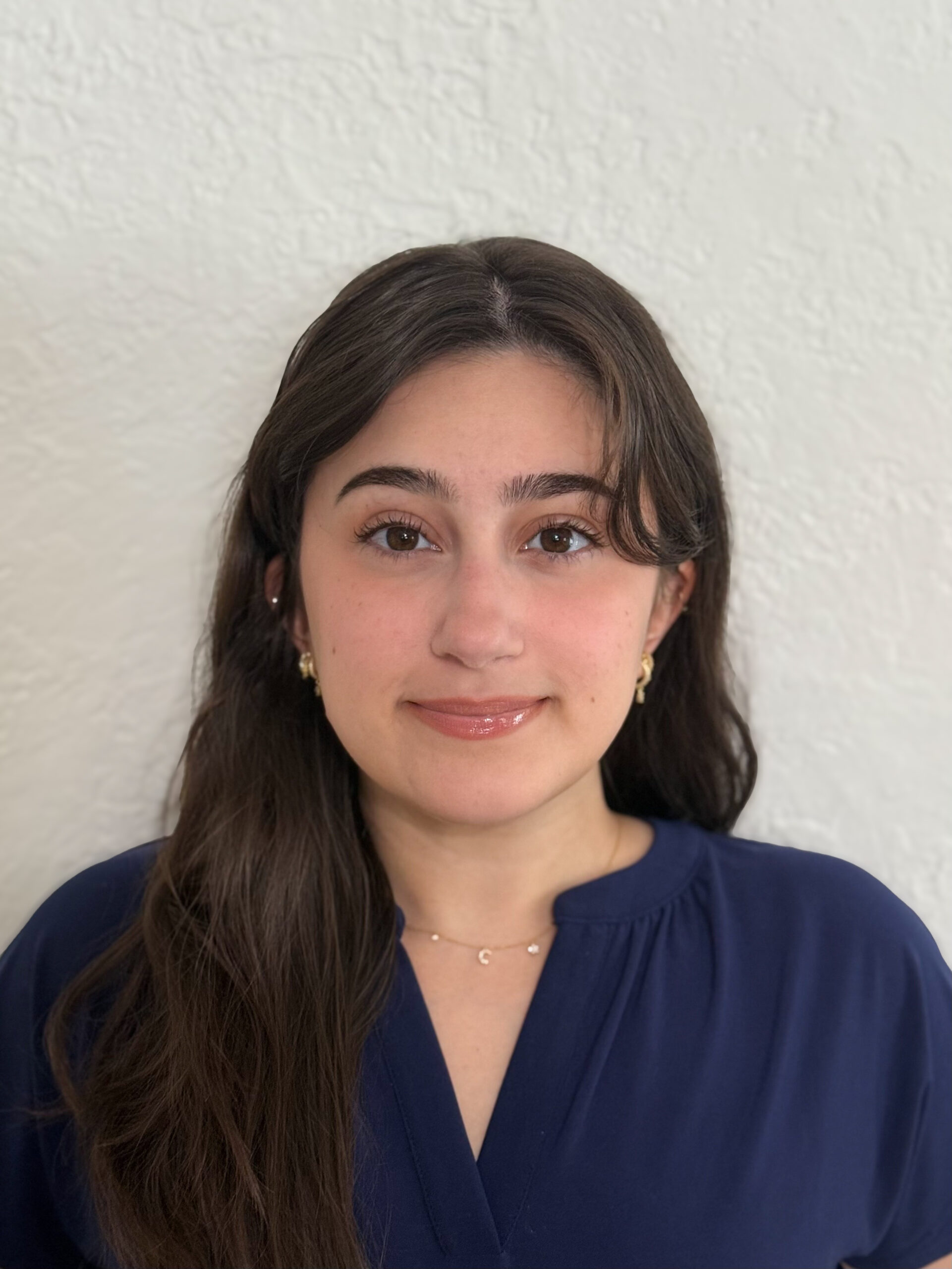
 About the Author: About the Author:
Angelise C. Bulit, M.S., CF-SLP, is currently completing her clinical fellowship year in the acute care setting. She is a recent graduate of Florida International University’s Speech-Language Pathology program, where she developed an interest in fluency disorders while under the instruction of Dr. Angela M. Medina. Through this course, she not only built upon her knowledge of the technical aspects of stuttering but was introduced to individuals within the stuttering community. After meeting with persons who stutter (PWS), she grew increasingly passionate about exploring the complexities of how stuttering impacted their lives. This guided her to complete a thesis, examining the lived experiences of women who stutter within support group spaces. As she moves into her career, she hopes to continue supporting those within the stuttering community. |
Throughout the years, research on stuttering has primarily focused on men, with studies on women emerging in the early 2010s (Milton, 2013). It is important to note that women who stutter comprise a small portion of the stuttering community, with there being a 4:1 male-to-female ratio (National Stuttering Association, n.d.). This has left their voices within literature to be often overlooked, leaving their unique and powerful experiences untold. Nonetheless, one way their experiences have been better understood is via research investigating the stories of those who have participated in self-help and support groups (SH/SG) spaces. Research on said spaces investigating both men and women has proved that, via attendance, it played a pivotal role in the way individuals perceived their stutter, how they connected with others, and how they ultimately embraced their authenticity. My research sought to explore how eight women experienced both mixed-gender and women-only SH/SG spaces. Through their experiences, not only were we shown how their strength allowed them to overcome challenges, but also how, when given a voice, a deeper understanding of the communal challenges could be supported.
During our time together, each participant described their early life with stuttering as difficult and generally as an isolating experience. They noted having faced bullying within school, shame within the home, and overall, just misunderstandings with family and peers. One described an experience with her father that left her feeling afraid and ashamed. Another shared her experience of having been mocked in school. Each of these experiences with stigma reinforced their feelings of isolation, which left lasting emotional marks.
From the hardships expressed came strength. Each participant noted that as they grew older, their perspectives shifted regarding themselves and their stutter. In other words, they grew to stop hiding and accept their stutter as a part of themselves. One participant noted, “I feel good about myself. I feel okay about my speech. I no longer hate my speech. I’m more like um it just is. I don’t feel the need to be fluent and to pretend being someone I’m not.” Another called stuttering a “blessing in disguise” as it strengthened her and her family and led them to connections with others of similar backgrounds. While each participant’s journey was unique, each demonstrated a common theme, this being their resilience and self-acceptance.
After providing their personal narratives regarding their stuttering journey, we discussed their experiences with mixed-gender SH/SGs. Many reported that after having attended, they had a newfound sense of community. One woman described it as “life changing”. Others equated it to feeling at home and being an “island where everybody got it.” These spaces gave women hope and the encouragement needed to pursue relationships, even careers! One shared, “I was able to start to believe that I could have a job as a person who stutters. I could potentially meet someone to date and stuff. And I could like have a life.”
Throughout their retellings, women noted there had been underlying challenges faced within these mixed spaces. Some participants felt as though men dominated conversations or dismissed their feelings. One participant reported having been one of only two women within a group of 18 men. When in this space, she shared feelings of being outnumbered and unheard. This showed that even when in supportive spaces, gender dynamics can cause barriers because of disparities present. Through it all, the participants demonstrated strength by sharing their stories, ensuring not only to communicate their positive experiences but also to report on the challenges faced.
Towards the end of our time together, we discussed their experiences with women-only SH/SG spaces. For those who had a background with these spaces, they described them as “freeing”, “sacred”, “safe”, and “beautiful”. These groups offered the participants a newfound sense of authenticity and empowerment that was unlike what they encountered before. One said, “So when I joined the women-only stuttering support group I felt like there were no barriers. I felt like I can be myself even more… they understand me more than when I’m in a mixed support group. And I feel like I am also seen and listened to…”
These dedicated groups allowed the participants to not only find deep connections but also representation. Being in spaces with women helped them feel less isolated and ultimately, more understood. Like Murgallis (2015), who once touched on the concepts of altruism and catharsis within SH/SG spaces, the participants within this study shared the importance of not only being able to learn from others, but also how imparting strength impacted them as well. This cyclical relationship helped in producing the strength and solidarity found in this sacred space.
While not every participant (n=1) found the need to seek out women-only spaces, those who sought them out (n=7) noted them to be empowering and essential. These groups show how vital it is to have dedicated gender-affirming spaces. They allow people to face their challenges, to build strength within themselves, and ultimately, foster strength within the community. As one participant said, “It feels like home.” Their stories and experiences serve as a reminder that the strength of the stuttering community lies within its diversity.
All this to say,
For those who stutter, your story matters.
For family and friends, your support makes a difference.
For professionals, recognize that everyone’s experiences are unique.
References:
National Stuttering Association (n.d.). Facts About Stuttering. NSA. Retrieved September 22, 2024, from https://westutter.org/facts-about-stuttering/
Milton, K. (2013). Women who stutter : experiences of developing self-management and quality of life. Edith Cowan University. https://ro.ecu.edu.au/theses_hons/90
Murgallis, T., Vitale, C., & Tellis, G. M. (2015). Perceptions of Persons who Stutter before and after Attending Support Group Meetings. Procedia – Social and Behavioral Sciences, 193, 202-208. https://doi.org/10.1016/j.sbspro.2015.03.260

Dear Angelise,
Thank you so much for sharing your research – it’s great to read this and is so relevant for us as therapists when thinking about the kind of things we put together for the people we work with, Nic
Hello Nic,
Thank you for sharing your thoughts, I am elated to hear just how much my research has impacted you. As you noted, research is important for therapists to consider when figuring out the appropriate trajectory of treatment for the individuals we work with.
-Angelise B.
Angelise, thank you for sharing your research. I am a big fan of your mentor, Dr. Medina. Your work related to support groups for people (women) who stutter is important! – Ana Paula Mumy
Hi Ana Paula Mumy,
Thank you so much for taking the time to read my research. While combing through literature, I had the realization that there is still plenty we need to address. Nonetheless, I am happy that while under the guidance of Dr. Medina, we’ve been able to make even the slightest impact. -Angelise B.
Wow!
This was an amazing read. It seems as though women are able to not only able to become empowered and supported, but also support others in turn. I was also wondering if you believe that the altruism developed in the group would differ if this had been a mixed-gender scenario?
Hi Kyber433,
It is tough to say. There is literature (Murgallis, 2015) that addresses the topics of altruism and catharsis within the means of mixed-gender SSG spaces. However, in the context of that article, genders were not specified, making it difficult to truly narrow down how gender disparity may have potentially impacted the results. Within my own research, while several women still choose to attend mixed spaces in addition to women-only spaces, only one exclusively attends these mixed spaces. With a larger sample size, this question would make for great future research! -Angelise B.