
 About the Authors: About the Authors:
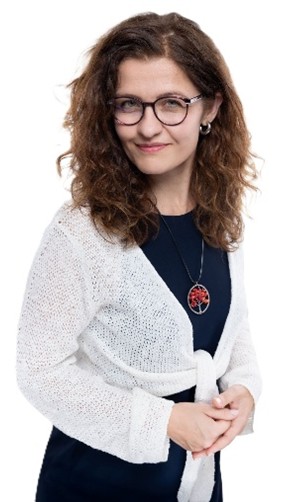
Dr. Agnieszka Płusajska-Otto is a lecturer at the Stefan Batory Academy of Applied Sciences in Poland. She is a speech-language therapist and a voice trainer. She mainly works with adolescents and adults, specializing in voice therapy and public speaking. As the Logopedic Center Foundation team member, Dr. Płusajska-Otto coordinates and implements research and educational projects to improve attitudes toward stuttering and cluttering.
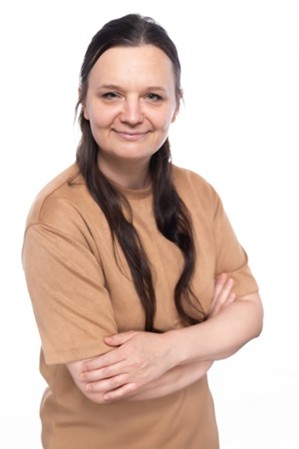
Joanna Szymczakowska, MA, is a speech-language therapist (SLT) at the Logopedic Centre Foundation and a lecturer at the University of Silesia in Katowice, Poland. She specializes in stuttering and cluttering. She is a Certified European Stuttering Specialist and a coach of the European Stuttering Specialization. Joanna is a recipient of the Prof. Gene J. Brutten Grant (2021) and is actively engaged in raising awareness about stuttering and cluttering among parents, teachers, and fellow clinicians. She is involved in organizing various educational and preventive projects aimed at changing attitudes toward stuttering and cluttering, including InterACT and The Archive of the Marginalized.
|

The International Stuttering Awareness Day (ISAD) Online Conference’s theme this year: A Diverse Stuttering Community – Meeting Challenges With Strengths strongly resonates with the situation in Poland. Similar to many other countries, people who stutter here have diverse needs, dreams, and goals. However, they often find it harder to face everyday challenges when society keeps insisting that stuttering can or should be “cured,” and that fluency must remain the ultimate goal. With this in mind, we asked ourselves: what if the narrative could change? What if Polish society could see stuttering and cluttering differently, not as problems to be eliminated, but as part of human diversity to be embraced? We wanted to show that stuttering has many faces—faces of exceptional people who, every day, pursue their dreams and passions, whether they stutter or not. This is how the idea of the Archive of the Marginalized: Many Voices on Stuttering and Cluttering was born. The project, run by the Logopedic Center Foundation (in Polish: Fundacja Centrum Logopedyczne, FCL) in cooperation with the University of Silesia in Katowice (UŚ), responds to the urgent need to reshape how stuttering and cluttering are discussed and perceived in Poland. Its aim is not only to raise awareness but also to promote inclusive language, evidence-based support, and above all, respect for real-life experience.
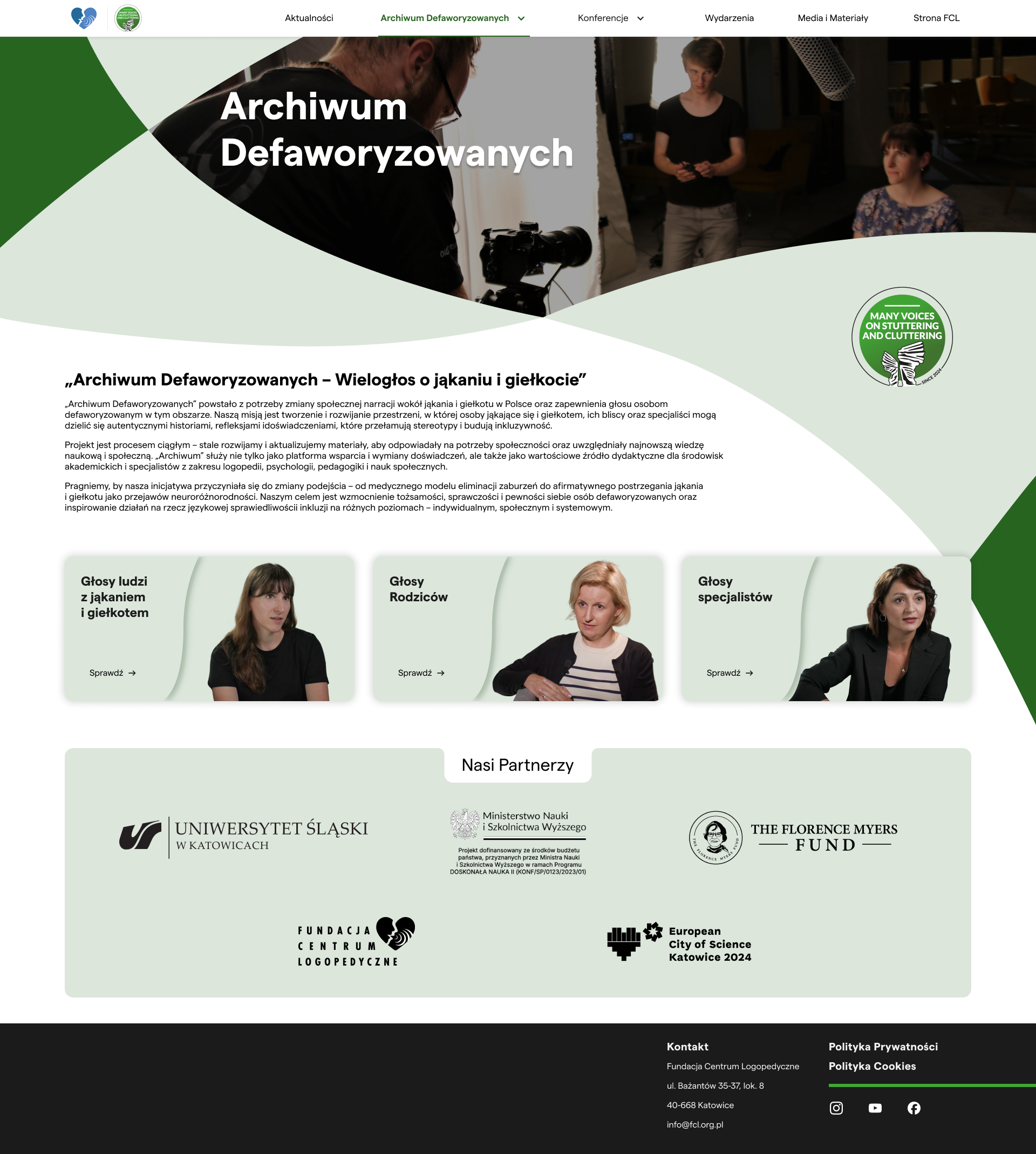
Fig. 1. Homepage of the Archive
In Poland, the medical model of stuttering and cluttering still predominates, fueling stigma, limiting access to support, and contributing to social exclusion. Research conducted for more than a decade within the International Project on Attitudes Toward Human Attributes: IPATHA framework has confirmed the persistence of ableism and stigmatization in this area (Przepiórka et al., 2013). Meanwhile, international studies highlight the neurophysiological basis of stuttering and cluttering (Yairi & Ambrose, 2013) and support holistic, affirmative, and neurodiversity-based approaches (Byrd et al., 2024; Constantino, 2018). The Archive was launched in 2024 as a multimedia platform collecting authentic stories of people who stutter and clutter, their relatives, parents, and specialists. Its inauguration coincided with the organization of the international conference Many Voices on Stuttering and Cluttering. The earlier editions of the event (2014, 2016, 2018, 2021) had been called Fluency Disorders: Theory and Practice. The change of the conference name in 2024 was deeply symbolic because it reflects a broad paradigm shift, strongly influenced by speech therapists and self-help activists connected with FCL and UŚ, gradually spreading across Poland (Pakura et al., 2024). The immediate incentive for creating the Archive came from a research project on narratives of stuttering in Poland and their impact on the self-perception of people who stutter (Węsierska et al., under review). The recorded interviews were designed to give participants the freedom to speak openly, without censorship or stigma, not only about their struggles and challenges, but also about resilience, passions, and achievements. The interviewees freely shared their reflections and perspectives. The Archive includes a wide variety of multimedia: video recordings, parents’ testimonies, and experts’ reflections. These are not just ‘data’; they are voices, emotions, and real-life experiences. So far, four recording sessions with individual interviews have been conducted. The upcoming ISAD celebrations at the University of Silesia will enrich the collection with two panel discussions: one with adults who stutter or clutter, and another with parents of children who stutter.
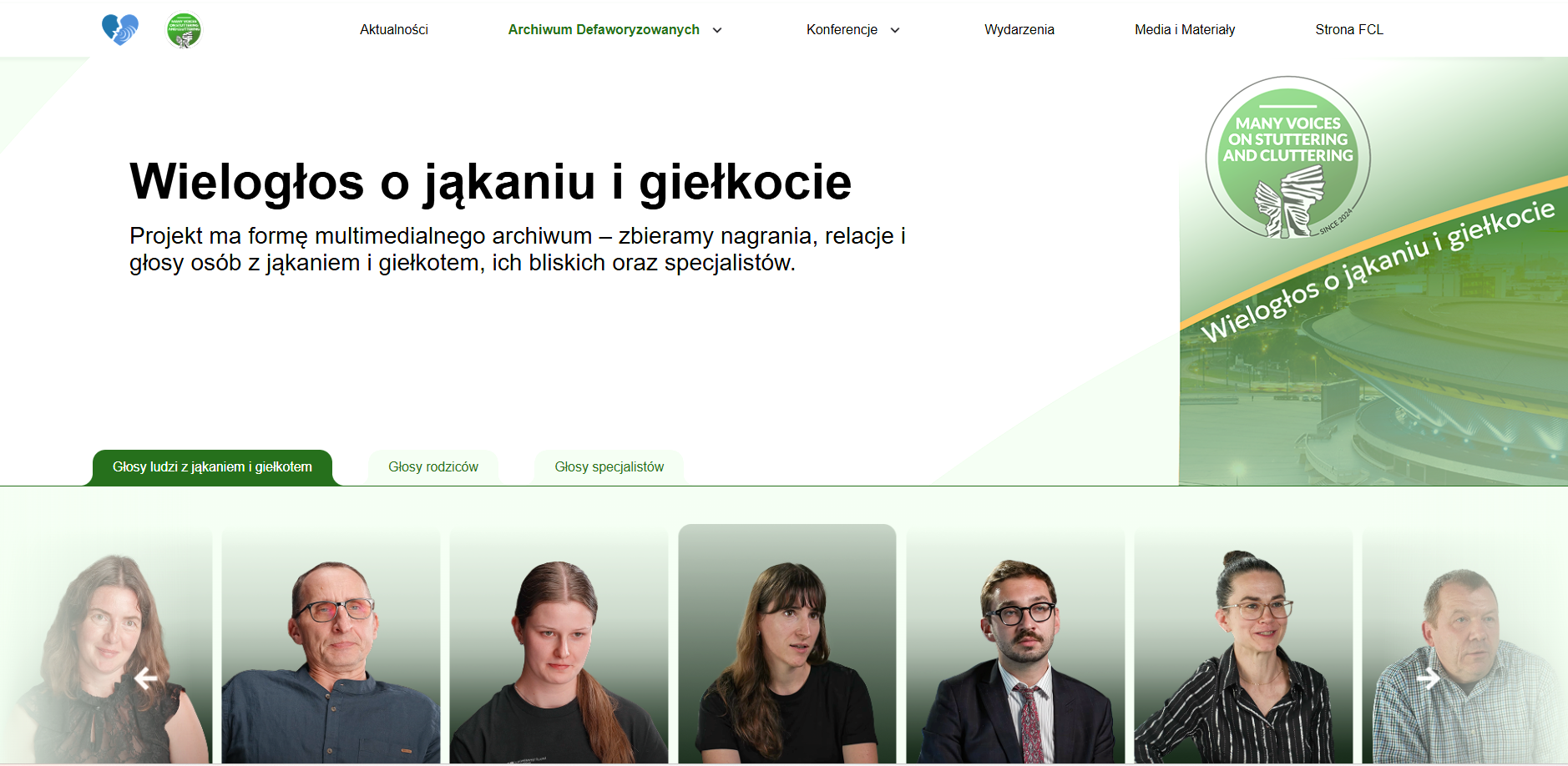
Fig. 2. Multimedia resources of the Archive of the Marginalized
And what do these voices say? They speak with honesty, courage, and depth.
Ania, an adult who stutters, addresses parents directly: “Dear parents of children who stutter, I wish you courage. Do not close your eyes to stuttering! Do not make it a taboo. Talk about it with your children, whenever they want, and in the way they want.”
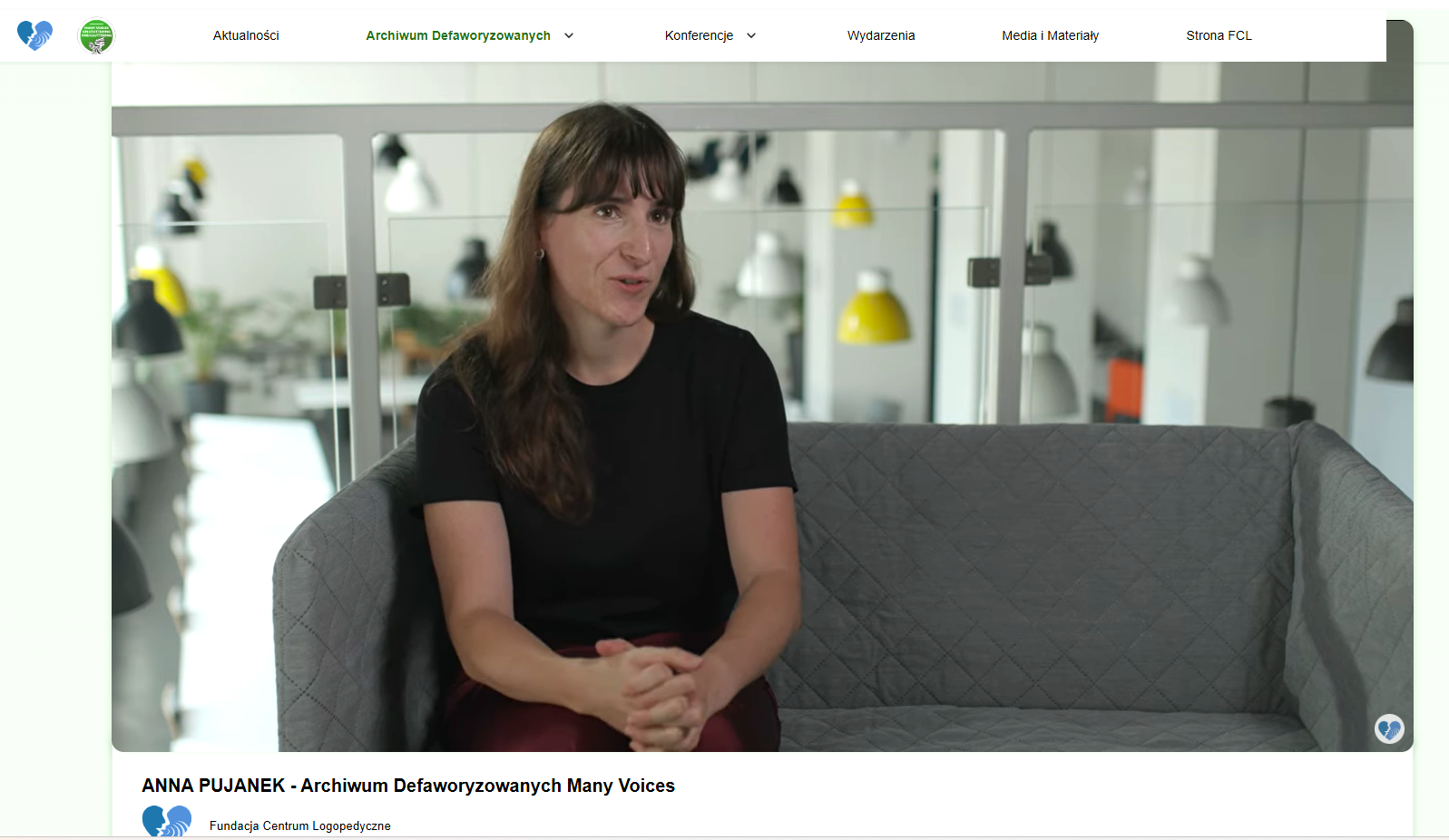
Fig. 3. Screenshot from an interview with Anna
Artur, also a person who stutters, has stressed the importance of embracing diversity: “Stuttering is normal. It is normal for people who stutter. Therefore, it would be unfair for society to try, in any way, to regulate this normality. Stuttering enriches the world with diversity. Speaking with stuttering is authentic for a person who stutters. That is why my appeal to society is: let us not change this truth.”
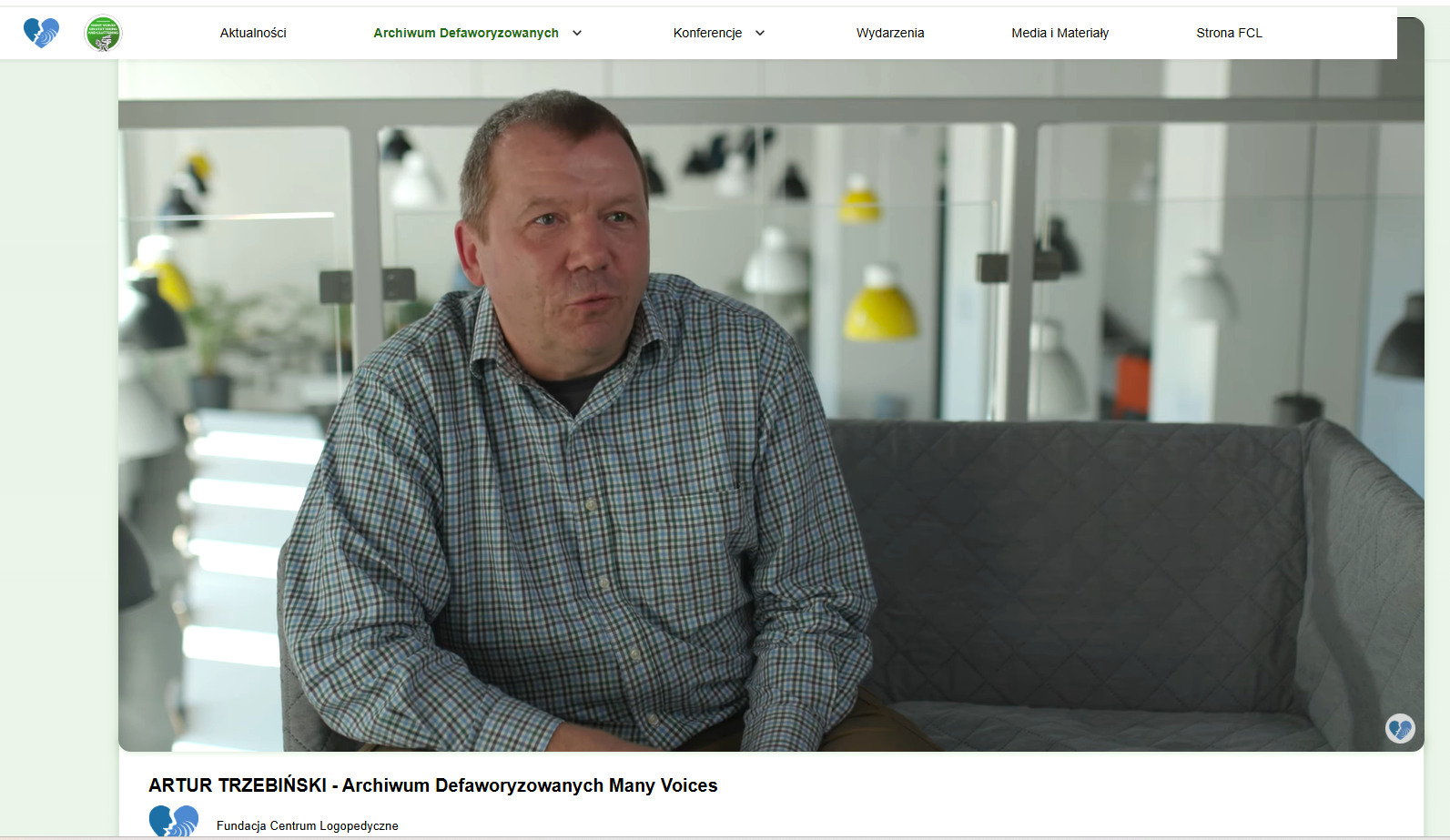
Fig. 4. Screenshot from an interview with Artur
Jarek reflects more personally: “Stuttering is a value that I am beginning to appreciate. Perhaps all the rocks that have hit my life boat had something to do with stuttering.”
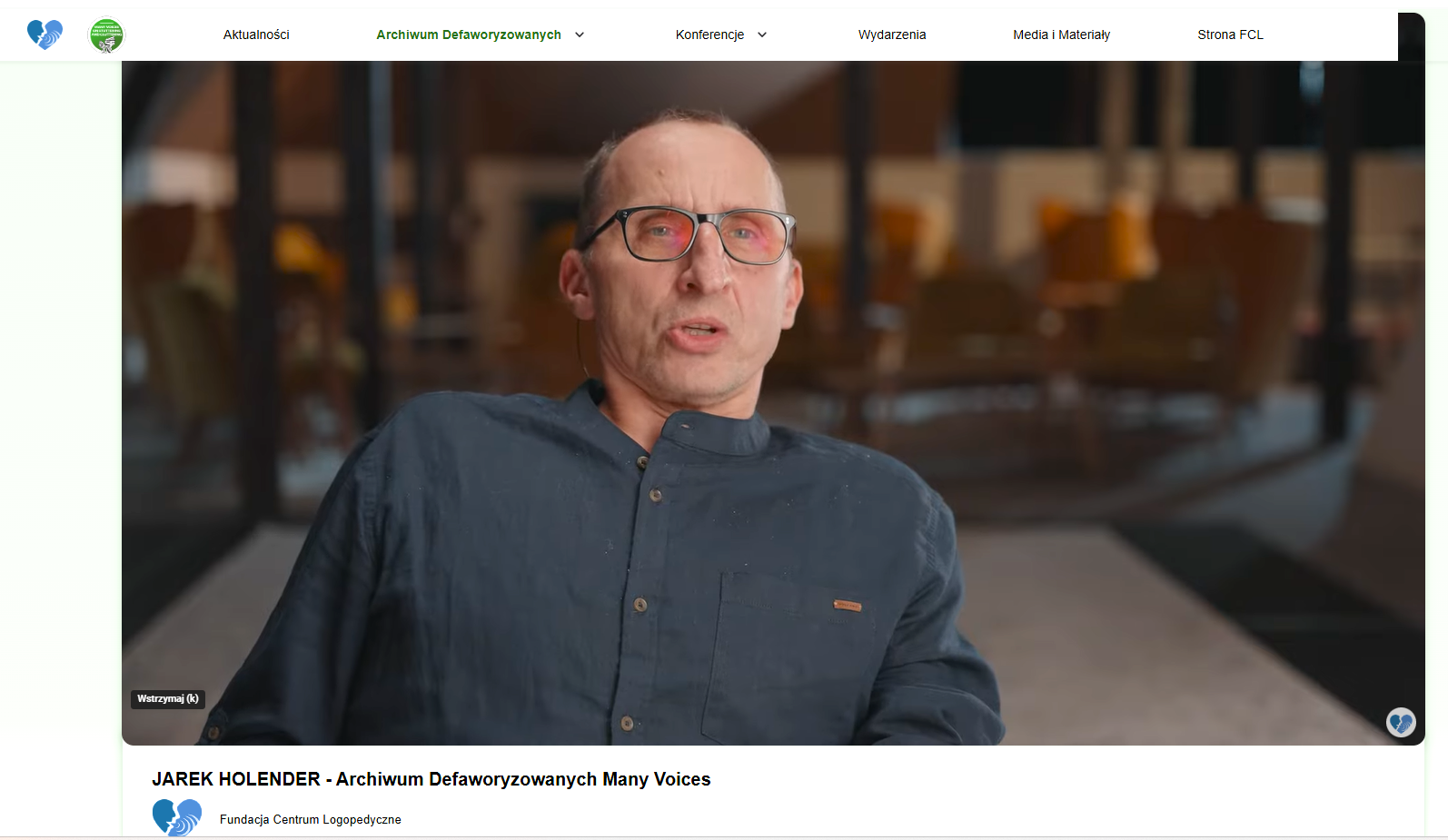
Fig. 5. Screenshot from an interview with Jarek
Robert recalls his less than positive experiences in therapy and reflects on what therapy goals should be:
“The goal of stuttering therapy is not fluent speech, but rather open stuttering and communication that feels natural and enjoyable – regardless of whether we stutter or not. Let us speak the way we speak, and listen to what we say, not how we say it. Achieving complete fluency for a person who stutters is impossible, because stuttering is a trait that will stay with us forever. What is possible, however, is improving quality of life, improving the way we perceive ourselves, the way we view our communication, and enabling free, open, and courageous communication – despite stuttering, with stuttering, not without it.”
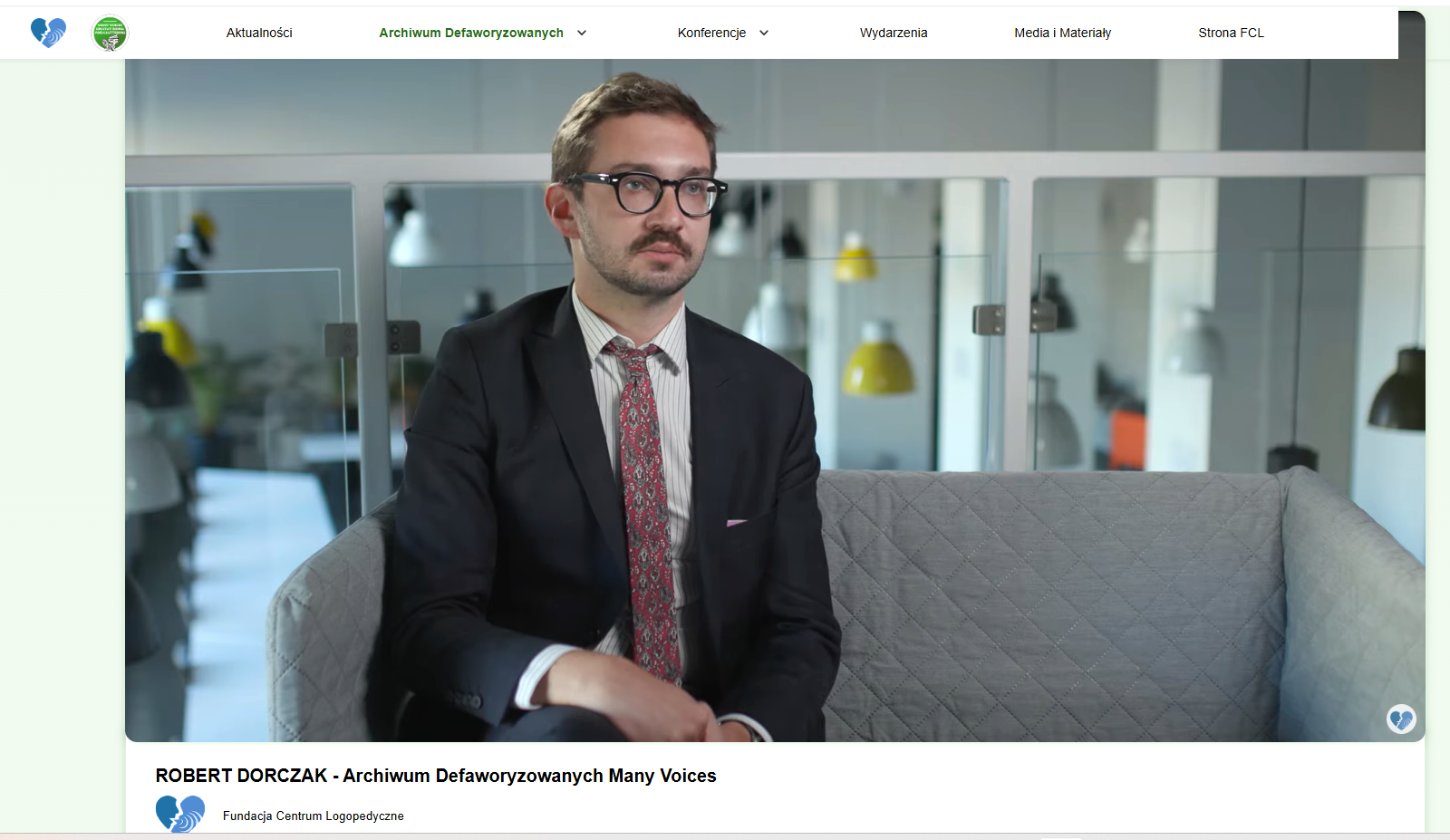
Fig. 6. Screenshot from an interview with Robert
Karolina adds her powerful voice: “The only thing that limits us is our own beliefs about stuttering. I have this conviction that it’s okay that I stutter, that it doesn’t limit me in any way. When I think like this, it turns out that others also stop seeing it as a problem in communication. They are no longer afraid to ask me questions, to talk with me, or to entrust me with more responsible tasks that require communication.”
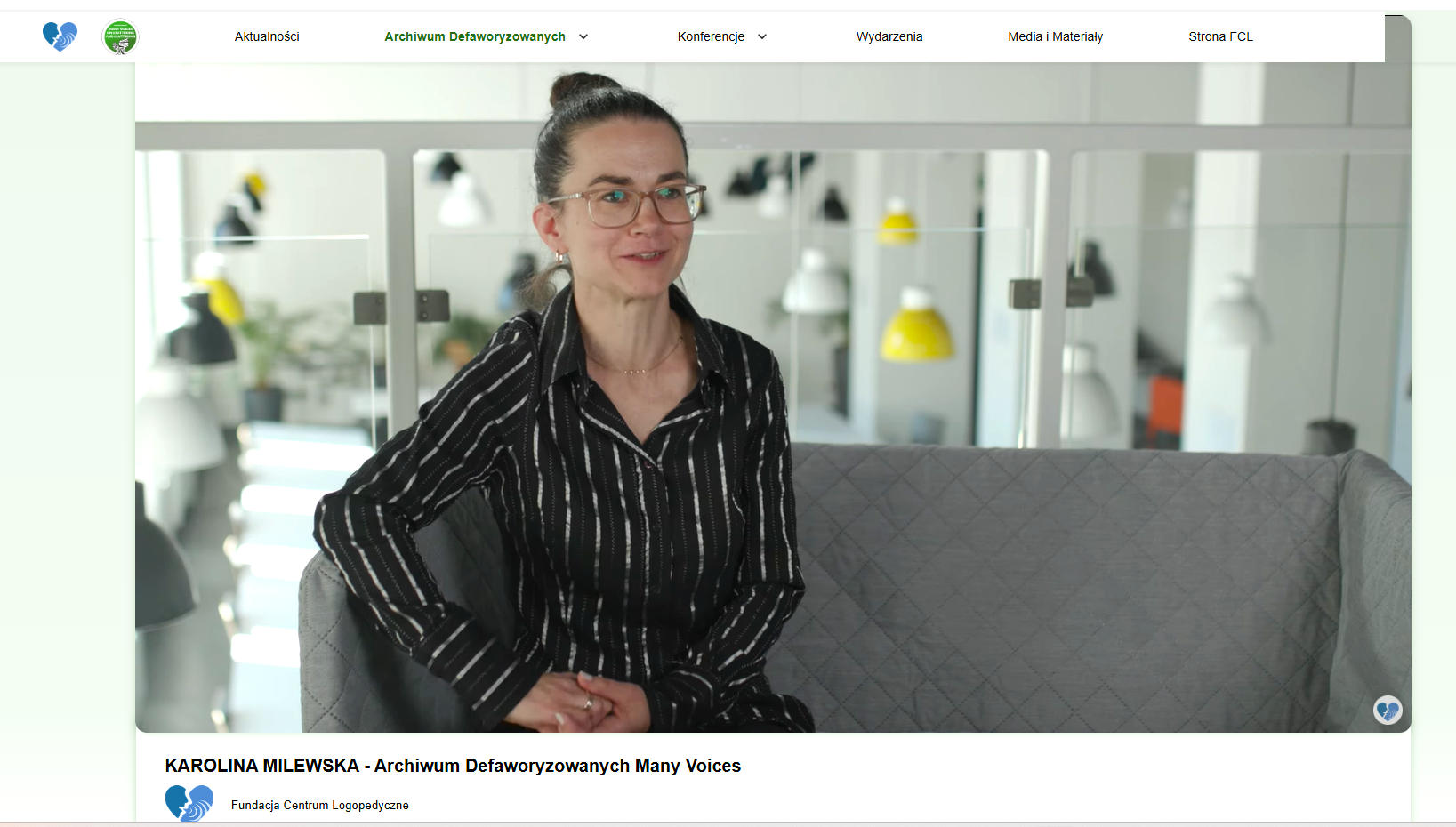
Fig. 7. Screenshot from an interview with Karolina
These are only a few examples; many more voices of people who stutter and/or clutter can already be found in the Archive, and new ones are constantly being added.
The Archive also contains a growing collection of parents’ voices. We were inspired to include them by research using the PASS-S/P/Ch (The Personal Appraisal of Support for Stuttering–Parent/Child) (Weidner et al., 2022), which highlighted the importance of parents’ and children’s perspectives. Hearing them convinced us that their voices matter just as much as those of people who stutter and/or clutter themselves.
For example, Katarzyna, Jedrek’s mother, reflects on her son’s transformation: “My son understood that stuttering is not an illness, that he is not someone different. He is just like everyone else. He realized that he can be whoever he wants to be, that he can pursue his dreams, and that stuttering does not stand in his way. In fact, he has gained a great deal of self-confidence.”
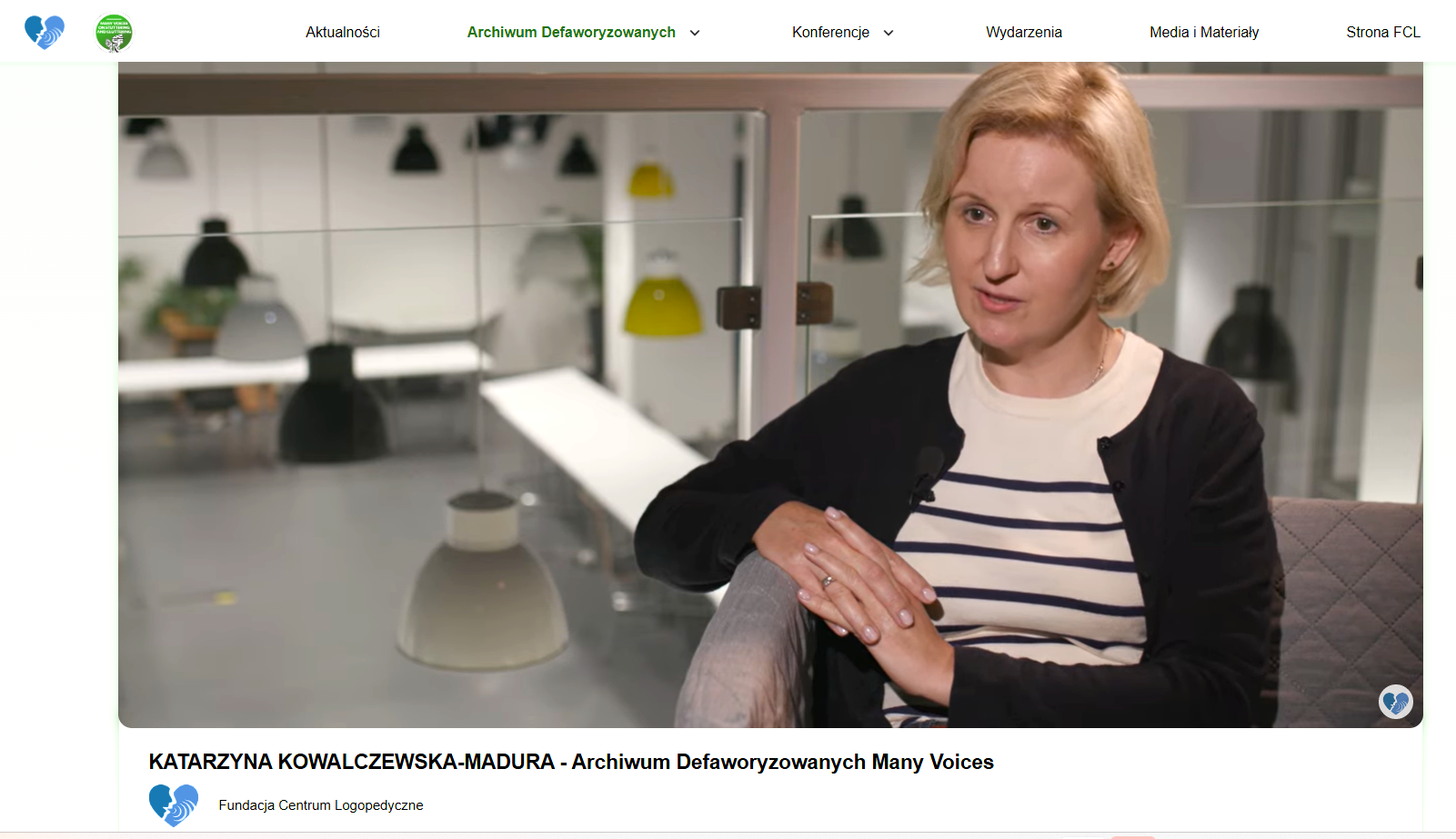
Fig. 8. Screenshot from an interview with Katarzyna
Lucyna, Krzysztof’s mother, pointed out how she has understood the parents’ role: “My child just has a stutter, and will live with it. We must not make things harder or stand in the way, but instead we must support them. My child is just as valuable as any other child!”.
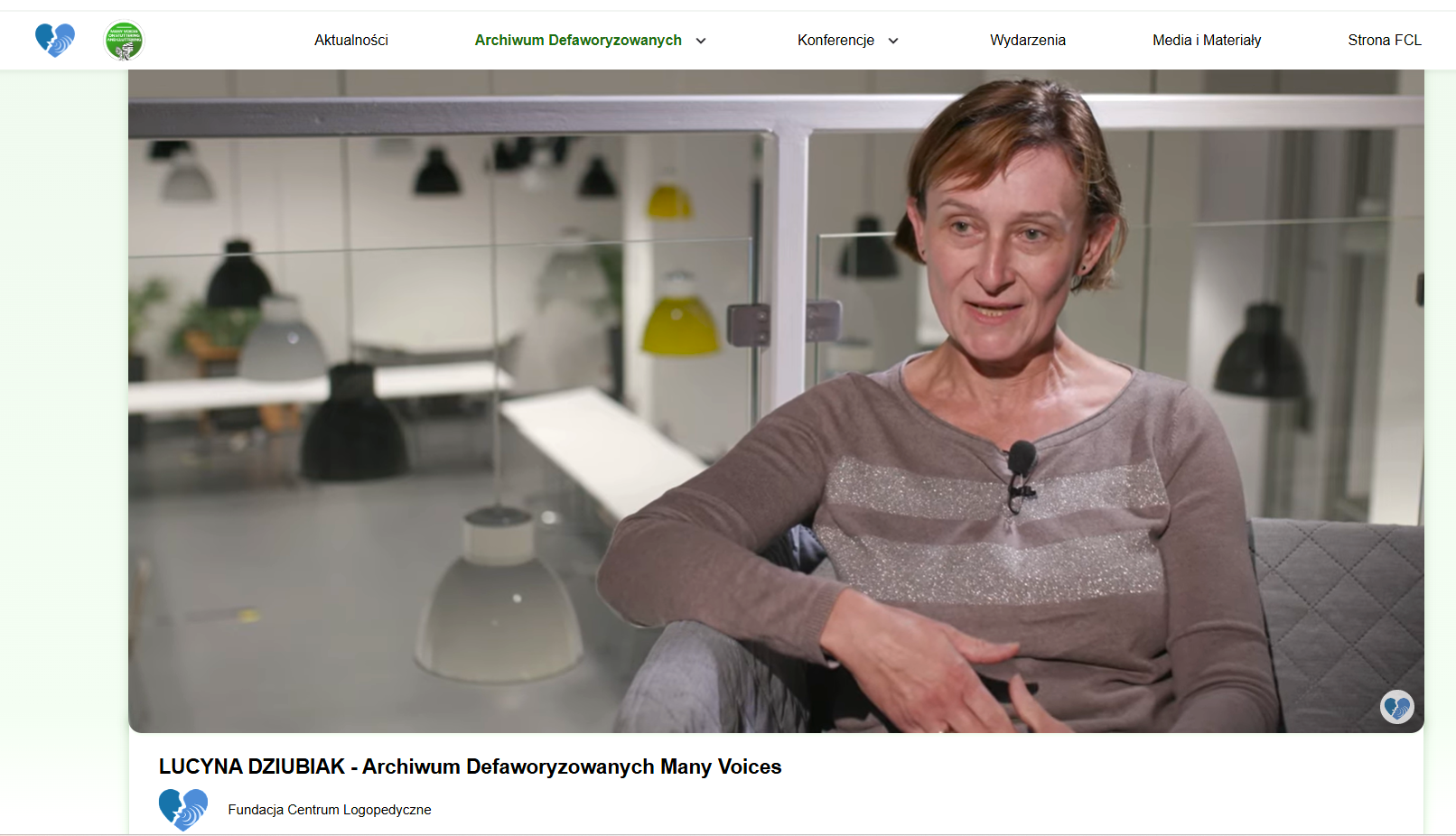
Fig. 9. Screenshot from an interview with Lucyna
Marta, Alan’s mother, stresses the importance of being an ally to her child and educating the community:
“I now feel a responsibility to educate and inform people about what stuttering is, and to speak about it openly, not hide it in a closet. This is because I can be proud of my son, and I am proud of him, and I will talk about what stuttering is. I will do everything in my power to make sure that more and more people talk about stuttering in my immediate surroundings.”
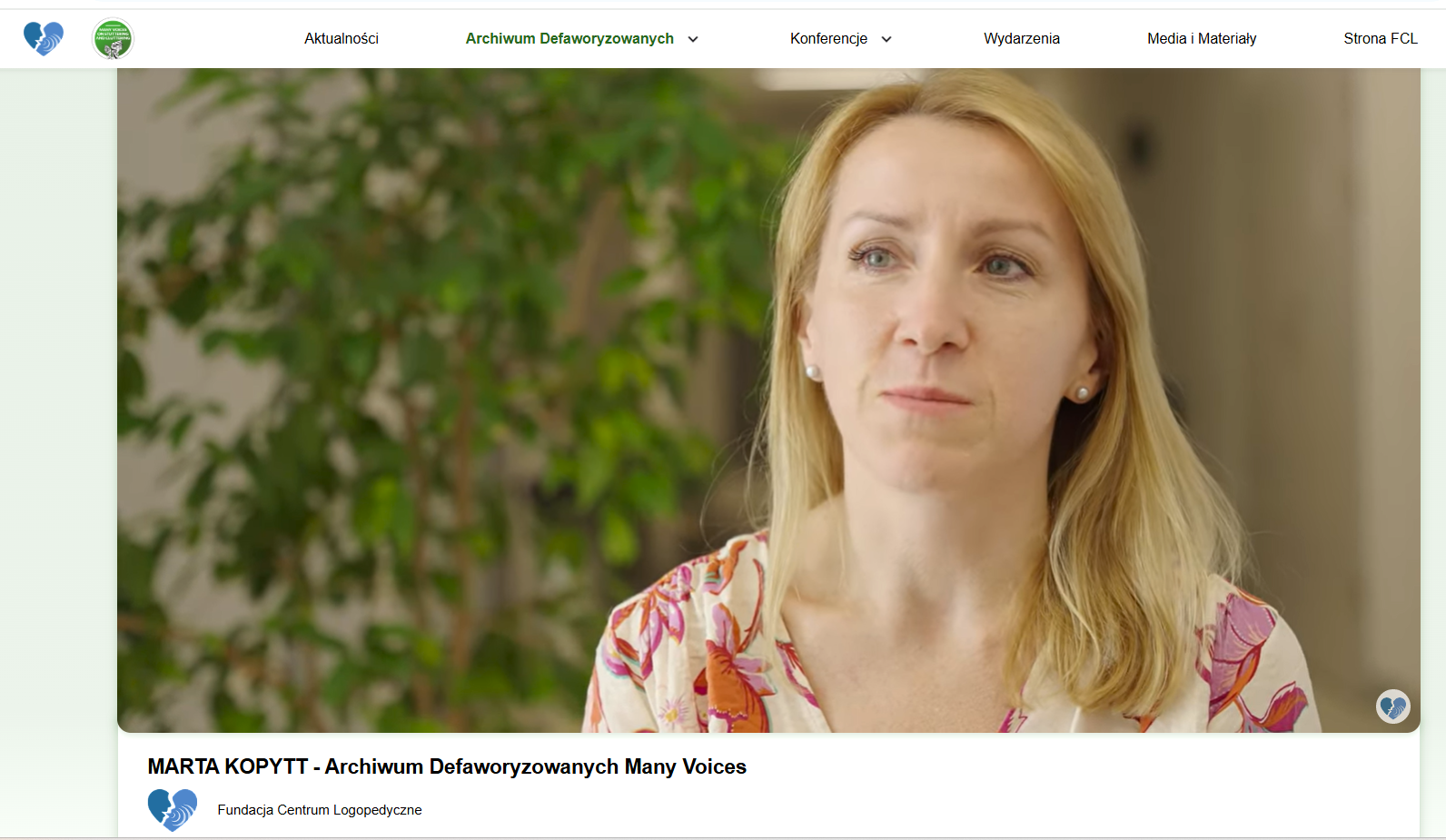
Fig. 10. Screenshot from an interview with Marta
Aneta, Zuzanna’s mother, gives her advice to all parents of children who stutter:
“Dear Parents, listen to your children, who will show you the way and tell you what they need regarding their stuttering. It will certainly be acceptance.”
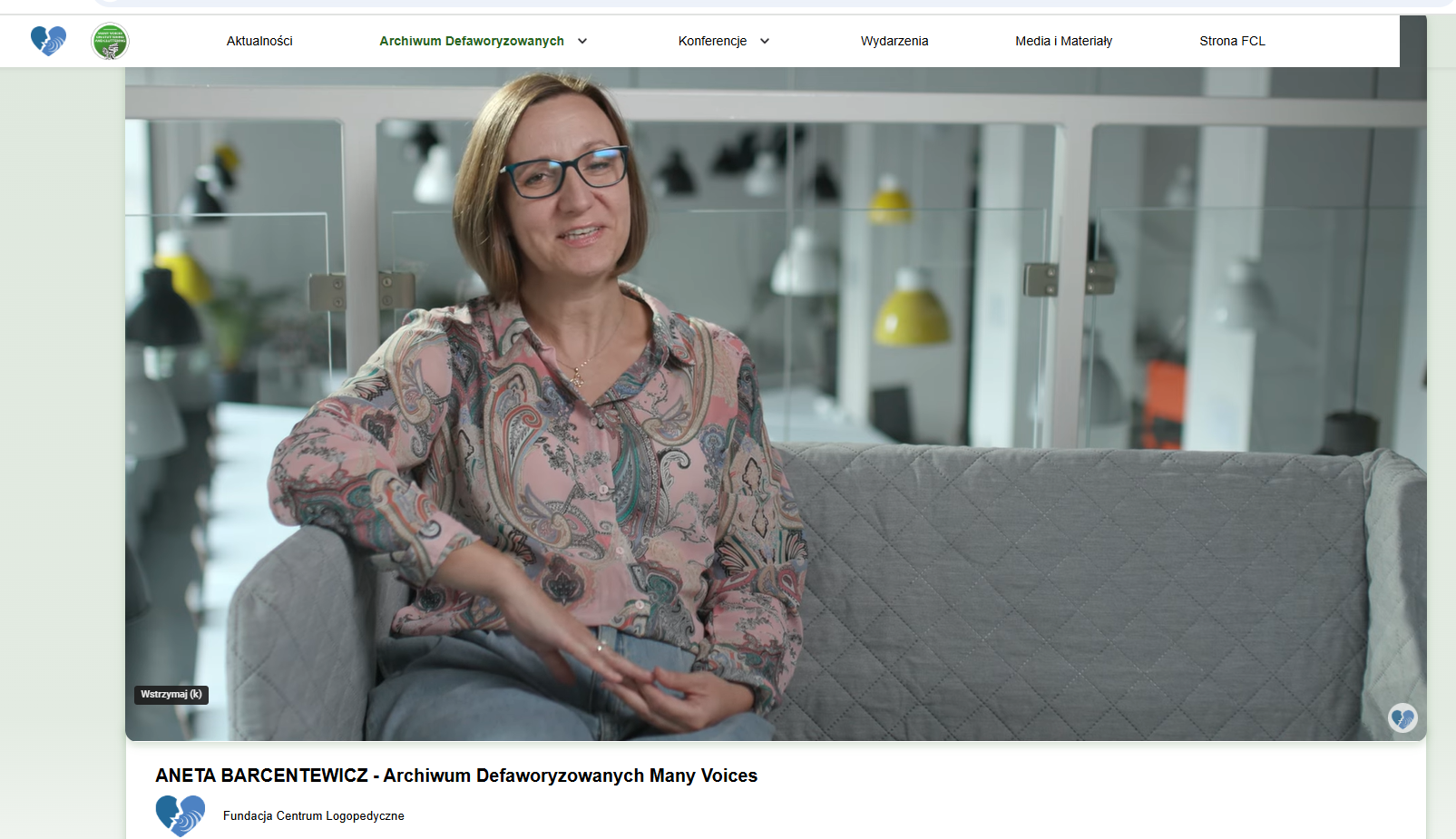
Fig. 11. Screenshot from an interview with Aneta
The Archive also features voices of therapists who see themselves as allies, not ‘fixers’. They emphasize that therapy should never be about “repairing people,” but rather about empowering them and facilitating their growth.
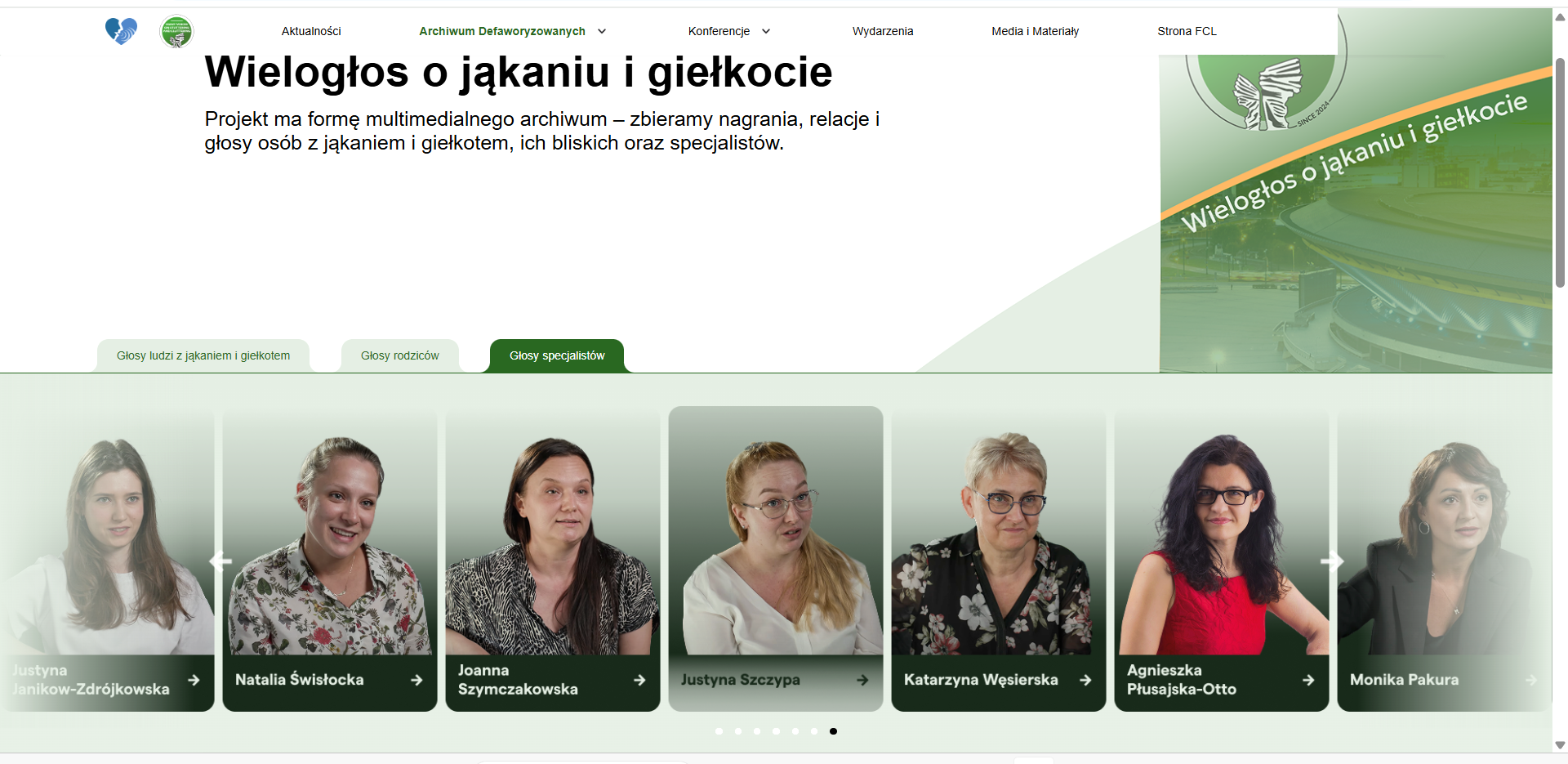
Fig. 12. Screenshot from the Specialists’ Voices webpage
The Archive of the Marginalized is not a finished project; it is a living, ongoing process. It continues to grow, expand, and adapt, and has also become a resource for academic teaching and professional training. It strengthens identity, self-confidence, and self-advocacy for people who stutter and clutter, while offering parents, teachers, and therapists tools to change social attitudes and counteract stigma. Although the website was launched only a few months ago, it has already attracted attention – importantly, not only from people who stutter and clutter. We believe this initiative has the power to transform the way stuttering is perceived in Poland. That is why we warmly invite people who stutter and clutter, their families, specialists, and institutions to join us and contribute. Together, we can build a more inclusive and respectful society – one that embraces neurodiversity and values communication in all its forms. In this way, the Archive of the Marginalized – Many Voices on Stuttering and Cluttering fully reflects the ISAD 2025 theme, “A Diverse Stuttering Community – Meeting Challenges With Strengths.” It gives space for authentic stories, challenges stigma, and opens the door to real social change.
References:
Byrd, C. T., Coalson, G. A., & Conture, E. G. (2024). CARE Model of Treatment for stuttering: Theory, assumptions, and preliminary findings. Frontiers in Psychology, 15, 1488328. https://doi.org/10.3389/fpsyg.2024.1488328
Constantino, C. D. (2018). What can stutterers learn from the neurodiversity movement? Seminars in Speech and Language, 39(4), 382–396. https://doi.org/10.1055/s-0038-1667166
Pakura, M., Szymczakowska, J., & Węsierska, K. (2024). Czas na zmianę podejścia do jąkania. Prace Językoznawcze, 26(4), 53-67. http://dx.doi.org/10.31648/pj.10587
Przepiórka, A. M., Błachnio, A., St Louis, K. O., & Woźniak, T. (2013). Public attitudes toward stuttering in Poland. International Journal of Language & Communication Disorders, 48(6), 703-714. https://doi.org/10.1111/1460-6984.12041
Weidner, M., Węsierska, K., Laciková, H., Sønsterud, H., Skogdal, S., Åmodt, K., Scaler-Scott, K., & Coleman, C. (2022). Personal Appraisals of Support from the Perspective of Polish, Slovak, and American Children Who Stutter. Logopaedica Lodziensia, 6, 279-295. https://doi.org/10.18778/2544-7238.06.18
Węsierska, K., Wyrwas, K., & Zarzycki, M. (under review). Stuttering narratives in Poland: A qualitative study exploring the consequences of stigmatization and ableism on adult life experiences. Journal of Communication Disorders.
Yairi, E., & Ambrose, N. (2013). Epidemiology of stuttering: 21st century advances. Journal of Fluency Disorders, 38(2), 66-87. https://doi.org/10.1016/j.jfludis.2012.11.002

Congratulations to all involved in having the vision for the Archive, for creating it, for giving voice to the marginalized. I applaud you all on doing the very important work.
Changing public stigma is, as we all know, incredibly difficult. However, changing the stigma requires many actions, many steps, and telling the stories is, I feel, an important part of that process of change.
Well done to you, and to all who participated (and continue to participate) in the project. I am sure that your Archive will contribute to changing the perception of stuttering in Poland.
Wishing you all continued success and fulfillment. Thank you, truly, for all that you do.
Hanan
Thank you so much, Hanan, for your kind and thoughtful words.
We deeply appreciate your recognition and support – it means a lot to everyone involved in the Archive. As you said, changing stigma is a long and complex journey, but sharing stories and experiences is a powerful step toward building more understanding and empathy.
We’re grateful for your encouragement and for supporting us in this journey.
With gratitude,
Joanna
What a wonderful initiative! Thank you all for your work in making stuttering voices more visible. Their messages are so important not only to change public stigma, but also to use in therapy to help change internalized stigma for those who struggle with negative self-images. Where can I find a link to the recorded interviews to use for our Polish clients/parents? Thanks in advance! Femke
Dear Femke,
Below I’m sending you the link to the Archive website: https://mv.fcl.org.pl/ad.html
Dear Femke,
Thank you so much for your kind words; it means a lot to us. We are especially grateful for the support you have given us and continue to share. We also want to thank you for the interview you kindly gave us after last year’s Many Voices on Stuttering and Cluttering conference at the University of Silesia in Katowice. We hope you will agree to let that interview also become part of the Archive of the Marginalized. We will soon begin editing the English-language recordings. It is truly wonderful to have the support of such remarkable specialists as you. I would also like to warmly invite you to participate in the next Many Voices conference in Katowice in July 2026.
Warm regards, Kasia
What an amazing project, the time and energy put into it is just a unbelievable. It’s so good to let people who stutter and clutter tell the stories instead of talking about them. So good to see all those faces. We will certainly point Polish speaking clients to this website. Thank you for all you effort!
All the best,
Joeri
Thank you so much, Joeri! Your words mean a lot! :-). Giving people who stutter and clutter a space to share their own stories is truly at the heart of this project. It is an honor to support the community together.
All the best,
Joanna
Wow, what an amazing resource! Reminds me a bit of the FluencyBank in the US. All the best to you all as you continue this impactful work! – Ana Paula Mumy
Thank you so much, Ana Paula! We truly appreciate your kind words. We’re doing our best to spread awareness about stuttering and cluttering in Poland.
Joanna
This is so amazing, and so important. To listen to the clients’ stories, as we bring so many things to the table, such as wants, needs, backgrounds, cultures, experiences, etc. To really take time to listen can help to really individualise therapy, tailored for that very person. You practice “Nothing about us, without us”. May your work create the ripple effect.
Keep them talking
Anita
Thank you so much, Anita! We truly believe that every story deserves to be heard and honoured, and that real change begins when we listen with intention and respect. “Nothing about us, without us” is not just a saying – it’s a foundation for meaningful, person-centred work. If what we do can spark even a small ripple, then we are already moving in the right direction. Let’s definitely keep them talking! 🙂
Joanna