
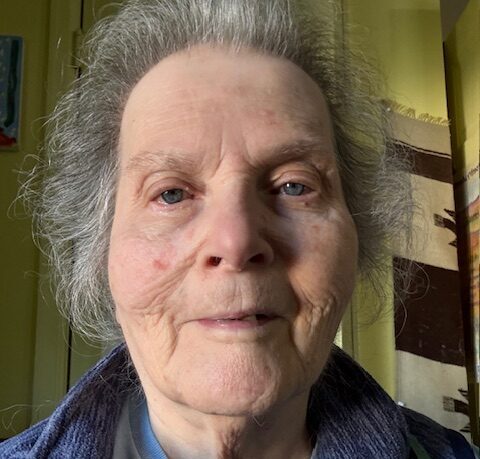
 About the Authors: About the Authors:
I’m Ellen-Marie Silverman, 82 years old. And I’ve been realizing for some time that I know very little about myself and about life, except that life is an adventure. I’ve had many opportunities to learn much of a scholarly nature and about human nature, but still, I think life is a wonderful mystery. Something else about me you may want to know: I began having a stuttering problem in my third year of life. Because of it in part, I became a speech pathologist, both clinical and research, and then a tenured university professor of speech pathology. Because I like solving mysteries, and I’ve considered the problem of stuttering one, I’ve enjoyed doing research about stuttering problems of children and about stuttering problems women face. Most of all, I enjoy helping people with their problems regarding stuttering. And that’s what it comes down to if you have a stuttering problem, in my opinion, you, eventually, are the one who can solve your own problem. |
It took me quite some time in my life to be willing to face my deep personal challenges, most of which originated in early childhood, including my stuttering problem. I preferred to live a risk free existence if I could create it as I believe most people would if given a chance to do that. Having been abused at home daily from age three until my wedding day, I was especially motivated to scout out the possibility of pain rising on the horizon and find ways to avoid it.
I missed formative experiences for socializing by avoiding interactions and talking very little. It took a friend of mine, a nun and novice mistress, to say to me in middle age, in a way I could accept the idea of it, “You have to go through the challenges, Ellen.”
Let me tell you it was difficult to put myself deliberately in a position that I knew was likely to cause me pain. First of all, I didn’t want to feel pain after all the pain I had already felt as a child and young person. And second, because I rarely talked I had almost no knowledge or experience of knowing how to feel and see my pain without being consumed by it, which led to thinking about it and talking about it a lot of the time. Pain is unpleasant enough, but the ruminating about it kept me hurting overly long.
When I took up the practice of mindfulness meditation in my late 30’s to calm my mind, I found out ways I could experience circumstances that hurt without becoming trapped in pain. With that knowledge, I grew in self-confidence which, for me, could be translated as strength.
I believe therapists can help us learn ways to do that and practicing mindfulness meditation definitely can help. Learning to manage our own expectations about learning what we believe will help us and to accept the outcome of what we learn as reality for us individually can help free us to continue moving forward on our life’s path.
This sounds like a pep talk, which it is, because most of us benefit from one time-on-time to keep us from being stuck. Being stuck can sneak up on us. It’s not unusual that we don’t often know ourselves as well as we might until we begin taking what we think are risks to uncover more of what’s there within us.
Going through challenges with kindness and compassion toward ourselves and perseverance throughout the process adds to our strength and joy of living even during difficult circumstances.

Welcome!
Slow to develop skills to skillfully manage strong emotions it was easily put aside while i attended activities that were more pleasant. My mindfulness meditation practice led me to ones that removed my fear of learning to know them and live at ease with them developing greater and resilience in me.
Welcome!
I was born into a family that didn’t talk much about feelings, which was not terribly unusual for the times. So it took me quite a few years before I learned it was possible to not let them overrun me, which was what I feared. I can tell you that, even with that attitude and hesitancy about touching my feelings turned out to be just what I needed. It os was brought me greater self-confidence and resilience, not to mention joy in living. Learning to relate to my feelings, opened up my living as I stopped hiding.
Hello Ellen-Marie
Thank you, as always, for your writing.
You wrote in your introduction that “you, eventually, are the one who can solve your own problem”. I feel that this is such an important message. So many PWS with whom I speak exhibit great resistance to taking personal responsibility to solve their problems. I was once (and for many years) in that situation, so I am writing this with compassion and understanding, not with judgement. And yet, the message must be given if we, who have been down the path, want to help others. I try to do so with kindness.
I believe that your message of “Going through challenges with kindness and compassion toward ourselves and perseverance throughout the process ” is so important. And yes, mindfulness and meditation are valuable companions in this process.
Thank you for writing.
Hanan
Thank you, Hanan, for helping amplify the message that it is we ourselves who must do for ourselves what we and only we can do for ourselves to become more as we wish.
I agree it is one piece of advice that is often considered a disagreeable one to receive at first by individuals in a culture such as ours where we tend to be conditioned to devalue our capacity for helping ourselves. But, in learning to approach communicating with others with greater ease, we need to do what only we can do or, sadly risk becoming embittered.
And that can be a very good thing. We develop greater confidence surely as we know what we are doing to live more as we wish, we are making that happen. Realizing and living more as we wish as a result of what we know we are doing greatly increases our confidence iin ourself, and there is truly rewarding helping us become an even more comfortable and effective communicator.
Actually, my entire book, “Mindfulness & Stuttering,” is a statement addressing the need for us to take thoughtful care of our lives.
Hi Ellen-Marie,
What a great contribution to this year’s ISAD conference. I especially like this line:
“Going through challenges with kindness and compassion toward ourselves and perseverance throughout the process adds to our strength and joy of living even during difficult circumstances.”
I wished I had understood that long ago. I always strived to be a perfectionist in everything in my life that I could control, because I could not control my stuttering. That constant energy spent on trying to excel took any possible moments of kindness and self compassion away because I never thought of those things as important.
Well, I do now. I am trying to practice those things now so I can experience strength and joy in living during difficult circumstances, both stuttering and non-stuttering circumstances.
Thanks for sharing. I do want to get better at mindfulness.
Dear Pam and 2025 ISAD Participants, The above response from me was prematurely sent. Proofreading for TYPOS was incomplete. I cannot on my own do that now. I humbly ask you noto to try to understand it. It is a mess.
Please consider this: concentrate on doing and continue doing without worrying about the outcome of your practice. Meditate following a well-known method not on an outcomme. Well-known teachers Sharon Salzberg, Pema Chodron, Jack Korrnfield, and others are online and have each authored several accessible books. The basic method they teach to s 2600 or so years old. But there is no way of learning to meditate without meditating. It is experiential learning.
Thank you.
Best wishes.
Ellen-Marie
Hi Ellen-Marie,
First and foremost I wanted to thank you for sharing your story and journey in this post. Everyone can feel stuck in one or more aspect of their life. How difficult would you say it was for you to take that first step into choosing to change our life and mindset? It is easy to stick to what we know, our comfort zone. Living a life for ourself and not others is what will set us free.
Hello,
The first step in changing is both the easiest and the hardest for me, and ,from what I’ve heard, it is for others, too.
For me, it’ sometimes begins with something I have thought of changing but then thinking, “No. I can tough it out.” And sometimes I just forget about it and don’t change at the time. Other times of it is too tough to tough it out, I decide to face my fear about change, and go ahead and change.
There are many times and circumstances in a life where we makes this choice. We don’t necessarily think, “oh, I’m going to change my life.” For example, i am more likely to think I can’t stand doing this anymore. I’m going to do XY or Z instead. Then I do XY or Z.”
The general belief is people change doing what they’re doing when doing what they’re doing becomes that becomes too uncomfortable to continue or too costly.
The first step to change can be a leap or a small step. Most people are comfortable starting with a small step and adding additional ones that follow from it.
Once started , i do my best to keep going forward, keeping my looking ahead and not backward.
So start and don’t stop. You can take a breather at some point, but if you do, remind yourself to go back.
These thoughts, these decisions are not selfish by any means. Each one of us affects those we come in contact with. If we become more sensitive, more kind, more happy , others will be likely behave similarly, at least when engaging with us. It’s a start.
Thank you for sharing .
Hi, Ellen-Marie!
I enjoyed reading your post. Your honesty is so encouraging and powerful. I am a second-year graduate student for speech-language pathology, and I am currently taking a course over fluency. This topic is new to me but so interesting. In the future I would like to work with children in the school, so I will most definitely have students that present with a stutter. Hearing your story inspires me to help my future patients seek the same confidence and courage that you have. I feel as though most people can relate to your story in some way. It is scary to try new things that we already know will be out of our comfort zone, so most people choose to stay in that comfort zone. I am one of those people that doesn’t try new things due to the fear of failing. Your resilience and strength really resonated with me, and I look forward to trying new things that I normally wouldn’t do. I also look forward to helping my future students build their confidence as well. Thank you for sharing your story!
Hello, Emily,
Thank you for sharing your plans. And good luck in realizing them and others you may make.
Ellen-Matie Silverman
Hi Ellen-Marie,
I admire your courage and the way you’ve shared your life experiences so openly. I can’t imagine going through so much pain as a child, and I admire how you faced those challenges later in life instead of letting them hold you back. I especially connected with how you used mindfulness to feel your pain without being overwhelmed, it reminded me that it’s okay to sit with hard emotions instead of avoiding them. I also agree with your point about therapy, learning strategies and having guidance can help us face challenges and grow stronger. Your idea that strength grows by facing challenges was very meaningful to me, and it made me think about how I can approach my own fears and difficult situations with more patience, courage, and self-compassion. Thank you for sharing your journey, it inspired me to try facing my own challenges instead of avoiding them.
-Kim
Hello, kim, i’m glad my paper helped you think more about acquiring information and skills to learn to work, skillfully with what challenges us. That is a great path to take in life. If we are to be happy and successful, we need to learn how to work with all the challenges we may encounter. That will bring us into a place where we are stronger and more effective in living not to speak of being a therapist. Thank you for sharing your thoughts and good luck to you.